
Last updated September 22, 2026
Free on-site gate assessment - hinges, posts, and your LiftMaster or Nice gate operator checked before anything is quoted
The assessment is free and the quote is the invoice.
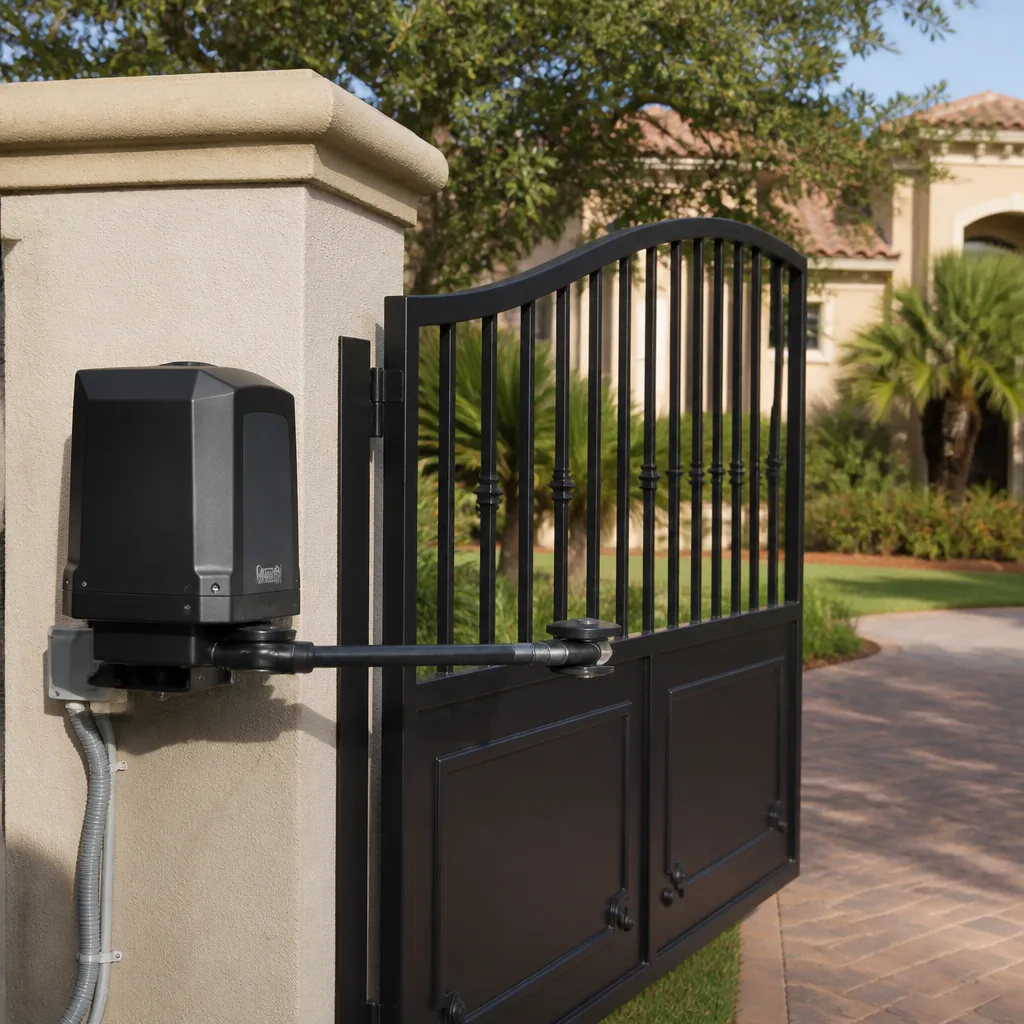
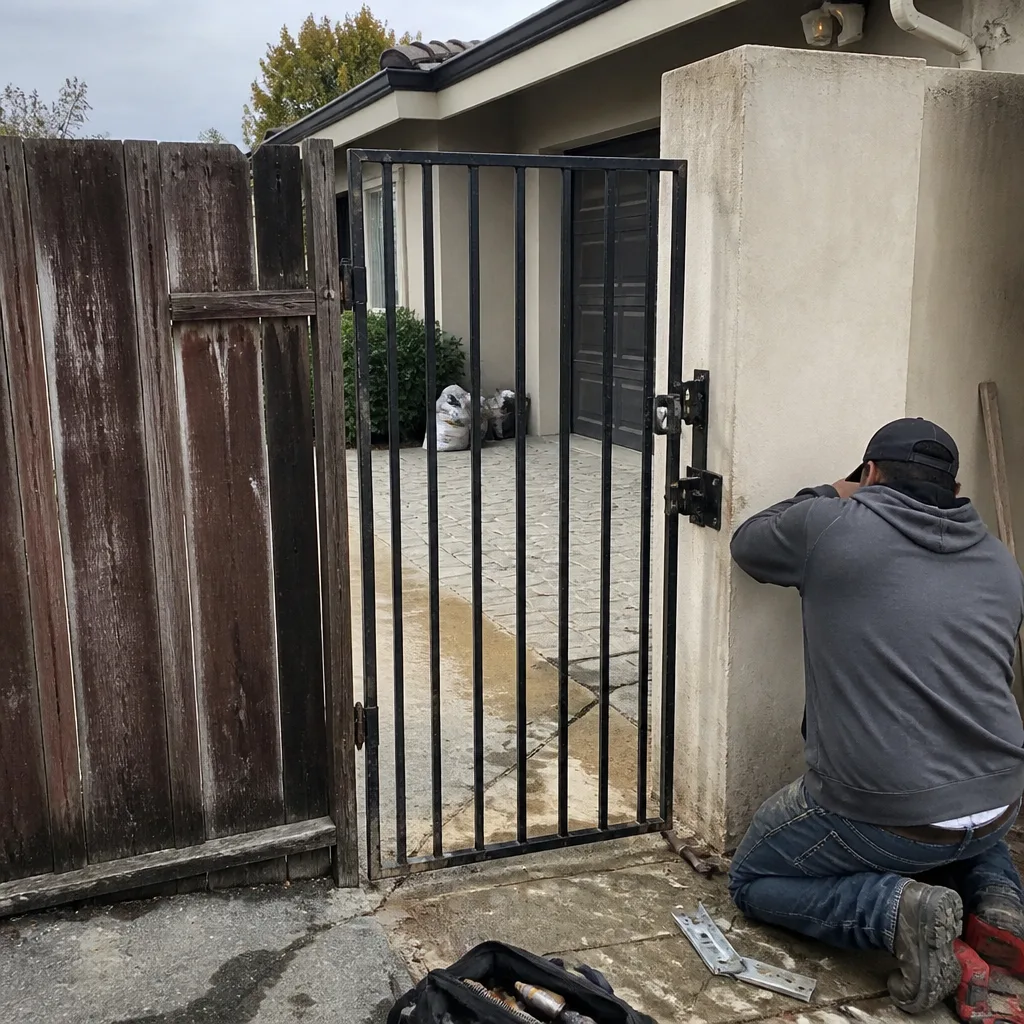 Before
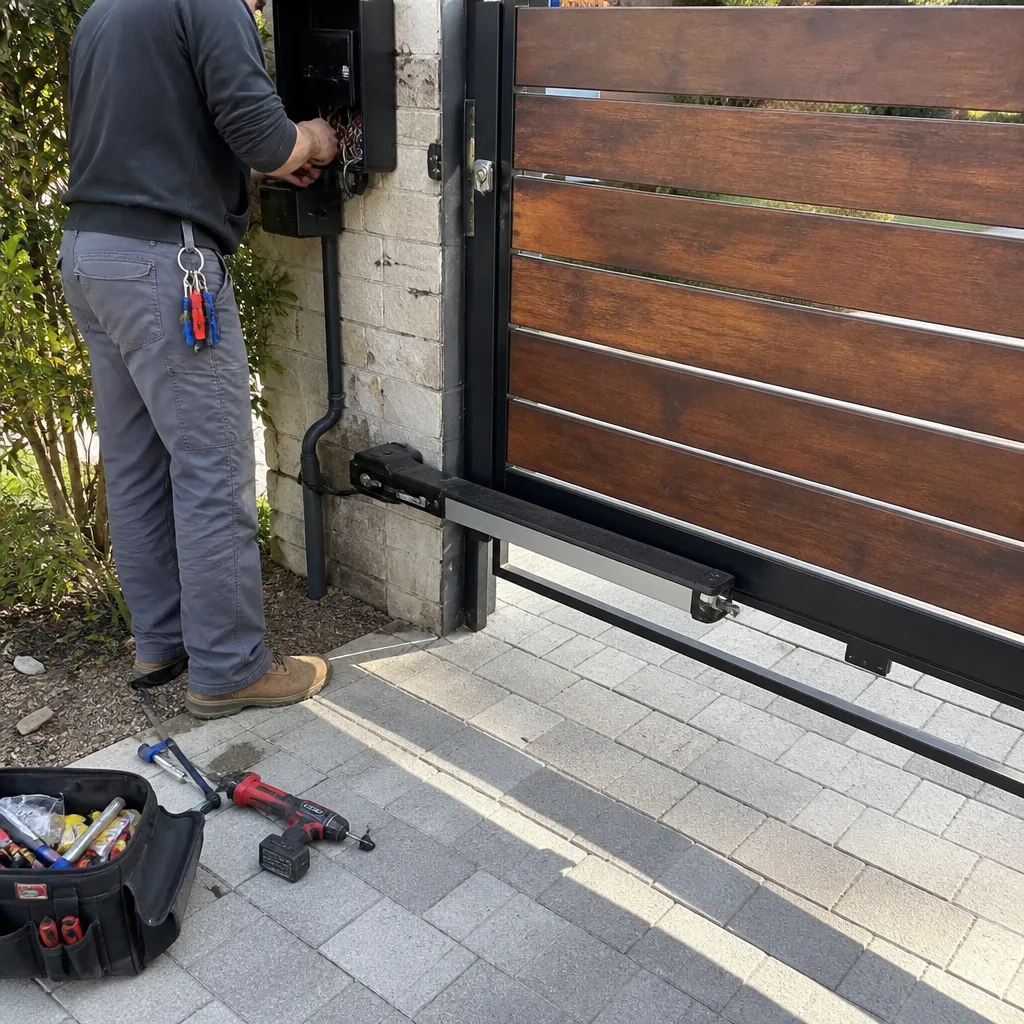 After
After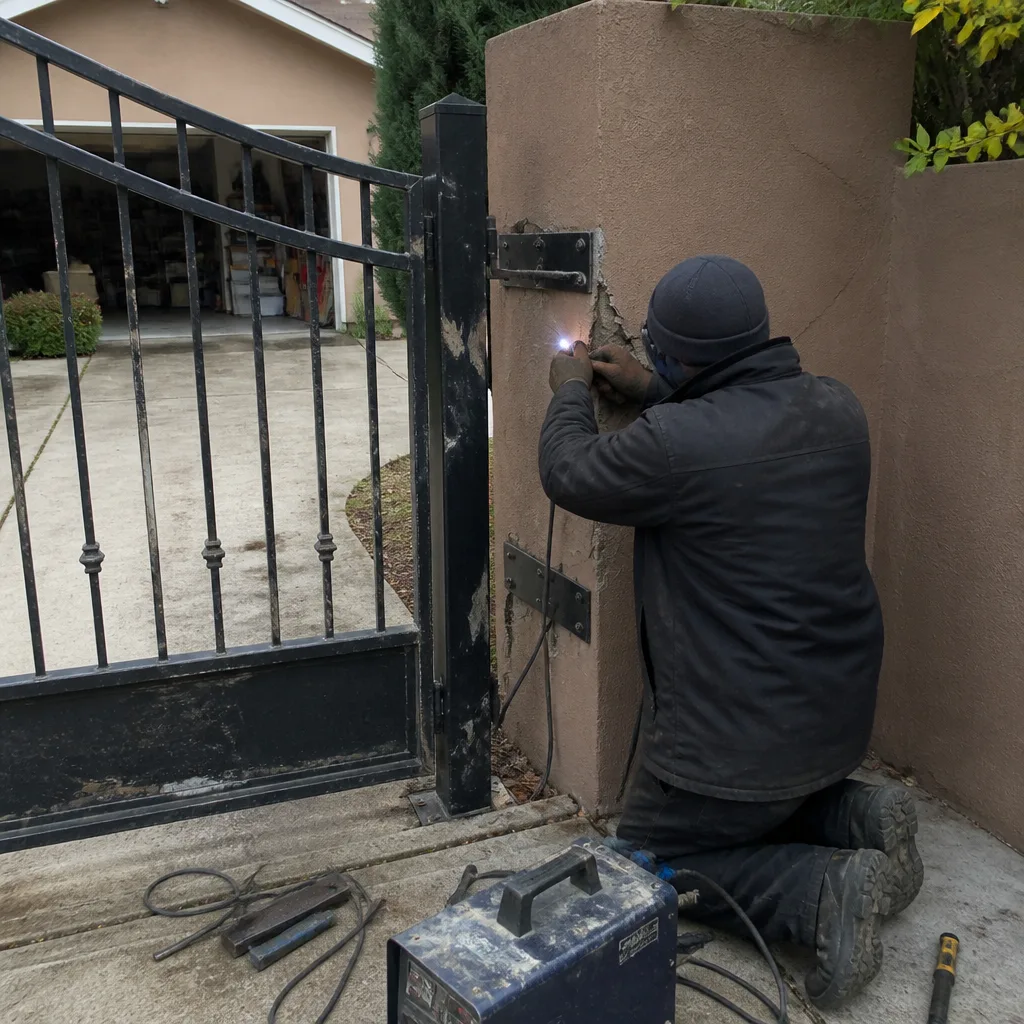 Before
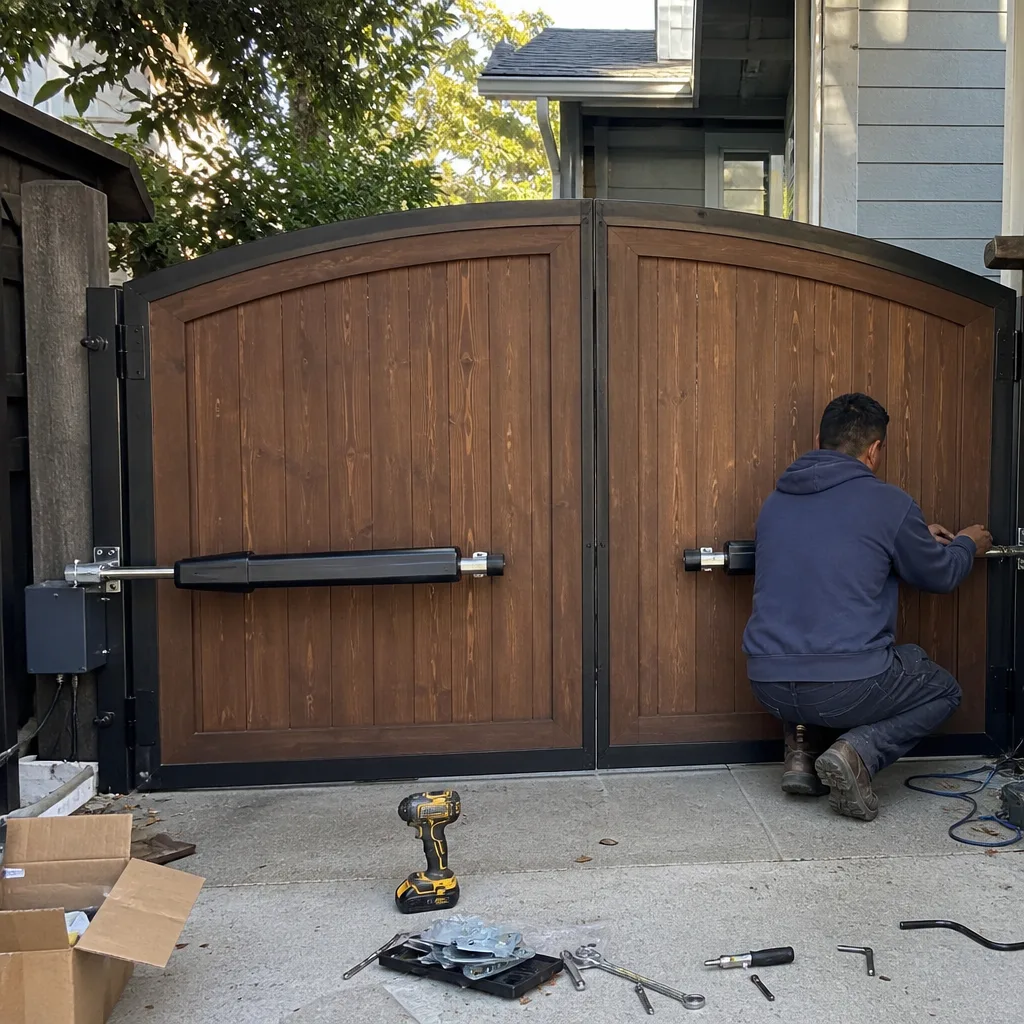 After
After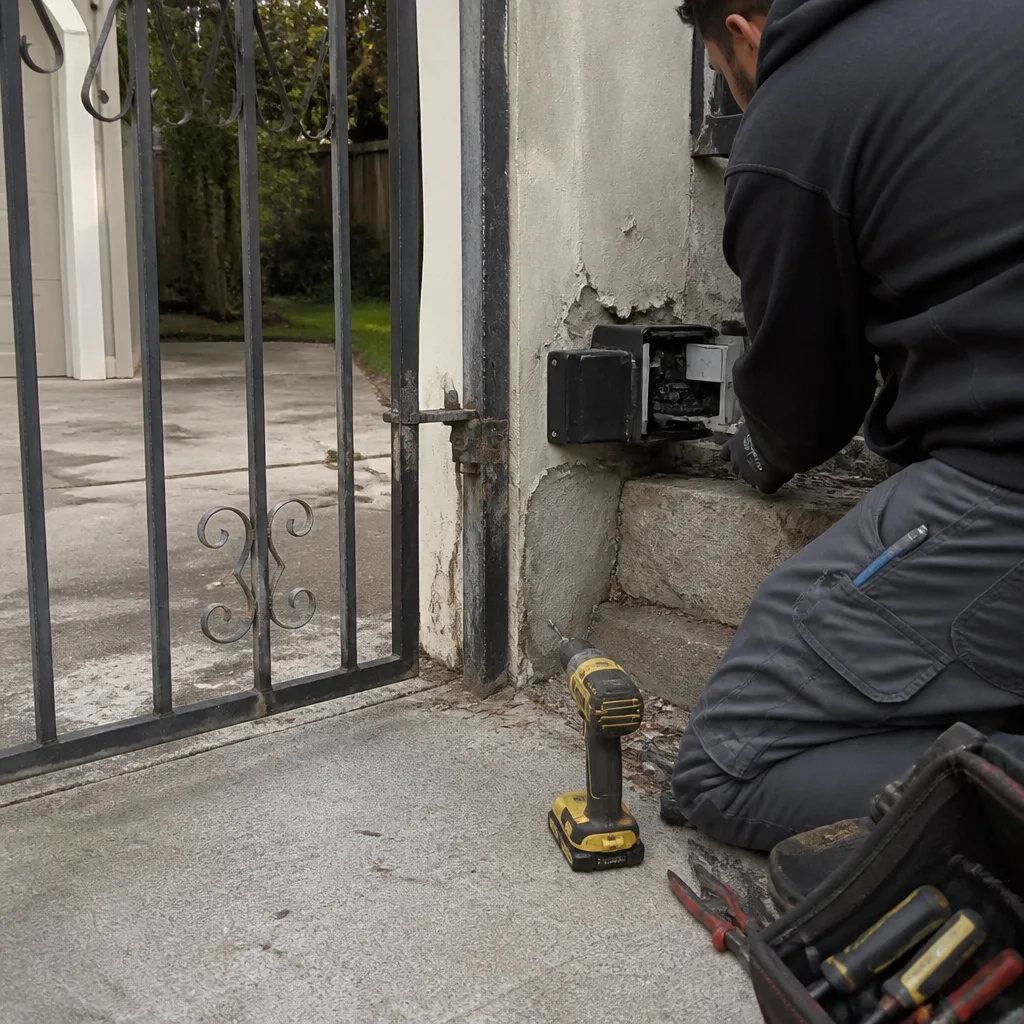 Before
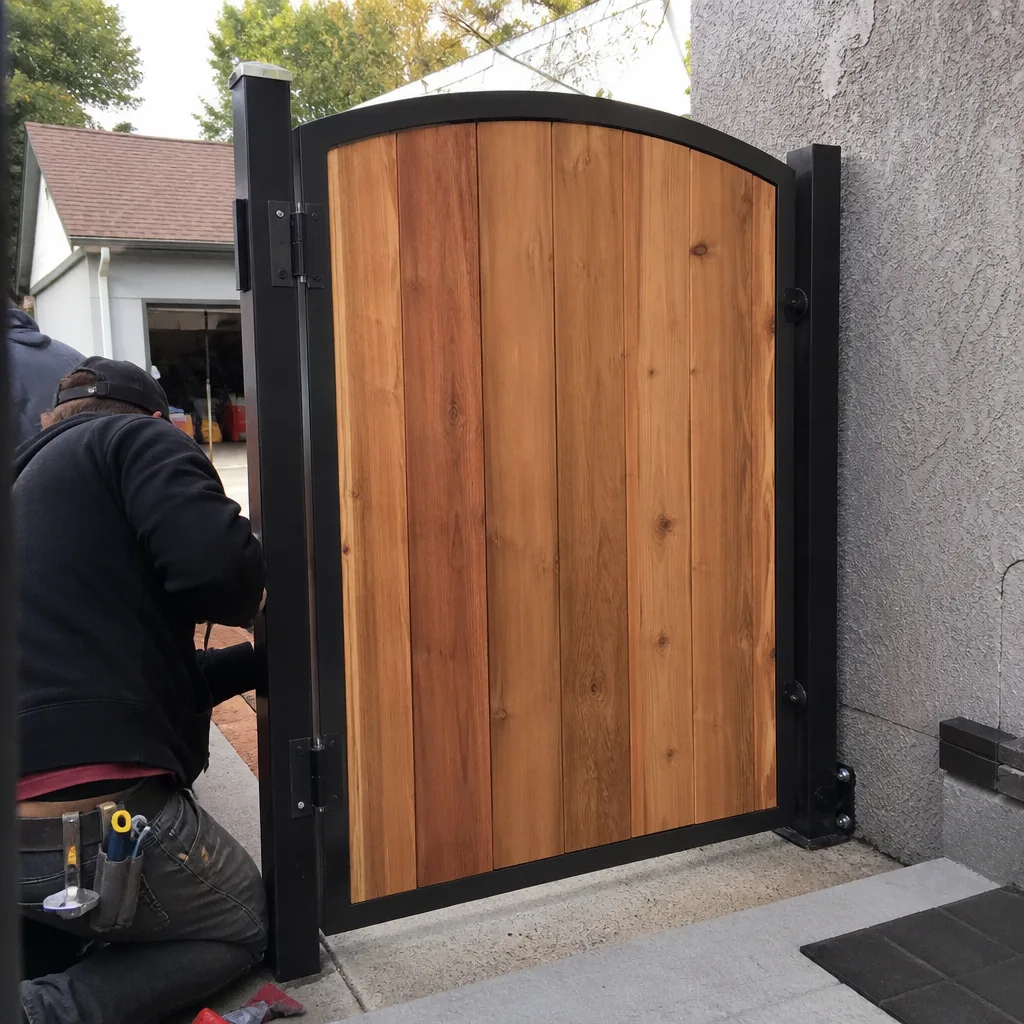 After
AfterGate Repair Permits, Codes & Inspections in CA: What You Need to Know
A gate operator replacement in San Mateo can trigger a building permit, an electrical permit, both, or neither. The determining factor is wire gauge and junction box location, not the cost of the repair. Most homeowners discover this only after a contractor has already opened the panel and the inspector red-tags the job. In this guide and across our more guides & resources, we’ll map exactly which authority governs your repair, what documentation protects you at resale, and how to avoid the unpermitted-work disclosure that can stall a California home sale.
Quick Answer
Most gate repairs in California do not require permits if they are like-for-like part replacements. A permit is required when you alter the electrical supply, change the gate’s weight or dimensions, or install a new operator where none existed. In San Mateo County, a gate operator replacement triggers a building permit only if the new unit requires a different voltage, amperage, or conduit run. Electrical permits are separate and are required for any new circuit or subpanel work.
Table of Contents
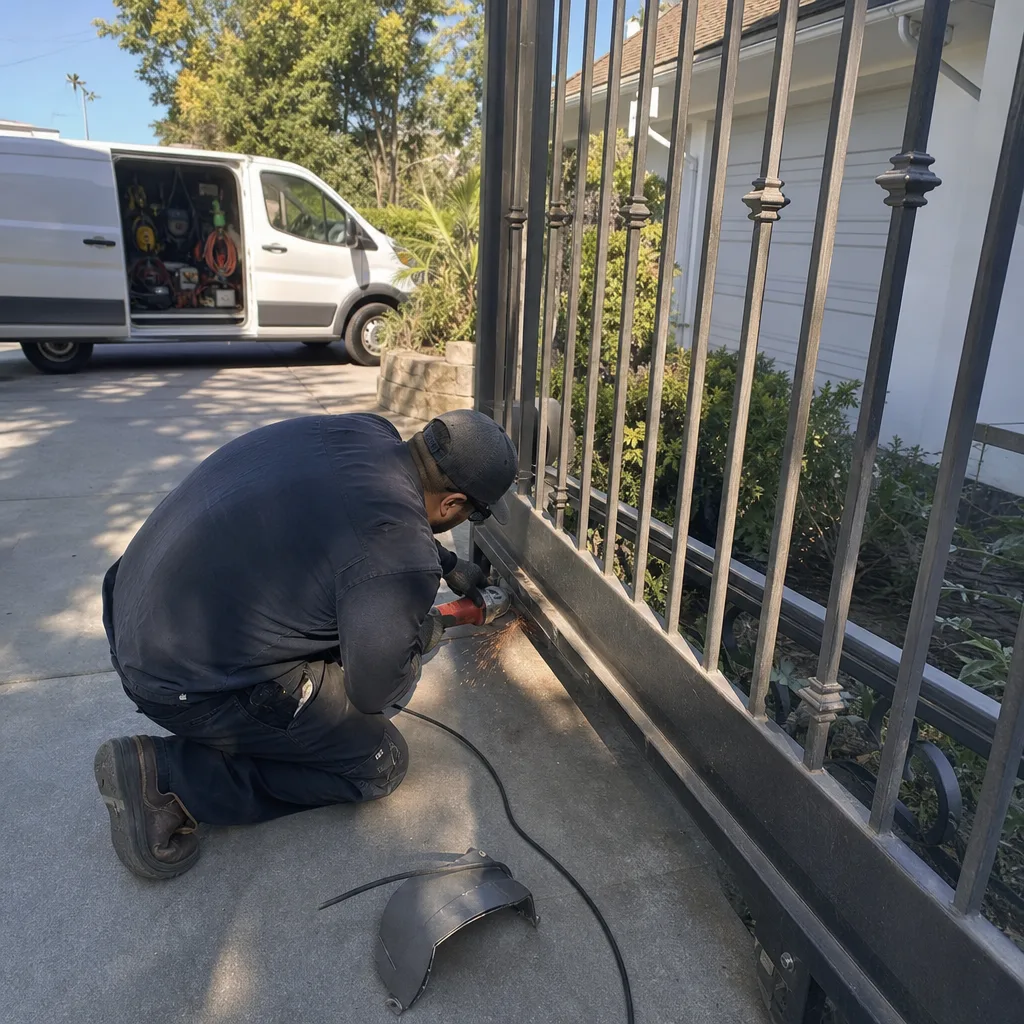
- The Three Authorities That Govern Your Gate Repair
- The San Mateo County Permit Threshold for Gate Operators
- UL 325 Entrapment Protection: What Inspectors Actually Measure
- When HOA Rules and City Codes Conflict
- The Documentation You Need After a Permitted Repair
- Unpermitted Gate Work and California Property Disclosure
- Common Mistakes to Avoid
- When to Call a Professional
- Frequently Asked Questions
 Before
 After
AfterThe Three Authorities That Govern Your Gate Repair
California gate repairs operate under a three-layer system that surprises most homeowners. The layers do not replace each other. They overlap, and compliance with one does not guarantee compliance with the others.
Layer 1: City or County Building Departments
Your local building department enforces the California Building Code and California Residential Code. For gate work, their primary concern is structural and electrical safety. They want to know that the gate frame can handle the operator’s torque, that the foundation or post footing meets wind-load requirements, and that any new electrical work is on a properly sized circuit.
In San Mateo, the city building department processes permits for gate operators when the installation involves new concrete, structural posts, or electrical service upgrades. The county handles unincorporated areas like parts of North Fair Oaks and the rural hills west of Highway 280. If you’re on the border between city and county jurisdiction, a contractor with local experience will know which office to call. We’ve filed permits in both and the requirements differ slightly. The county, for example, requires a site plan showing the gate’s distance from the property line; the city does not unless the gate faces a public sidewalk.
Layer 2: The National Electrical Code (NEC) and Local Amendments
California adopts the NEC with amendments through the California Electrical Code. For gate operators, the critical sections are Article 430 (motors) and Article 590 (temporary power). The NEC governs wire gauge, conduit type, GFCI protection, and disconnect location.
Here’s where it gets specific. A 120V residential gate operator on a dedicated 15-amp circuit typically requires 14 AWG copper wire. If your existing operator was installed with 18 AWG low-voltage wiring to a remote transformer, and the new operator needs a direct 120V feed, you’ve crossed into permit territory. The inspector will want to see the circuit breaker size, the wire gauge printed on the jacket, and the GFCI protection method. In San Mateo’s older neighborhoods like Baywood and San Mateo Park, we’ve found operators fed from garage receptacle circuits shared with power tools and refrigerators. That configuration fails current code and requires a new dedicated circuit with permit.
Layer 3: Homeowner Association Covenants, Conditions, and Restrictions (CC&Rs)
HOA CC&Rs are private contracts, not public law. But they carry enforcement power through fines and liens. Many San Mateo HOAs, particularly in the Hillsdale and Shoreview areas, require architectural review for any visible change to a front gate, including color, material, and operator housing finish. Some specify approved brands. We’ve encountered CC&Rs that prohibit visible solar panels on gate operators, requiring instead hardwired low-voltage systems or battery backups charged from the main house.
The key point: an HOA approval does not satisfy the building department, and a building permit does not satisfy the HOA. You need both, separately, when both apply.
The San Mateo County Permit Threshold for Gate Operators
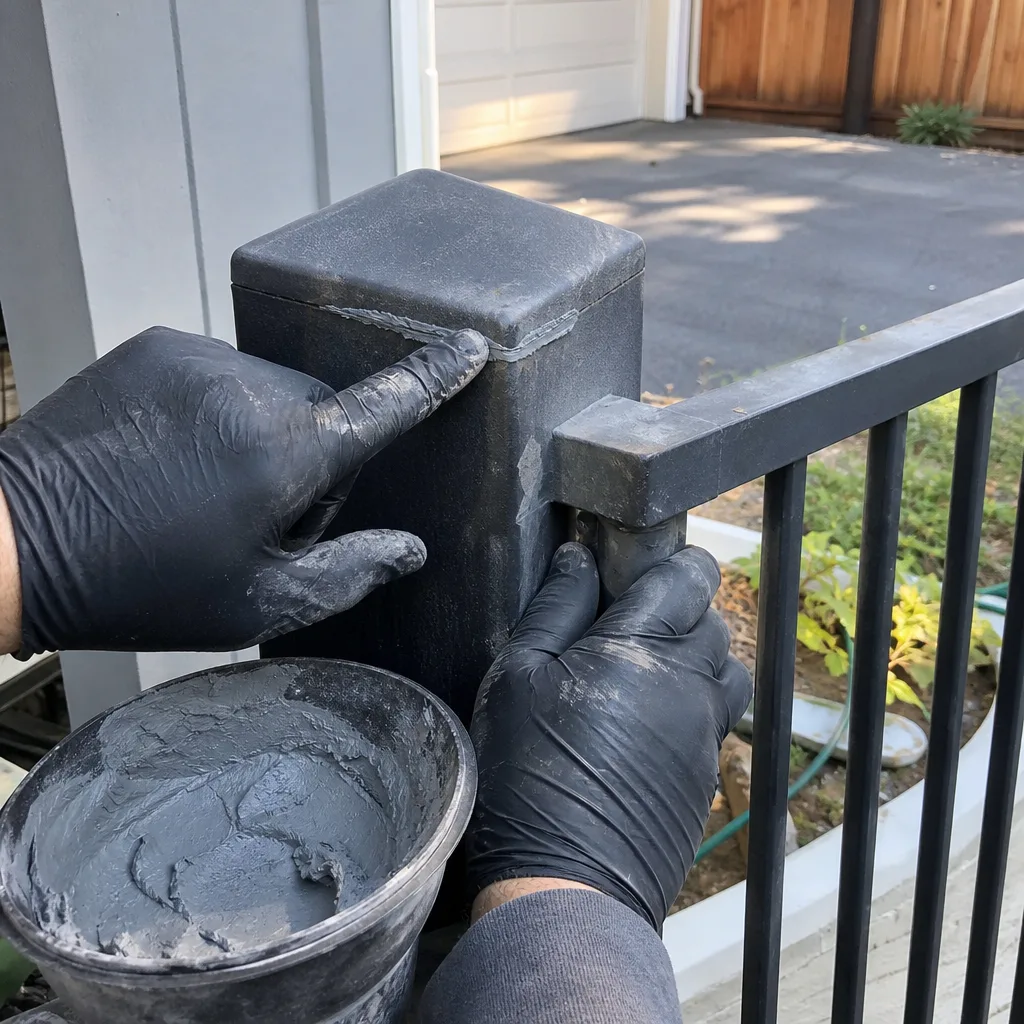
San Mateo County and its incorporated cities follow a consistent framework for determining when a gate operator replacement needs a permit. The framework is based on the “like-for-like” principle, but the definition is narrower than most homeowners expect.
No Permit Required:
- Replacing an operator with the same brand and model number, using the existing power supply and conduit
- Replacing a failed circuit board or control module inside the existing housing
- Adjusting limit switches, force settings, or photo-eye alignment
- Replacing a broken chain, belt, or arm on a swing gate without altering the mounting geometry
- Repairing or replacing damaged safety edges (contact strips) on the existing gate leaf
Building Permit Required:
- Installing an operator where none existed previously
- Changing from a swing gate to a sliding gate, or vice versa
- Increasing the gate width or weight beyond the original engineered specification
- Installing a new post or pillar to support a heavier operator
- Pouring new concrete footings or modifying existing ones
Electrical Permit Required (Separate from Building Permit):
- Running new conduit from the main panel to the operator location
- Installing a subpanel or junction box near the gate
- Upgrading from 120V to 240V service for a commercial-grade operator
- Adding a GFCI-protected receptacle in the operator housing for accessory power
- Any work that requires opening the main electrical panel beyond resetting a breaker
The specific threshold that trips most homeowners: voltage and amperage change. We recently replaced a 15-year-old FAAC 740 operator in the Hayward Park neighborhood with a newer FAAC 422. The homeowner assumed it was like-for-like. But the old unit ran on 120V at 2.5 amps; the new unit required 120V at 5.8 amps. The existing 14 AWG wire was technically sufficient, but the circuit was shared with landscape lighting. The inspector required a dedicated 20-amp circuit. That meant an electrical permit, a new conduit run, and a second inspection.
Under Haven Standard Clause 1, we identified this during the initial site visit, wrote the permit cost into the upfront price, and pulled the permit before any work started. The homeowner had no surprise and no red tag.
UL 325 Entrapment Protection: What Inspectors Actually Measure
UL 325 is the standard that governs gate, door, and louvre operator safety. California adopted it by reference in the California Electrical Code. When an inspector visits a residential gate installation, they are checking for compliance with specific, measurable criteria, not general “safety.”
What UL 325 Requires for Residential Vehicular Gates:
- Two independent entrapment-protection devices. A gate must have two methods to detect obstruction and reverse or stop motion. Common combinations: photo eyes plus safety edges, or photo eyes plus current-sensing motor overload. A single photo eye alone is insufficient.
- Photo-eye height and alignment. The inspector will measure the beam height, typically 4 to 6 inches above the driveway surface. They’ll check that the transmitter and receiver are aligned within the manufacturer’s tolerance, usually plus or minus 5 degrees. They’ll wave a test object through the beam while the gate is closing and verify reversal within 2 seconds.
- Safety edge activation force. For contact edges (rubber bump strips on the gate leaf), the inspector applies a calibrated test weight, typically 15 pounds of force. The gate must stop or reverse before the full weight is applied. We test this with a fish scale on every installation and photograph the reading.
- Control panel warning labels. The operator housing must display the UL 325 entrapment hazard warning in a specific format. Missing or faded labels are a code violation.
- Manual release accessibility. The manual release mechanism must be reachable without tools and must function when the power is off. The inspector will trip the breaker and test it.
In San Mateo, inspectors are particularly strict on photo-eye placement because of fog and marine layer conditions. A photo eye mounted too low collects condensation and false-triggers in the morning. We’ve seen inspectors reject installations where the beam path crosses a drainage channel that holds standing water, arguing that splash-up will degrade the sensor over time. In the Baywood-Aragon area, where morning fog is common from May through August, we typically mount photo eyes at 5 inches minimum and specify heated housings for Linear and Viking operators that support them.
The inspector will also check that the gate’s automatic close timer is set to no less than 5 seconds after the vehicle clears the loop detector. Faster closing creates an entrapment hazard. We document the timer setting in our photo record, under Haven Standard Clause 4.
When HOA Rules and City Codes Conflict
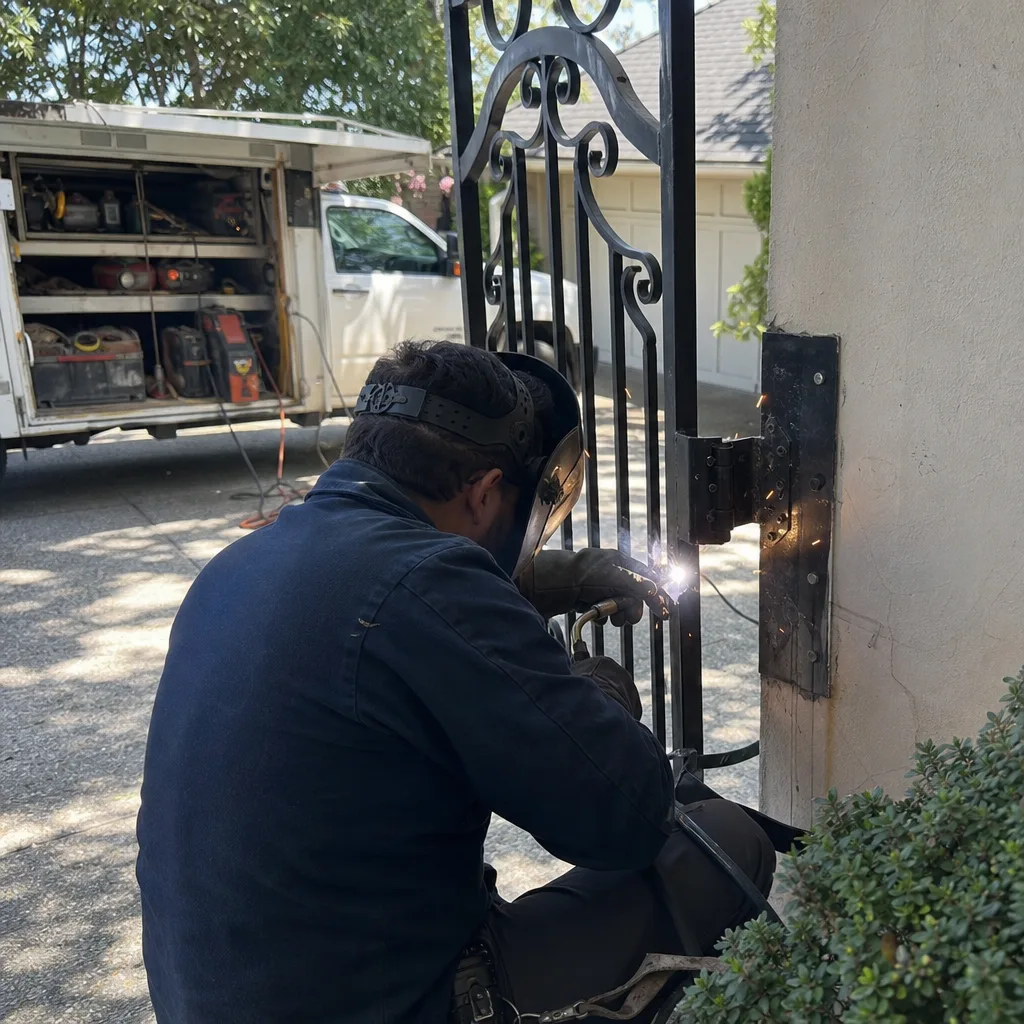
HOA CC&Rs and city codes sometimes impose incompatible requirements on the same gate. When they conflict, the general rule is: you must satisfy both, which may require creative design.
Common Conflicts in San Mateo:
- Gate height. San Mateo municipal code limits front-yard fences and gates to 42 inches in height within 20 feet of the front property line. Some HOAs in the Hillsdale area set lower limits, typically 36 inches, for aesthetic uniformity. The HOA limit is enforceable even when it’s stricter than the city code.
- Material and finish. We’ve encountered HOAs that require wood gates to match a specific stain color from an approved palette. The city doesn’t care about color, but if the HOA requires a solid wood panel that blocks the photo-eye beam path, the UL 325 compliance problem becomes the homeowner’s responsibility to solve.
- Operator housing visibility. Some HOAs prohibit visible operator housings, requiring burial or concealment within a masonry pillar. Underground operators from BFT and FAAC exist for this reason, but they require deeper footings and drainage that may trigger a building permit where an above-ground unit would not.
- Access control devices. HOAs sometimes restrict keypad or intercom placement. The city has no opinion on this unless the device requires new electrical work. But an HOA that requires a recessed pedestal may create a trip hazard that the building inspector flags under accessibility guidelines.
The precedence question: if an HOA requires something that violates city code, the city code wins. You cannot get a permit for a non-compliant installation. However, the HOA can still fine you for violating CC&Rs even if your installation is code-compliant. The practical solution is to design for both from the start. We bring HOA documents to our site visits when homeowners provide them, and we note potential conflicts in the written scope before any work begins.
In one San Mateo Park installation, the HOA required a wrought-iron gate with vertical pickets no more than 4 inches apart. The homeowner wanted an automatic sliding gate. The 4-inch picket spacing prevented mounting a standard photo-eye pair across the gate leaf. We specified a BFT subterranean operator with through-the-post photo eyes and a supplemental safety edge on the leading post. The permit required a structural engineer’s letter for the custom post footing. The HOA approved the aesthetic. Both were satisfied, but only because we identified the conflict before ordering materials.
The Documentation You Need After a Permitted Repair
A permitted gate repair generates paperwork that belongs in your permanent property file. Missing documentation creates problems at resale, during insurance claims, and for future service technicians who need to know what was installed and how.
The Seven Documents to Request and Keep:
- Final permit card with inspection sign-offs. This is the green tag or digital equivalent showing that all required inspections passed. In San Mateo, the city issues this through the online permit portal. Print it or save the PDF.
- Certificate of completion from the contractor. This should reference the permit number, the scope of work, and the date of final inspection.
- Manufacturer’s installation manual for the specific operator model. Not the generic brand manual. The model-specific document with the serial number recorded.
- Wiring diagram showing the actual as-built configuration. This is where commercial documentation habit pays off. We leave a laminated wiring diagram in the operator housing and email a PDF copy. Future technicians can trace circuits without disassembling the enclosure.
- Photo record of the installation. Under Haven Standard Clause 4, we photograph the footing depth with a tape measure, the conduit run, the panel interior with wire gauges visible, the photo-eye alignment with a level, and the safety edge test. Homeowners receive these photos via email within 24 hours.
- UL 325 compliance checklist signed by the installer. This documents that all required entrapment-protection devices were installed, tested, and functioning at the time of completion.
- Warranty and service records. Including the 365-Day Done Right Promise from Vance Gate Repair San Mateo, plus any manufacturer warranty registration.
Why this matters at resale: California’s Transfer Disclosure Statement (TDS) and Seller Property Questionnaire (SPQ) ask whether any structural or electrical work was done without permits. If you answer “don’t know” because you have no records, buyers’ agents will assume the worst. If you have the final permit card and completion certificate, you answer “no” with confidence. If the work was unpermitted, you must disclose it, and the buyer may demand a retroactive permit, a price reduction, or escrow holdback.
We’ve been called to San Mateo homes where the previous owner installed a gate operator in 2019 with no permit and no documentation. The current owner wants to sell. The buyer’s inspector notes the subpanel near the gate with no visible permit history. The simplest path forward is often a electrical inspector visit, which may require opening walls or trenching to verify conduit depth. That costs more than the original installation. Keeping records prevents this.
Unpermitted Gate Work and California Property Disclosure
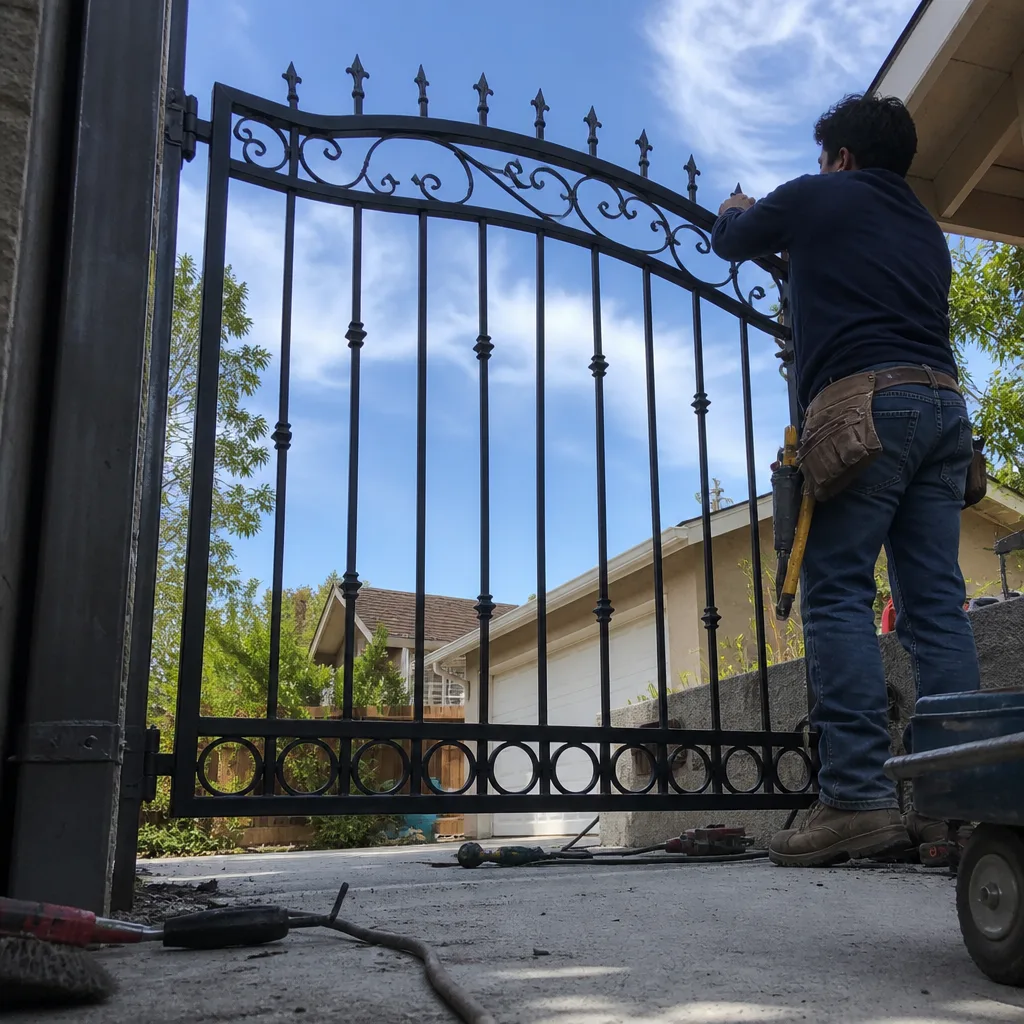
“Unpermitted work” on a California property disclosure is not a minor checkbox. It triggers a chain of consequences that can delay or derail a sale, and gate work is increasingly flagged because operators are visible, audible, and obviously electrical.
What the Disclosure Actually Requires:
The California Residential Purchase Agreement includes a standard request for permits and plans for “alterations, modifications, or additions.” The TDS asks specifically: “Have any structures or other features of the property been altered, modified, or added without required permits?” A gate operator installed on new concrete with new electrical service is an addition. Answering inaccurately exposes the seller to fraud claims.
The Financial Exposure:
- Retroactive permit costs. San Mateo charges permit fees based on project valuation, with a minimum for residential electrical work. The permit itself may be $200-$400. But the inspector may require bringing the entire installation to current code, not the code in force when it was built. If the 2019 installation used NM cable in conduit where current code requires THHN, the rewiring cost falls on the current owner.
- Escrow holdbacks. Buyers commonly demand $5,000-$15,000 held in escrow until permit clearance, regardless of the actual cost to clear.
- Insurance denial. If an unpermitted gate operator causes a fire or injury, the insurer may deny coverage based on the unpermitted electrical work exclusion in many California homeowner policies.
- Title complications. Some title insurers will not issue a clean policy if unpermitted structural work is disclosed, requiring an endorsement that increases closing costs.
The specific risk for gate work: it’s easy to spot. A home inspector walking the exterior sees the operator housing, the conduit run, the keypad. They check permit history. If nothing appears in city records for the address, they flag it. We’ve received calls from real estate agents in San Mateo asking us to “certify” a 5-year-old installation that has no permit and no documentation. We can’t. We can inspect it, document current conditions, and quote the cost to bring it to code, but we cannot backdate compliance.
The protection is simple: get the permit before the work starts, keep the final card, and keep the contractor’s documentation. Under Haven Standard Clause 4, every our Gate Repair services job includes a permit status note in the written record. If a permit was required, the number is recorded. If no permit was required, the reason is stated, so there’s no ambiguity years later.
Common Mistakes to Avoid
- Assuming “repair” means “no permit.” In San Mateo, replacing a failed operator with a different brand or model often crosses the line from repair to alteration, especially if the electrical requirements change. Always verify before work starts.
- Letting the contractor pull a permit in their name only. The permit should list the property owner as the responsible party, with the contractor as the authorized agent. If the contractor disappears, a permit in their name alone creates title complications.
- Ignoring HOA architectural review until after installation. We’ve seen homeowners pay for permitted, code-compliant installations that the HOA then orders removed or modified at the homeowner’s expense. Submit HOA applications before the permit, not after.
- Accepting verbal assurance that a permit “isn’t needed.” If the contractor won’t put the permit determination in writing, that’s a red flag. Under Haven Standard Clause 1, we state the permit status in every written scope.
- Discarding documentation after the warranty expires. Permit records matter at resale, which may be decades later. Keep digital and physical copies permanently.
- Installing battery backup systems without checking fire code. California requires battery backup on new gate operators, but the battery type and enclosure must meet fire safety standards. Lithium-ion batteries in unventilated housings have been red-tagged in San Mateo inspections.
- Assuming a “grandfathered” installation needs no updates. If you modify any part of an existing system, the inspector may require bringing the entire installation to current UL 325 standards, not just the new component.
When to Call a Professional
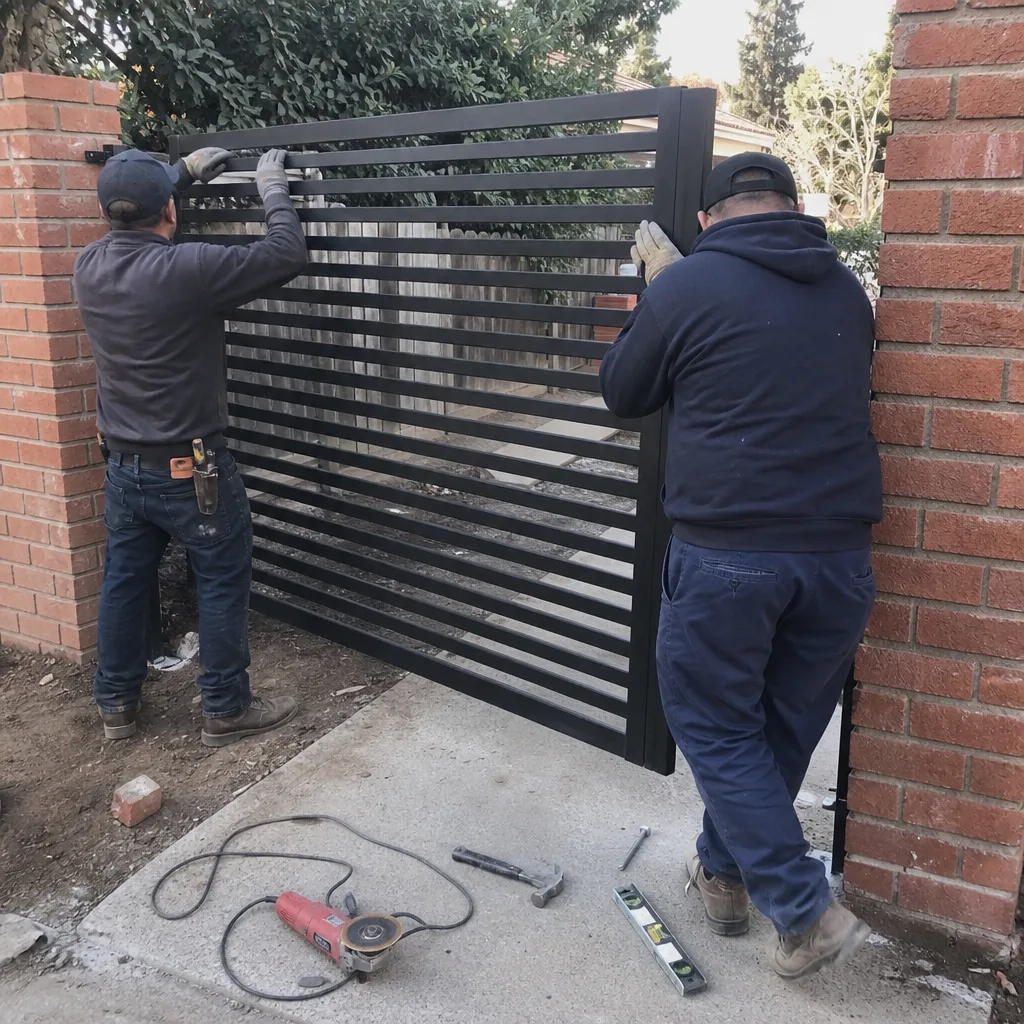
Call a licensed gate contractor when your repair involves electrical supply, structural posts, or any component that affects entrapment protection. Call before you call the permit office, because a contractor who knows San Mateo’s inspectors can tell you whether your specific job needs a permit, which type, and what the inspection will cover. Read our How to Hire a Gate Repair Contractor in San Mateo: A Step-by-Step Guide to vet your options.
At Vance Gate Repair San Mateo home, we handle permit determination on every site visit. If a permit is required, we pull it, schedule inspections, and include the cost in the upfront written price. No surprise fees, no red tags, no disclosure problems at resale. We offer free estimates in San Mateo. Call (650) 293-9440.
Frequently Asked Questions
You need a permit only if the new motor requires different electrical supply, voltage, or amperage than the old one. A direct brand-and-model replacement using existing wiring and conduit typically does not require a permit. Call (650) 293-9440 and we’ll tell you definitively after a brief site visit, estimates are free.
The inspector issues a correction notice listing specific deficiencies. You have a limited time, typically 30 days in San Mateo, to correct and request re-inspection. Common failures include misaligned photo eyes, missing warning labels, and safety edges that don’t activate within force limits. We correct these and schedule the re-inspection at no additional labor charge under our 365-Day Done Right Promise.
An HOA cannot prohibit automatic gates outright if the gate is on your private property and meets city code. But an HOA can restrict dimensions, materials, colors, and visible equipment. Some San Mateo HOAs require underground operators for aesthetic reasons, which affects your cost and permit requirements. Review your CC&Rs before applying for a city permit.
Most residential swing-gate operator replacements, including permit and inspection fees, run between $1,800 and $3,400 depending on brand, electrical requirements, and whether new conduit is needed. Sliding gate operators typically range higher due to track and roller requirements. We provide a written, itemized price before any work starts under Haven Standard Clause 1.
Keep the final permit card, the contractor’s completion certificate, the manufacturer’s installation manual, an as-built wiring diagram, and photographic evidence of the installation. These documents protect you at resale and help future technicians service the equipment correctly. Every Vance Gate Repair San Mateo job includes a documented photo record under Haven Standard Clause 4.
Contact the building department for your city or, in unincorporated San Mateo County, the county planning and building department. Provide your address and ask for permit history. In San Mateo, many records from 2000 onward are searchable online. If no permit appears and you believe work was done, request a physical records search. If the work was truly unpermitted, disclose it when selling and consider a retroactive permit to clear the issue.
The Bottom Line
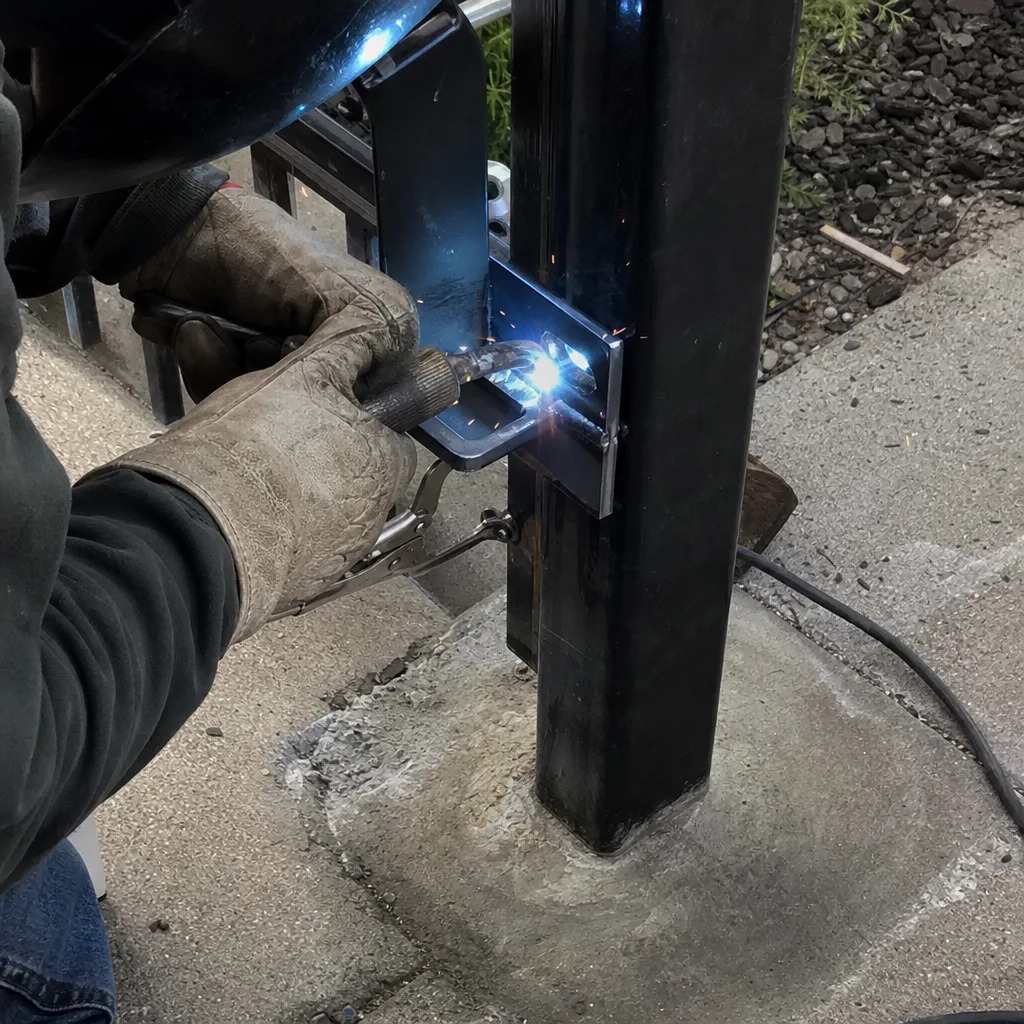
California gate permit requirements split across city building departments, the NEC, and HOA CC&Rs, and the rules that apply to your repair depend on electrical specifics, not cost. In San Mateo, a like-for-like operator swap on existing wiring usually needs no permit. Any change to voltage, amperage, or conduit triggers separate electrical and possibly building permits. UL 325 compliance is mandatory and inspectable. HOA approval runs parallel to city permitting and may impose stricter limits. Keep all documentation permanently, unpermitted work creates real financial exposure at resale, and the cheapest time to get compliance right is before the work starts.
Written by Adrian Vance, Owner at Vance Gate Repair San Mateo, serving San Mateo since 2014.