
Last updated September 22, 2026
Free on-site gate assessment - hinges, posts, and your LiftMaster or Nice gate operator checked before anything is quoted
The assessment is free and the quote is the invoice.
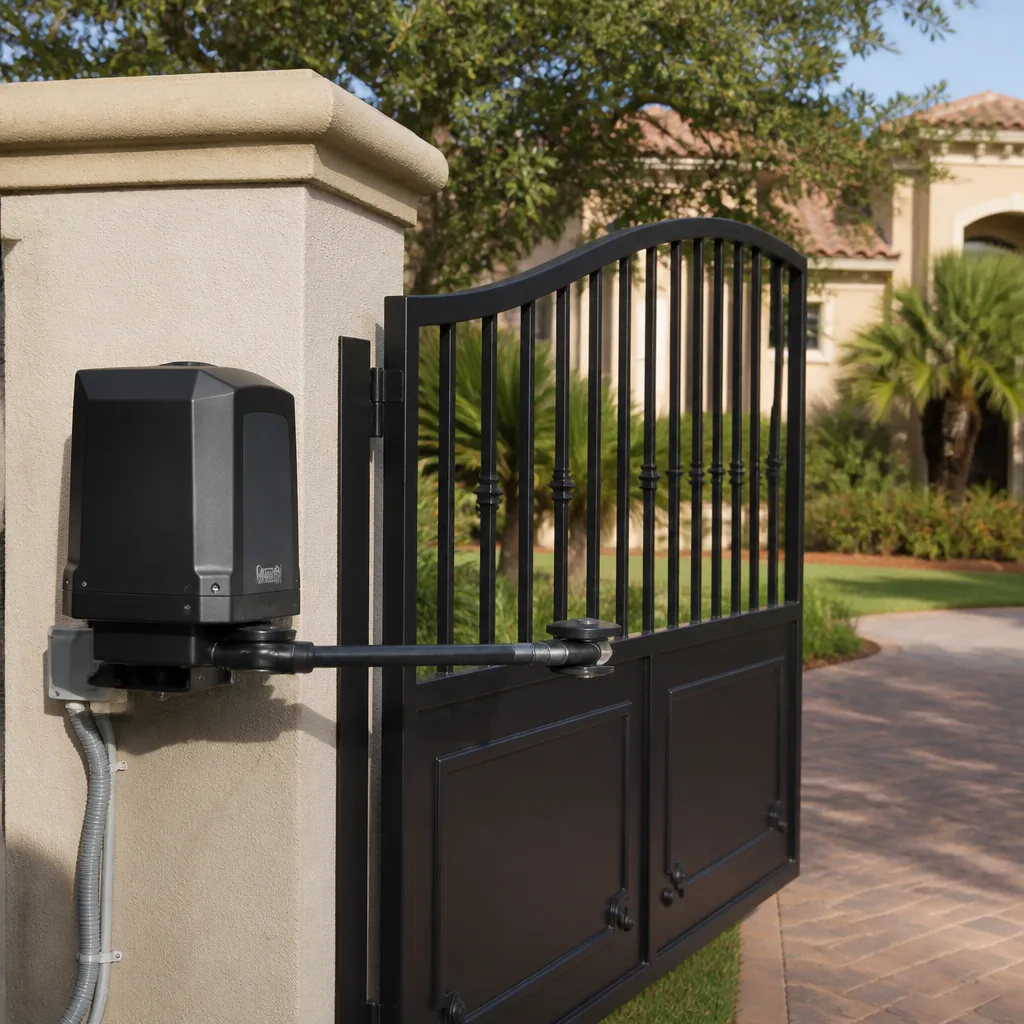
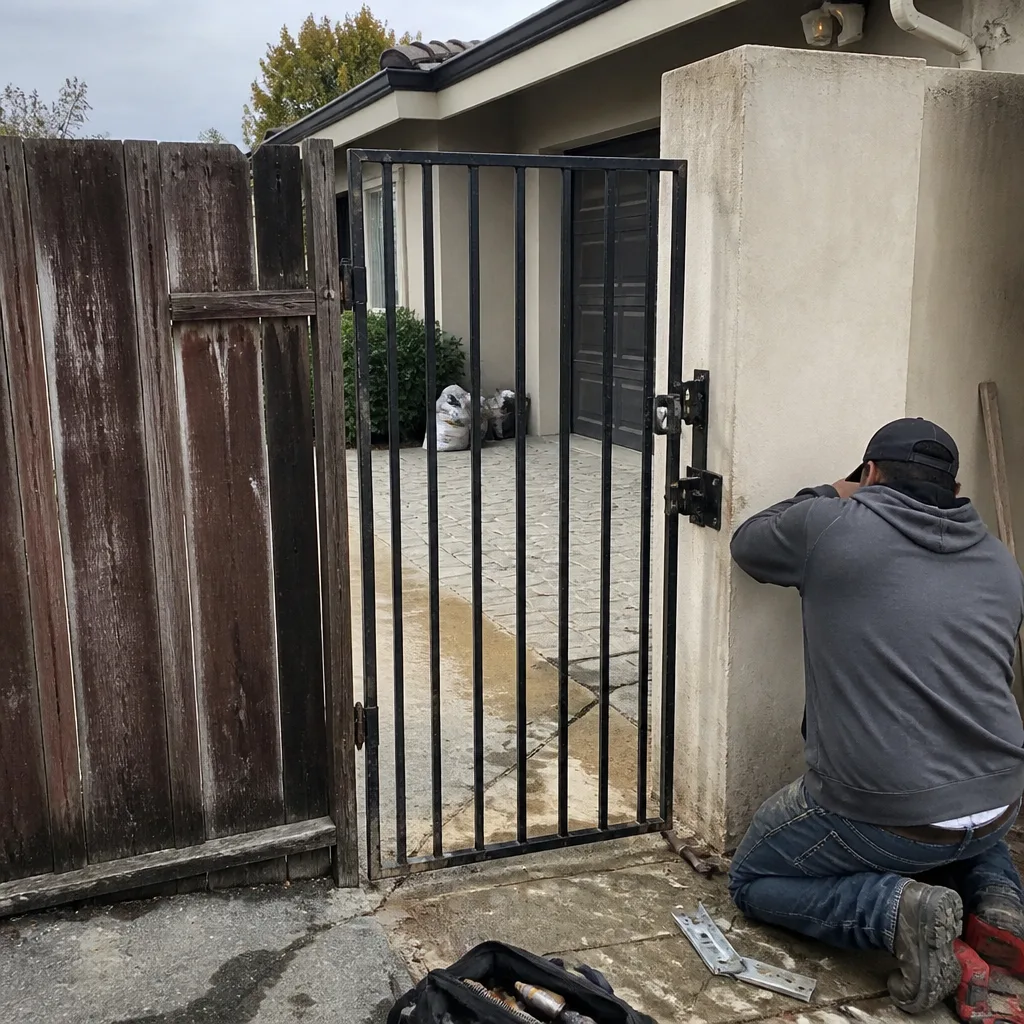 Before
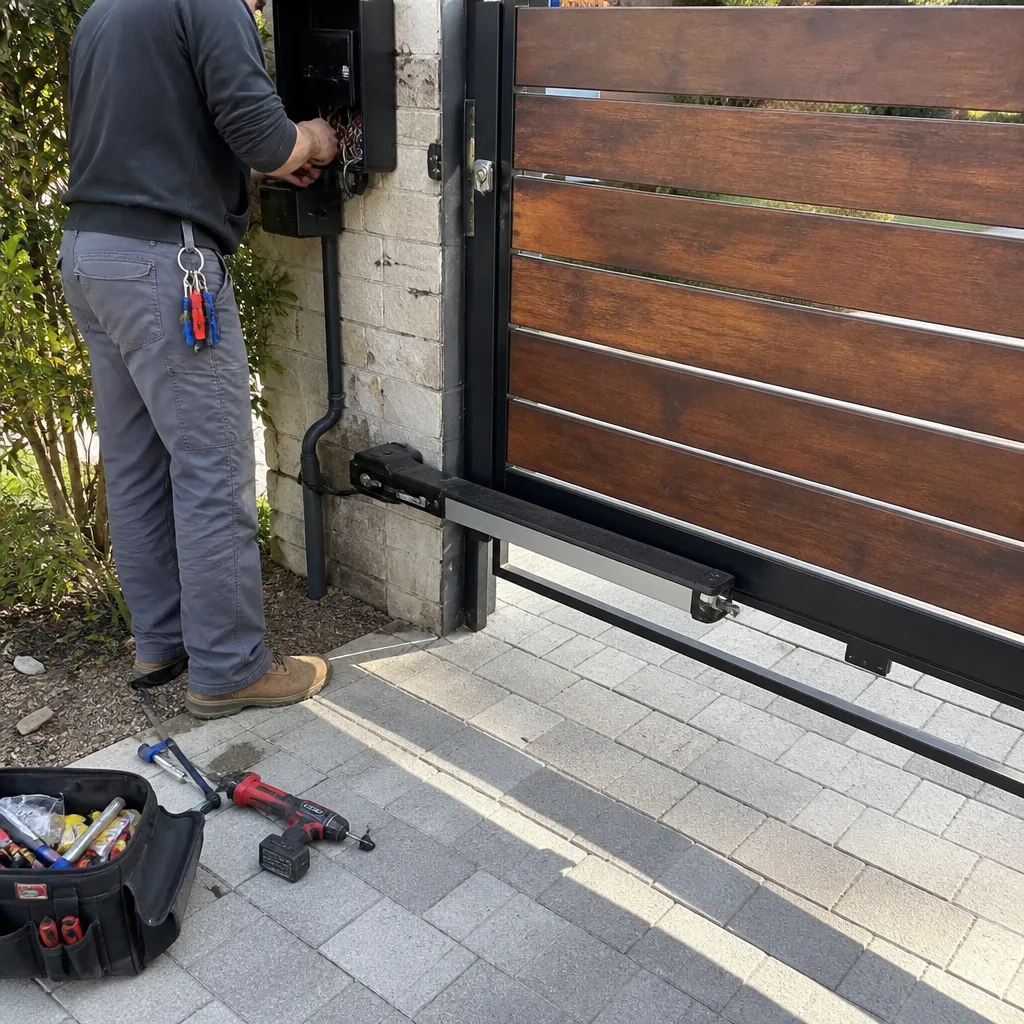 After
After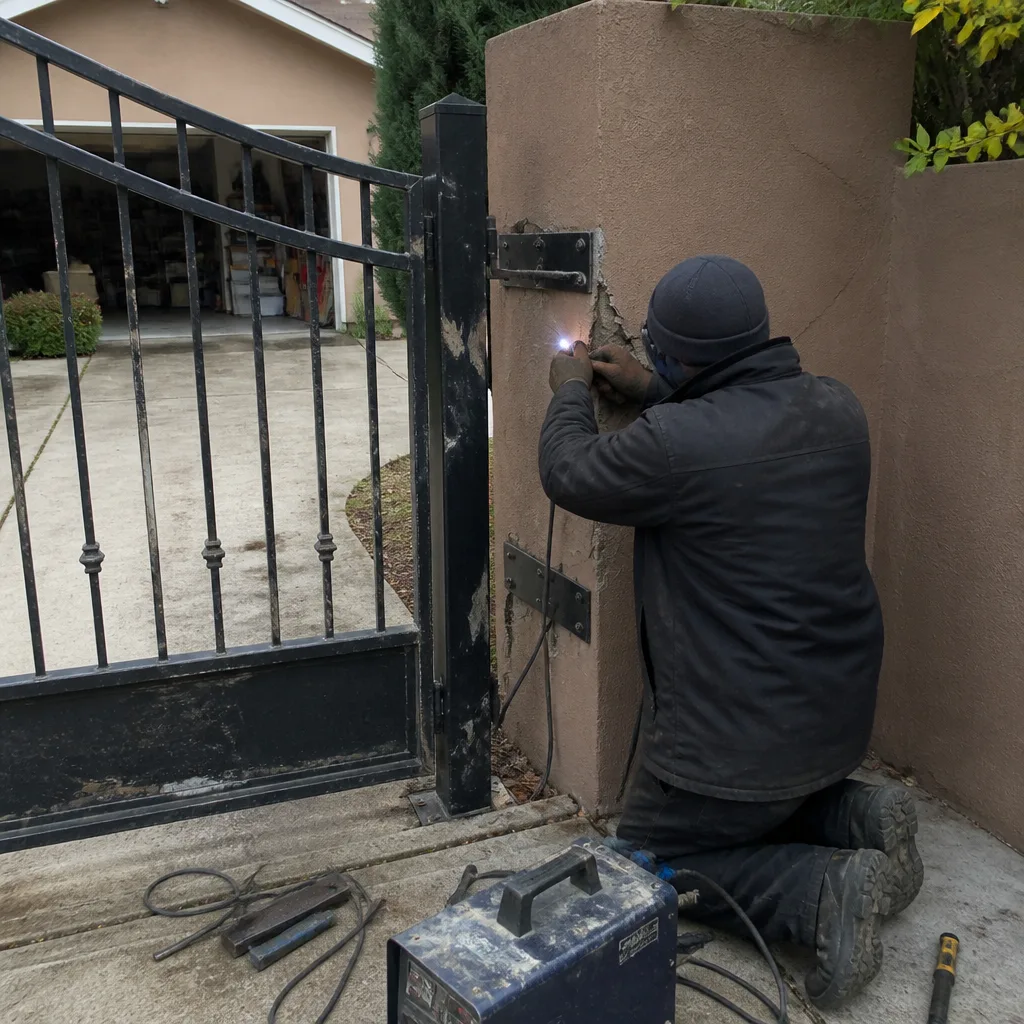 Before
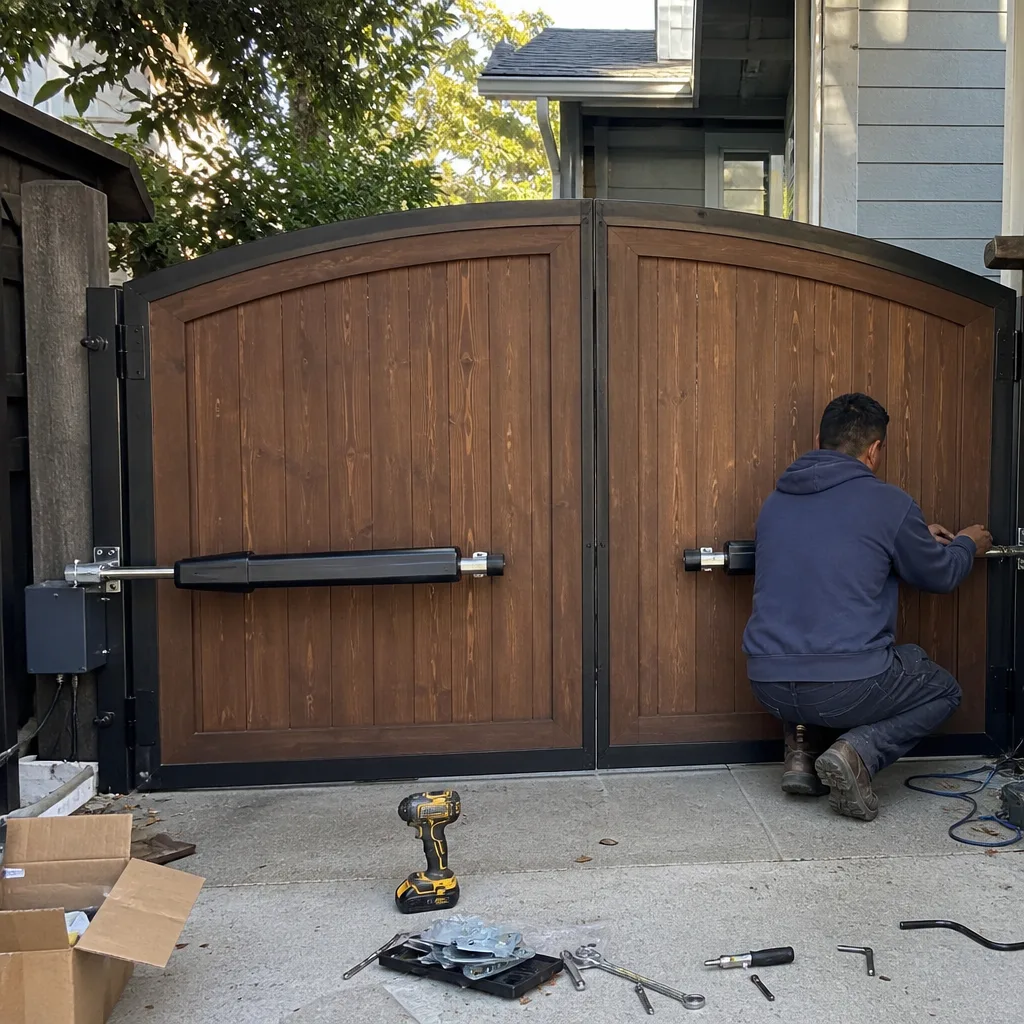 After
After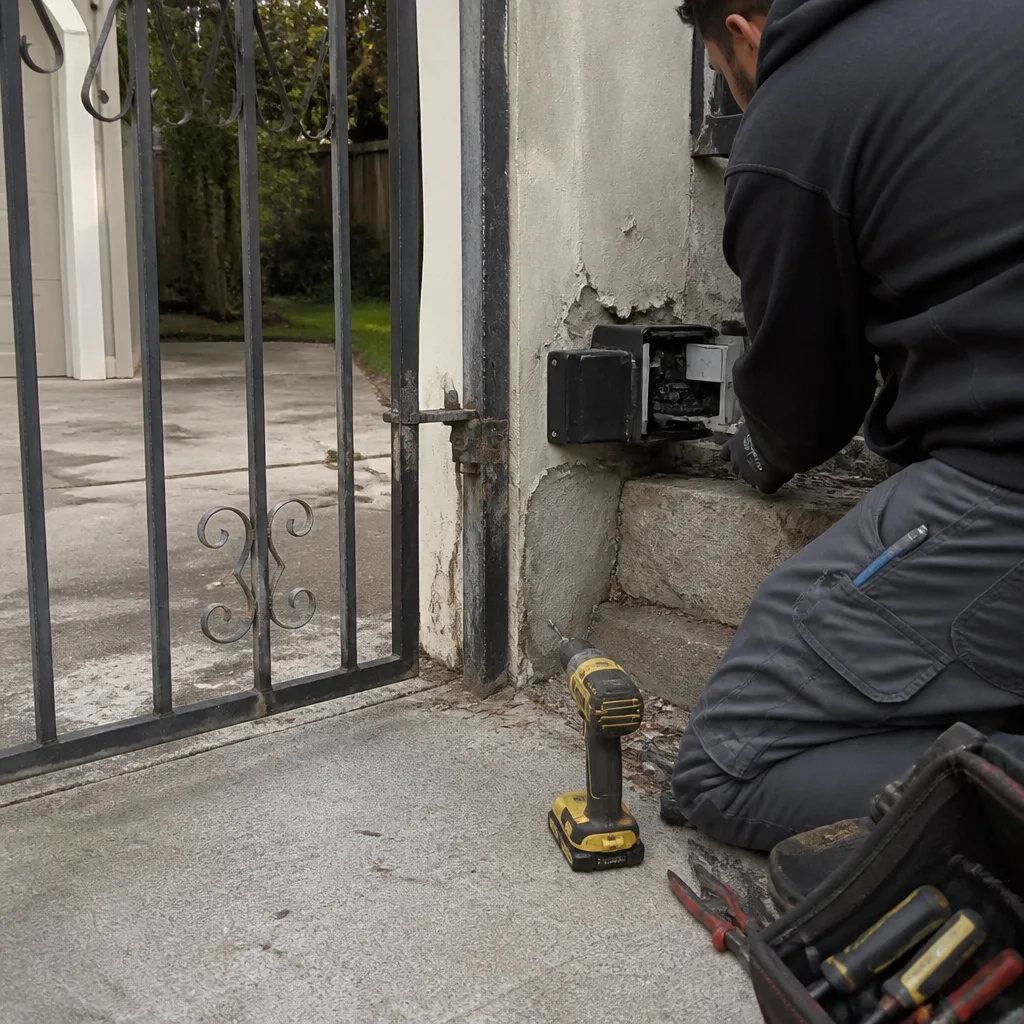 Before
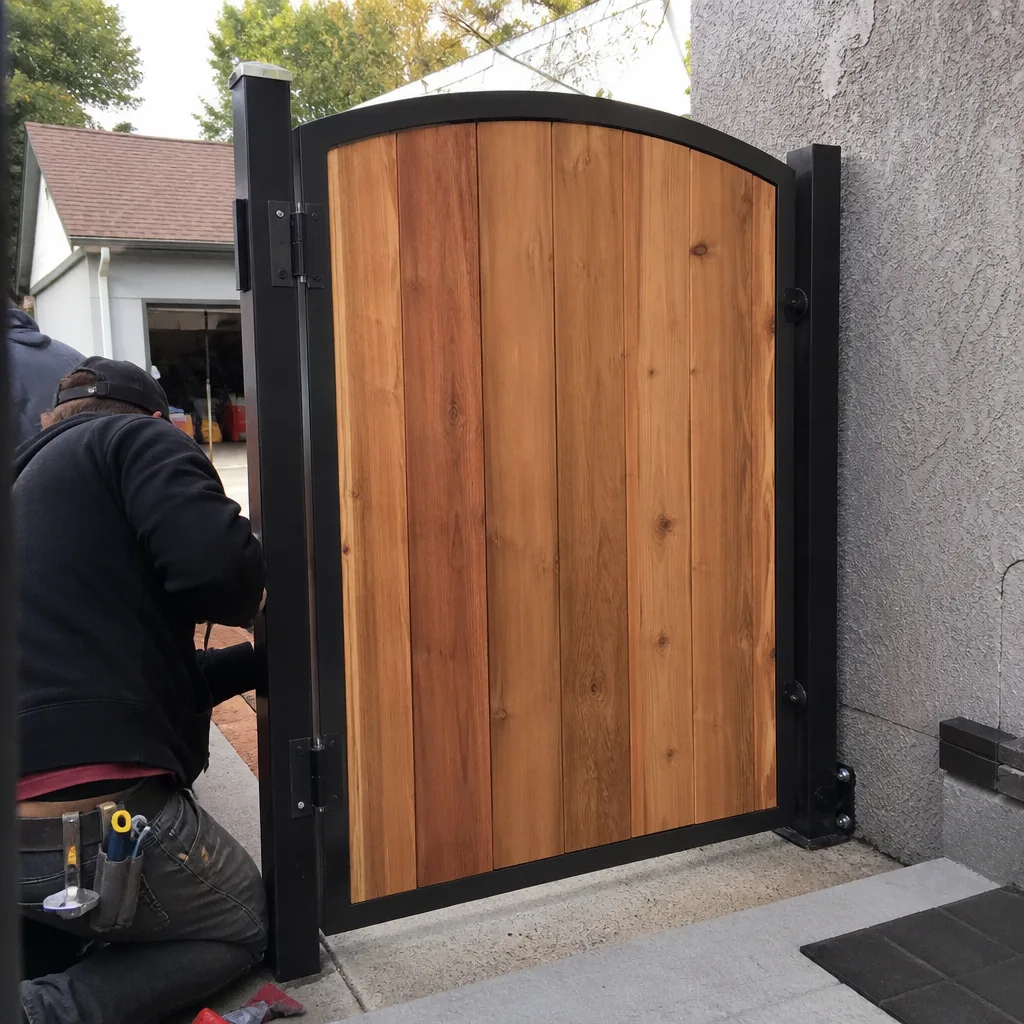 After
AfterGate Repair Warning Signs: A San Mateo Homeowner’s Reference Guide
A gate that reverses mid-travel before closing fully is showing you one of four distinct problems, and three of them cost under $150 to fix. The fourth costs $800 or more. The observable symptom looks identical in all four cases. In San Mateo, where hillside properties in neighborhoods like Baywood and Hayward Park put extra load on swing-gate operators, and where the wet season from November through April accelerates corrosion on coastal-facing hardware, knowing which warning sign maps to which repair cost can save you from replacing a $900 operator when a $45 limit-switch adjustment would have solved it. This guide maps every common symptom to its most likely failure component, gives you San Mateo-specific context for seasonal patterns, and shows you how to document what you’re seeing so your Gate Repair services technician’s quote reflects your actual problem.
Quick Answer
Most gate problems in San Mateo announce themselves through four observable behaviors: reversing before latching, grinding or squealing during travel, drifting out of position when stopped, and failing to respond to remote or keypad commands. Reversing usually indicates a safety-sensor or limit-switch issue ($45-$180), grinding points to mechanical wear in hinges or rollers ($120-$340), drifting suggests a failing operator brake or worn rack ($280-$650), and total non-response often traces to a transformer, circuit board, or wiring fault ($180-$520). The key is matching the symptom to the component before the component fails completely and damages adjacent parts.
Table of Contents
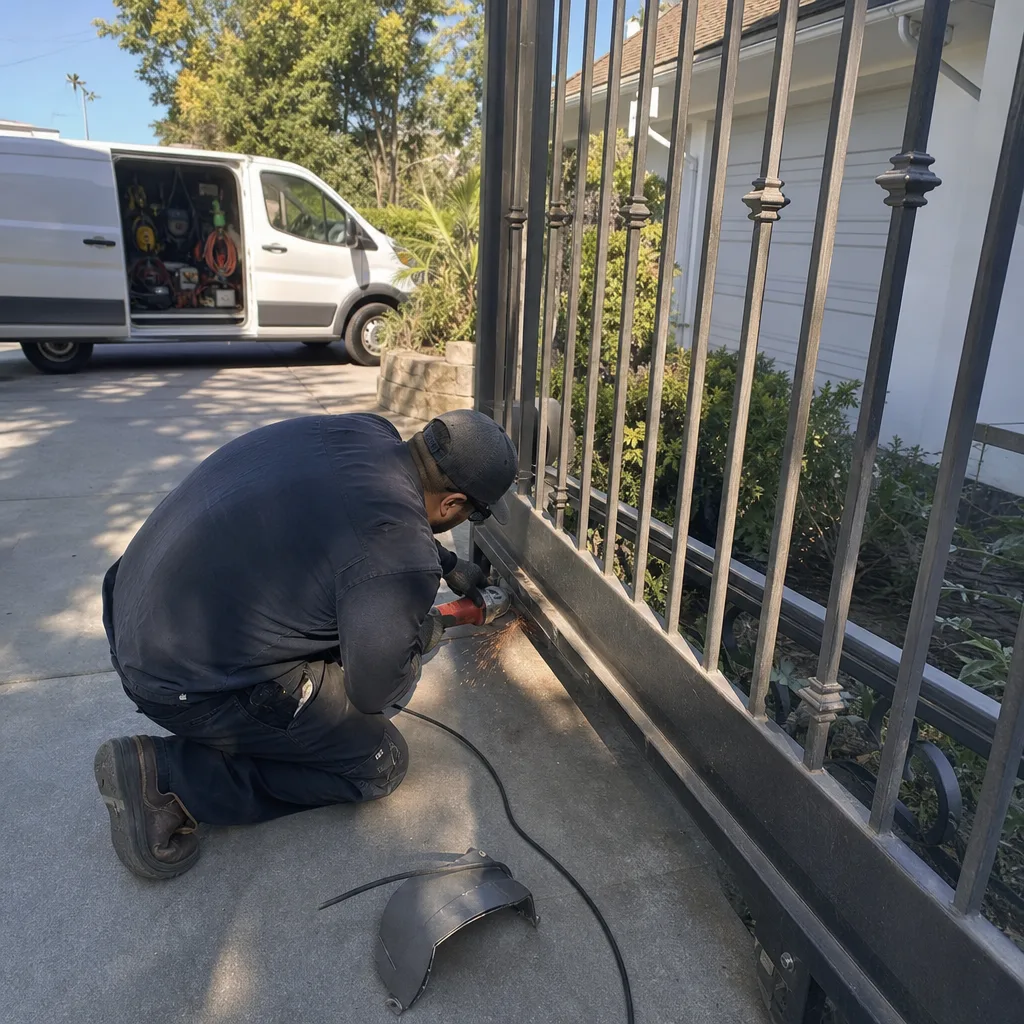
- The Symptom-to-Component Map: What Each Warning Sign Actually Means
- Operator Failure vs. Wiring Failure: A Homeowner Diagnostic
- The Three Sounds Your Gate Makes 30 Days Before Operator Failure
- San Mateo Wet-Season Warning Signs: Rust, Debris, and Limit-Switch Drift
- How to Document Warning Signs for an Accurate Quote
- Repair Cost Ranges by Symptom in the San Mateo Market
- Common Mistakes to Avoid
- When to Call a Professional
- Frequently Asked Questions
 Before
 After
AfterThe Symptom-to-Component Map: What Each Warning Sign Actually Means
Most warning-sign guides stop at “your gate is making noise, call a professional.” For more guides & resources that actually help you prioritize and budget, keep reading. Here’s what we’ve mapped from 22,000+ gate repairs since 2014: each observable behavior correlates to a specific component family, and the component family determines your repair range.
Reversing Before Full Close
When a gate starts its close cycle, travels partway, then reverses direction, the motor’s control board thinks it has encountered an obstruction. Four components can trigger this false positive:
- Photo-eye misalignment ($45-$95): The infrared beam across the gate opening is interrupted by vibration, leaf debris, or slight post shift. On hillside properties in San Mateo’s western neighborhoods, seasonal ground movement after rain often knocks photo-eyes out of parallel by just a few millimeters, enough to break the beam intermittently.
- Limit switch drift ($65-$140): The magnetic or mechanical switch that tells the operator “the gate is fully closed” has shifted position. The operator thinks it hasn’t reached the limit, keeps driving, then hits the obstruction-sensing current threshold and reverses. Common on Gate Motor & Opener in San Mateo units that have run without maintenance through multiple wet seasons.
- Obstruction sensitivity set too high ($45-$85 service call): The control board’s force-limit setting has been nudged upward, often by a previous technician or homeowner, until normal travel friction reads as obstruction. A five-minute adjustment with the programmer.
- Mechanical binding in the gate itself ($180-$420): Hinge corrosion, track debris, or a bent roller creates enough drag that the operator’s current sensor interprets it as an obstruction. This is the $800 scenario if ignored, because the operator strains against the binding until the motor or gearbox fails.
The critical distinction: if the gate reverses at the same point every time, suspect limit switch or mechanical binding. If it reverses at random points, suspect photo-eye or sensitivity setting.
Grinding, Squealing, or Rattling During Travel
Sound location matters. Grinding at the motor housing suggests gearbox wear, typically $340-$680 for operator rebuild or replacement. Squealing at the hinge or roller points to lack of lubrication or bearing failure, $85-$220. A metallic rattle that syncs with wheel rotation usually means a cracked v-groove wheel or loose track bracket, $120-$280.
In San Mateo’s coastal microclimates, particularly properties west of El Camino Real, salt air accelerates hinge-pin corrosion even on inland-facing gates. We’ve replaced hinge pins on 8-year-old gates in Baywood that looked 20 years old by inland standards.
Drifting or Creeping When Stopped
A gate that slowly opens or closes after the motor has stopped has lost its holding brake. In rack-and-pinion slide gates, this means the operator’s internal brake has worn or the rack teeth are too worn to hold position against gravity or wind load. In swing-gate operators, the gearbox brake or the mechanical stop has failed. Repair ranges from $180 for a brake adjustment to $650 for operator replacement on heavier gates.
No Response to Any Input
Total non-response separates into power-side and signal-side failures. Check the transformer first: 24V AC at the operator terminals? No voltage means a failed transformer ($140-$220) or a tripped GFI circuit. Voltage present but no movement means control board, receiver, or wiring fault ($180-$520).
Operator Failure vs. Wiring Failure: A Homeowner Diagnostic
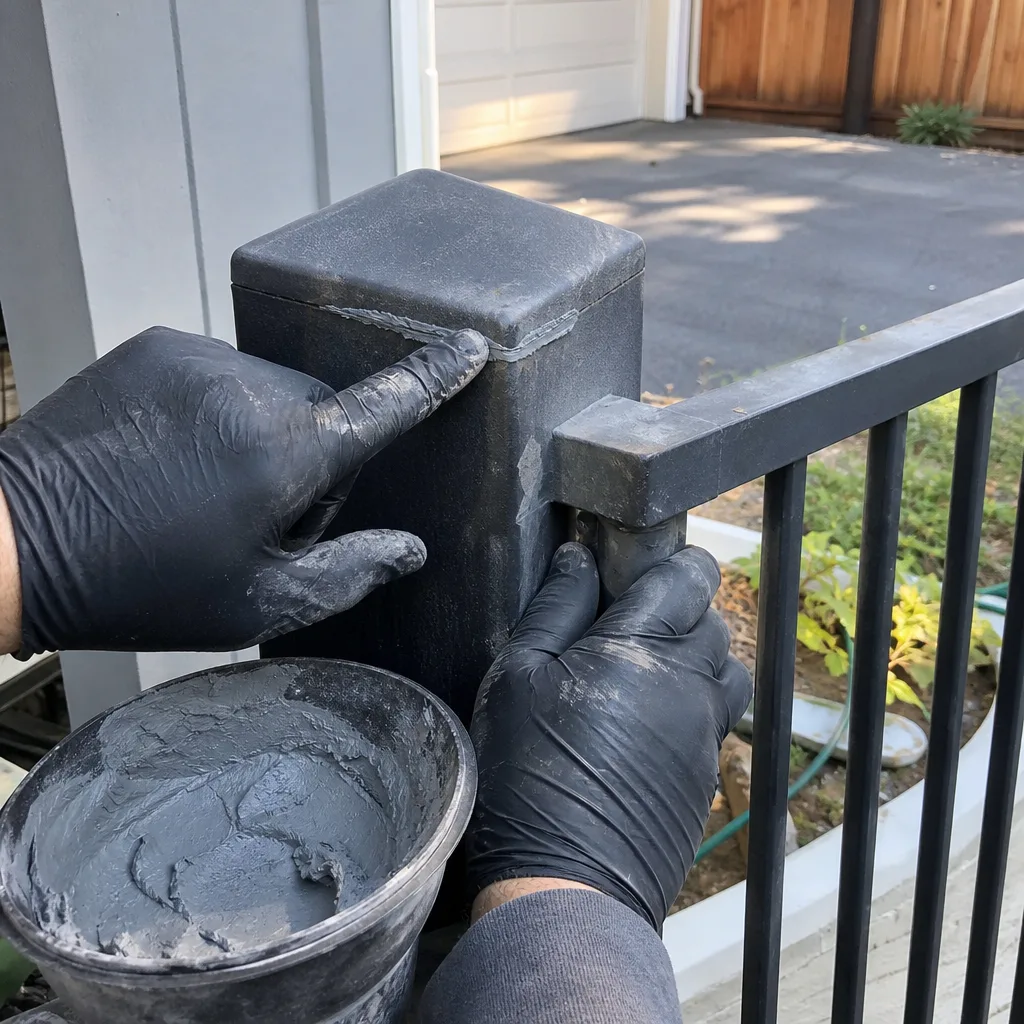
You don’t need to be an electrician to narrow the field. You need a $15 multimeter and the manual override procedure for your operator. Here’s the sequence we teach San Mateo homeowners who want to document before calling.
Step 1: Test Manual Override
Every gate operator has a manual release, usually a key switch or lever on the motor housing. Disengage the motor and move the gate by hand. If it moves freely through full travel, the mechanical system is sound and the problem is electrical. If it binds or requires excessive force, you have a mechanical issue that will eventually destroy the operator.
Step 2: Check for Power at the Operator
Set your multimeter to AC volts. Test across the operator’s power input terminals (usually labeled L1 and L2, or HOT and NEUTRAL). You should read 110-120V. If you have no voltage, the problem is upstream: breaker, GFI, underground conduit, or transformer. If you have voltage but the operator doesn’t respond to any input, the problem is inside the operator or its low-voltage control circuit.
Step 3: Differentiate Operator from Control Board
Most operators have a local test button or open/close switch on the control housing. Press it. If the motor runs from the local button but not from remote or keypad, the operator motor and gearbox are sound; the problem is in the control board, receiver, or wiring between receiver and board. If the local button also produces no response, the control board or motor has failed.
Here’s where documentation matters. A technician who arrives to “gate doesn’t work” has to run this same sequence and charge you for the diagnostic time. A technician who arrives to “operator has power, local button runs motor, remote and keypad dead” knows to bring a replacement receiver and can quote the repair before opening the control box.
We’ve documented this diagnostic on hundreds of Gate Repair in San Mateo calls. Under The Haven Standard, we photograph your multimeter readings if you’ve taken them, or we take our own and add them to your job record so the next technician, whether it’s us or someone else years later, sees exactly what was found.
The Three Sounds Your Gate Makes 30 Days Before Operator Failure
Most homeowners normalize gradual changes. The gate has “always been a little noisy.” Except it hasn’t. Here are three specific sounds that precede operator failure, with what each one indicates and what it costs if you catch it versus what it costs if you wait.
Sound 1: The “Coffee Grinder” Start
A brief grinding noise, one to two seconds, at motor startup. The motor is drawing high current to overcome static friction in a dry or corroded gearbox. The start capacitor is doing extra work. Caught early: $85 for lubrication service and capacitor test. Ignored: the capacitor fails, taking the motor winding with it, and you’re at $520-$840 for operator replacement.
We hear this most often on Ghost Controls and Mighty Mule operators in San Mateo’s older neighborhoods, where original equipment has run 10-12 years without service. Linear and Viking operators tend to fail more quietly, which makes them harder to catch early.
Sound 2: The “Squeal That Stops When Warm”
A high-pitched squeal during the first few cycles of the day that diminishes after the gate has run several times. This is the gearbox grease breaking down. Cold mornings in San Mateo’s December-through-February season make it more pronounced. Caught early: $120 for gearbox service and grease replacement. Ignored: metal-on-metal wear destroys the worm gear, requiring complete operator replacement at $680-$920.
Sound 3: The “Click, Then Nothing”
The control board relays click audibly, but the motor doesn’t turn. The board is sending the signal; the motor or capacitor isn’t responding. This is the final warning. Next cycle, the relay may weld closed and the motor may run continuously until thermal cutoff, or the motor may seize completely. Caught at the click: $180-$280 for motor or capacitor replacement. Ignored: $680-$920 for operator replacement, plus possible gate damage if the motor ran away.
Document the sound. Record it on your phone, note the date, time, and temperature. When you call, play the recording. A technician who hears the sound knows which component to bring and can quote closer to final cost before dispatch.
San Mateo Wet-Season Warning Signs: Rust, Debris, and Limit-Switch Drift
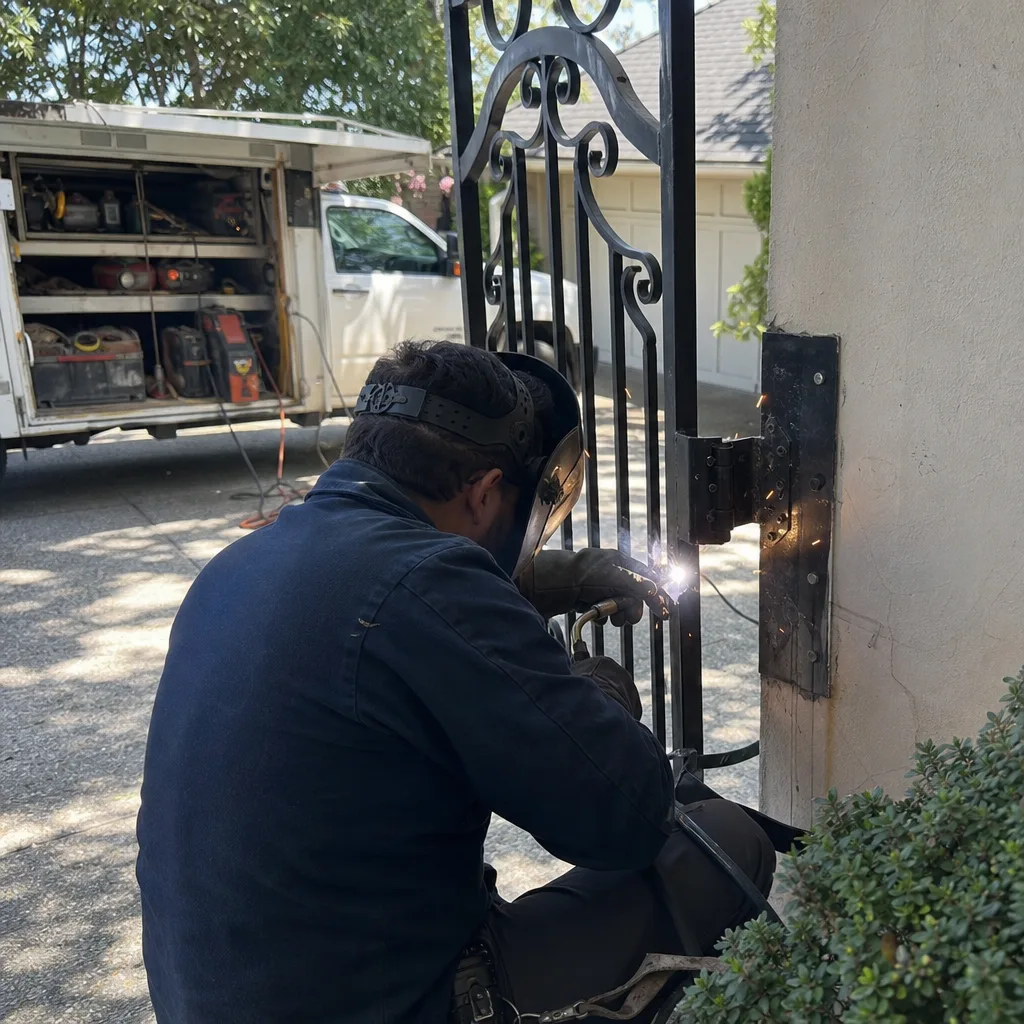
San Mateo’s rainfall pattern, concentrated November through April with intermittent heavy storms, creates specific gate failure modes that don’t appear in drier climates. See our Seasonal Gate Repair Care for San Mateo: Year-Round Homeowner’s Guide for the full maintenance calendar. We’ve tracked these patterns across thousands of San Mateo service calls.
Rust Bloom on Hinge Plates
The first visible sign is a reddish-brown dusting on the top surface of hinge plates, where water pools and evaporates. By the time you see orange flaking, the pin is already binding. On coastal-facing properties from Shoreview to Baywood-Aragon, we’ve seen hinge pins seize in as little as three wet seasons. The gate still moves, but the operator strains against the corrosion, drawing excess current and heating the motor.
Early intervention: remove the pin, clean with wire brush, lubricate with lithium grease, $85-$140 service call. Delayed: seized pin must be cut out, hinge plate replaced, operator stress-damage assessed, $280-$520.
Track Debris Patterns
Slide gates in San Mateo’s hillside neighborhoods collect distinctive debris: oak leaf tannin stains, mud from runoff across sloped driveways, and small gravel washed from adjacent landscaping. The pattern matters. Tannin stains along the track center indicate normal leaf fall; concentrated mud at the low end of a slope indicates drainage problems that will accelerate track wear. Gravel in the rack teeth means the gate is picking up debris and carrying it through the pinion gear, wearing both.
We document track condition with photos on every Gate Installation in San Mateo and service visit. Homeowners who clear leaves monthly and address drainage before December storms typically add 4-6 years to their track and rack life.
Post-Rain Limit-Switch Drift
This is the most expensive wet-season failure to miss. Ground saturation causes minor post movement, particularly on gates installed without concrete piers extending below the frost line. The gate itself hasn’t moved perceptibly, but the magnetic or mechanical limit-switch target has shifted 3-5 millimeters relative to the operator’s sensor. The gate closes to what looks like the right position, but the operator doesn’t register “closed,” continues driving, hits obstruction current, and reverses.
Homeowners often respond by repeatedly cycling the gate, which overworks the motor. The correct response: measure the gap between switch and target with a ruler, photograph it, and call for adjustment. A $65 limit-switch reset prevents the $520 motor replacement that follows from repeated over-travel.
How to Document Warning Signs for an Accurate Quote
The technician who quotes your repair can only price what they find on the day they visit. If your gate reversed three times yesterday but behaves normally today, you get a “no fault found” diagnosis and a wasted service call. Documentation bridges the gap between intermittent symptoms and accurate quotes.
The Photo Log
For each warning sign, capture:
- The symptom in progress: video of the reversal, audio of the grinding, photo of the drifted position
- The environmental conditions: time, temperature, recent weather
- The specific component: photo-eye alignment gap, limit-switch gap measurement, rust location on hinge
- The operator’s diagnostic display or LED pattern, if present (many DoorKing and Elite operators flash fault codes)
The Written Record
Note frequency: “Reversed 4 of 10 cycles on Tuesday morning, 47 degrees, after overnight rain.” Note progression: “Grinding started two weeks ago, now louder and present on every cycle.” Note any changes you’ve made: “Adjusted photo-eye last month after similar problem; helped for two weeks.”
When you call, email or text this documentation before the technician arrives. At Vance Gate Repair San Mateo, we review homeowner documentation before dispatch and often pre-order likely parts. See How to Hire a Gate Repair Contractor in San Mateo: A Step-by-Step Guide for what to ask before scheduling. Under Haven Standard Clause 4, we photograph what we find, what we adjust, and what we replace, then add your original documentation to the job record. If the same symptom returns within 365 days, we have both your observation and our repair record to diagnose whether it’s a new failure or an incomplete repair, covered by our Done Right Promise.
Repair Cost Ranges by Symptom in the San Mateo Market
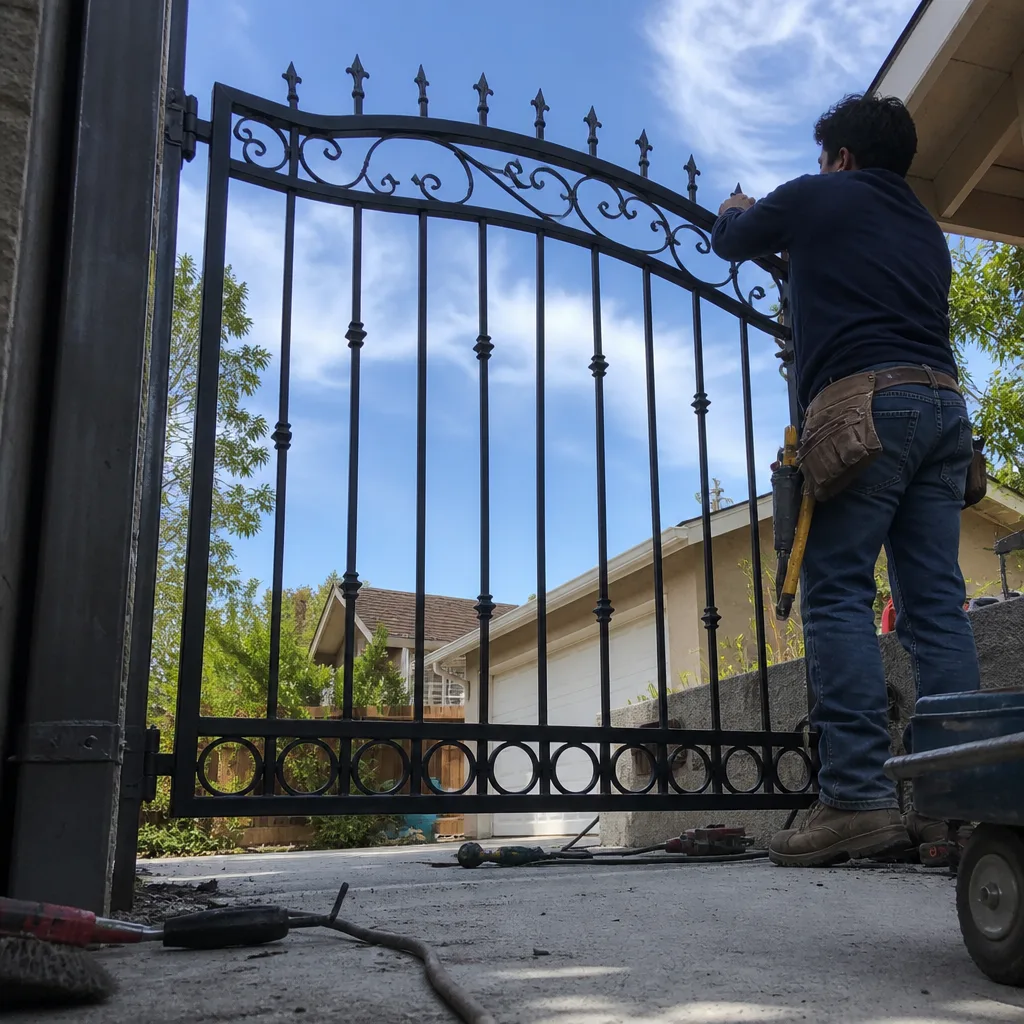
These ranges reflect San Mateo’s labor market and typical parts availability as of 2024-2025. Every repair governed by The Haven Standard receives a written, itemized price before work begins.
| Symptom | Most Likely Component | Repair Range | If Ignored |
|---|---|---|---|
| Reversing at same point | Limit switch adjustment | $65-$140 | Motor overwork, $520-$840 |
| Reversing at random points | Photo-eye realignment | $45-$95 | Intermittent failure, security risk |
| Grinding at motor | Gearbox service/rebuild | $180-$340 | Operator replacement, $680-$920 |
| Grinding at hinge/roller | Lubrication, pin/roller replacement | $85-$220 | Hinge seizure, operator damage, $280-$520 |
| Drifting when stopped | Brake adjustment or operator replacement | $180-$650 | Gate damage, vehicle impact |
| No response, no power at operator | Transformer, GFI, underground wiring | $140-$380 | Prolonged outage, security exposure |
| No response, power present | Control board or receiver | $180-$420 | Complete operator replacement if board unavailable |
| Remote works, keypad dead | Keypad or wiring to keypad | $120-$280 | Inconvenience, code compromise |
These are quoted ranges, not estimates that balloon on arrival. Under Haven Standard Clause 1, the flat price is written and handed over before any work starts. If we open the control box and find additional problems, we stop, explain, and quote the additional work separately. No surprise invoice at the end.
Common Mistakes to Avoid
- Ignoring intermittent symptoms because the gate “usually works.” Intermittent electrical faults are progressive. The photo-eye that misaligns weekly today will misalign daily next month, and the motor that over-reverses accumulates thermal damage even when it eventually closes.
- Adjusting the obstruction sensitivity upward instead of fixing the root cause. We see this constantly: a gate reverses, so the homeowner or a handyman cranks the force limit to maximum. The gate now closes through minor binding, but it’s straining the motor and creating a crushing hazard. The correct fix is $65-$140; the consequence of the workaround is $520-$840.
- Applying WD-40 to gate hinges and calling it maintenance. WD-40 displaces water but doesn’t lubricate under load. It evaporates, leaving hinges drier than before. Gate hinges need lithium or molybdenum grease, applied after cleaning corrosion. In San Mateo’s salt-air exposure, we recommend annual service on coastal-facing properties.
- Assuming operator replacement is the only option for an older unit. Many operators from the 2010s, including early Linear and Viking models, have rebuildable gearboxes and available replacement boards. A $280 gearbox rebuild extends service life 5-7 years versus $680-$920 for new equipment. We evaluate repairability before quoting replacement.
- Not checking whether the problem follows the remote or the gate. If one remote fails but another works, the problem is the remote, not the gate. A $35 remote replacement versus a $280 service call. Test all remotes and the keypad before calling.
- Failing to document seasonal patterns. “It only happens after rain” is diagnostic gold. It points to moisture intrusion in a low-voltage connection, photo-eye condensation, or post movement from saturated soil. Document the pattern and the technician starts with the right test instead of running the full diagnostic sequence.
- Accepting a verbal estimate for operator replacement. Operator replacement quotes in San Mateo vary by $300 or more for equivalent equipment, depending on whether the quote includes the power run, safety edges, loop detector, or just the motor. A written, itemized scope under Haven Standard Clause 1 lets you compare apples to apples.
When to Call a Professional
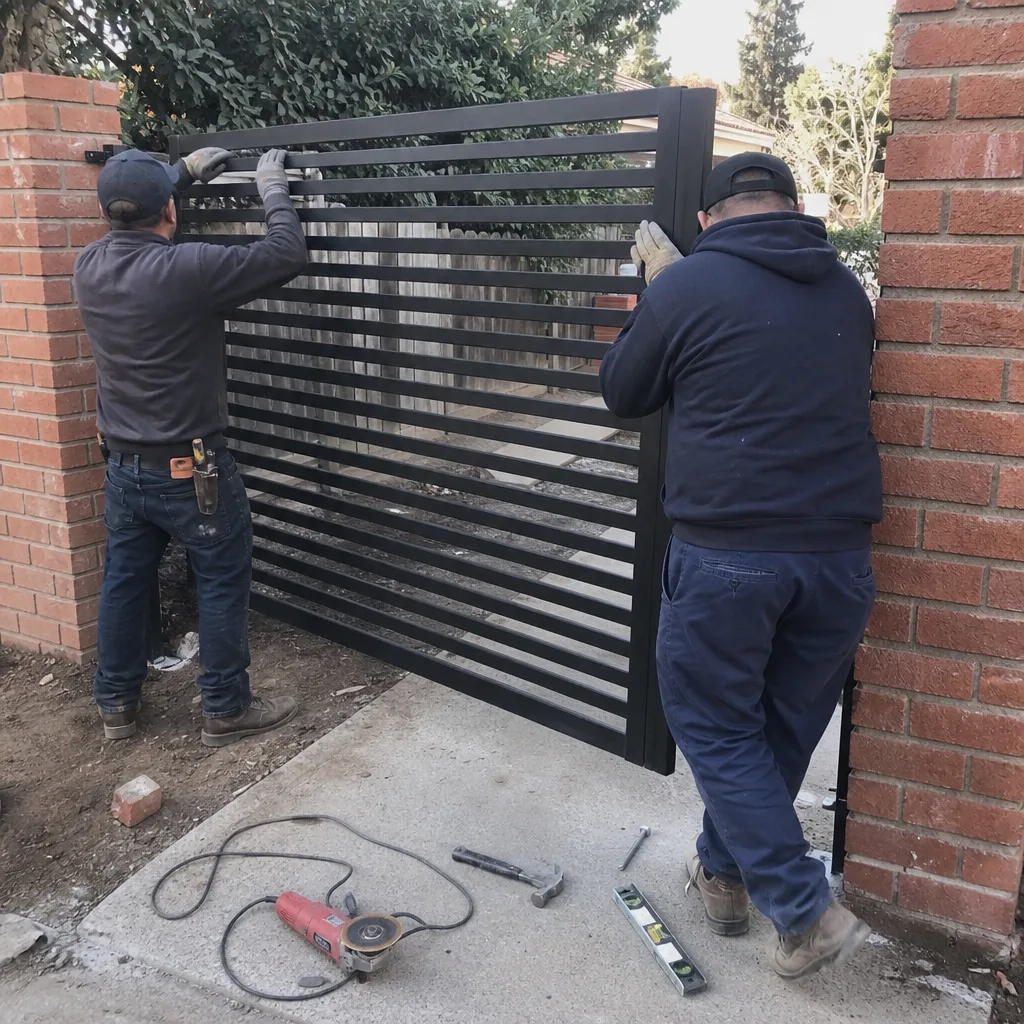
Call when the symptom is reproducible, when you’ve documented it, or when the gate poses a safety or security risk. Specifically: any gate that reverses unpredictably and could strike a vehicle or pedestrian; any slide gate that drifts open and exposes the property; any operator that runs hot to the touch or smells of electrical burning; and any manual override that requires tools or excessive force to engage, indicating mechanical binding that could trap someone.
Vance Gate Repair San Mateo offers free estimates in San Mateo. A live person answers at (650) 293-9440, 24 hours a day. We’ll review your documentation, ask the diagnostic questions above, and if needed, dispatch a uniformed, background-checked technician with name and photo provided before arrival. Every visit leaves a documented photo record under Haven Standard Clause 4, and every repair is covered by our 365-Day Done Right Promise.
Frequently Asked Questions
Most gate repairs in San Mateo fall between $120 and $420, with simple adjustments like photo-eye realignment at the low end and control board replacement at the high end. Operator replacement runs $680-$920 depending on gate weight, voltage, and whether the existing power run and safety edges are reused. We provide a written, itemized price before any work starts under Haven Standard Clause 1. Call (650) 293-9440 for a free estimate.
You can perform safe observation and documentation: test manual override, check for power with a multimeter, clear debris from tracks, and photograph symptoms. Do not attempt to adjust high-tension spring systems on swing gates, work on 110V wiring without proper training, or adjust obstruction sensitivity without understanding the crushing hazard you’re creating. For mechanical binding or electrical faults, the documented photo record you create will get you a more accurate professional quote than a DIY attempt that masks the symptom.
Moisture causes three common failures: condensation on photo-eye lenses that breaks the infrared beam, water intrusion in low-voltage wire splices that creates phantom obstruction signals, and saturated soil that shifts gate posts enough to misalign limit switches. In San Mateo’s wet season, we see post-rain call volume increase 40%. Document whether the problem clears as the gate dries, that single clue narrows the diagnosis significantly.
A properly maintained residential gate operator in San Mateo’s climate should last 12-15 years. Lack of lubrication, ignored grinding sounds, and running with mechanical binding typically reduce this to 7-9 years. Coastal salt air accelerates corrosion on external components, so operators on properties west of El Camino Real often need more frequent hinge and track service even when the motor itself is sound. We service nine major brands including Linear, Viking, and DoorKing, and evaluate repairability before recommending replacement.
A complete quote specifies: the operator model and brand; whether the existing power run (conduit and wire from house to gate) is reused or replaced; whether safety edges, photo-eyes, and loop detectors are included or reused; the warranty period on parts and labor; and whether permit coordination is included. Under The Haven Standard, our quotes itemize each of these. Bring us a written estimate from another company and we’ll review it free, line by line, under our free second-opinion policy.
We service nine major automation brands: LiftMaster, FAAC, BFT, Linear, Viking, Ghost Controls, DoorKing, Elite, and Mighty Mule. We do not steer customers toward replacement with a different brand when their existing operator is repairable. Our technicians carry common parts for all nine brands and can source proprietary components within 24-48 hours for less common failures.
First, secure the property manually if possible. Engage the manual override, close the gate by hand, and use the mechanical stop or a temporary latch to hold it. Then call for service rather than repeatedly cycling the operator, which can turn a $140 wiring fault into a $520 motor replacement. If the gate is stuck open after hours, our 24/7 live answer dispatches emergency service for security-critical situations.
The Bottom Line
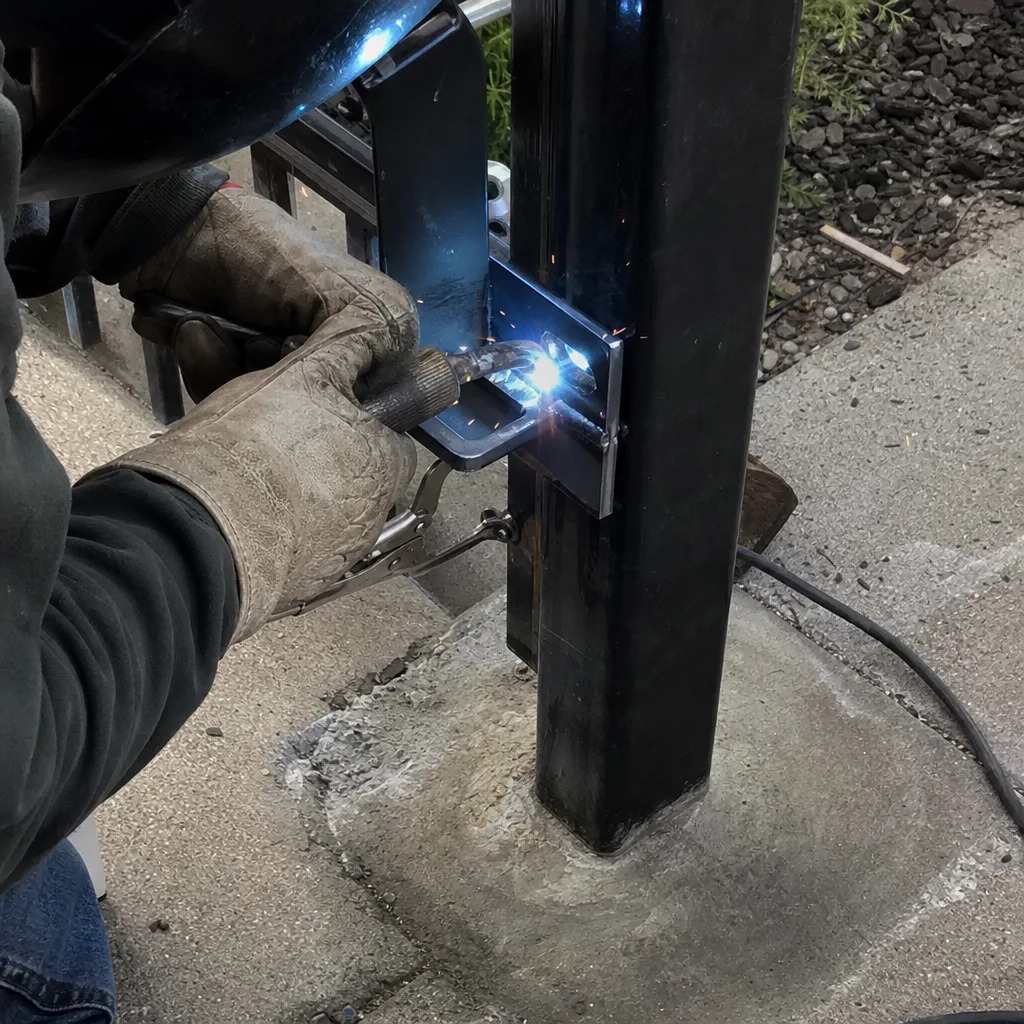
Gate problems in San Mateo rarely appear without warning. The same symptom can indicate a $45 adjustment or an $800 replacement, and the difference is which component is actually failing, how long it’s been failing, and whether the homeowner documented the pattern. This guide gives you the symptom-to-component map, the seasonal context for wet-season failures, and the documentation method to bridge the gap between what you observed and what the technician finds. The operators that last 15 years aren’t luckier; they’re the ones whose owners recognized the coffee-grinder start, measured the limit-switch gap, and called before the symptom became a cascade failure.
For a free estimate with a written price before any work begins, call Vance Gate Repair San Mateo at (650) 293-9440. A live person answers 24 hours a day, and every repair is backed by our 365-Day Done Right Promise.
Written by Adrian Vance, Owner at Vance Gate Repair San Mateo, serving San Mateo since 2014.