
Last updated September 22, 2026
Free on-site gate assessment - hinges, posts, and your LiftMaster or Nice gate operator checked before anything is quoted
The assessment is free and the quote is the invoice.
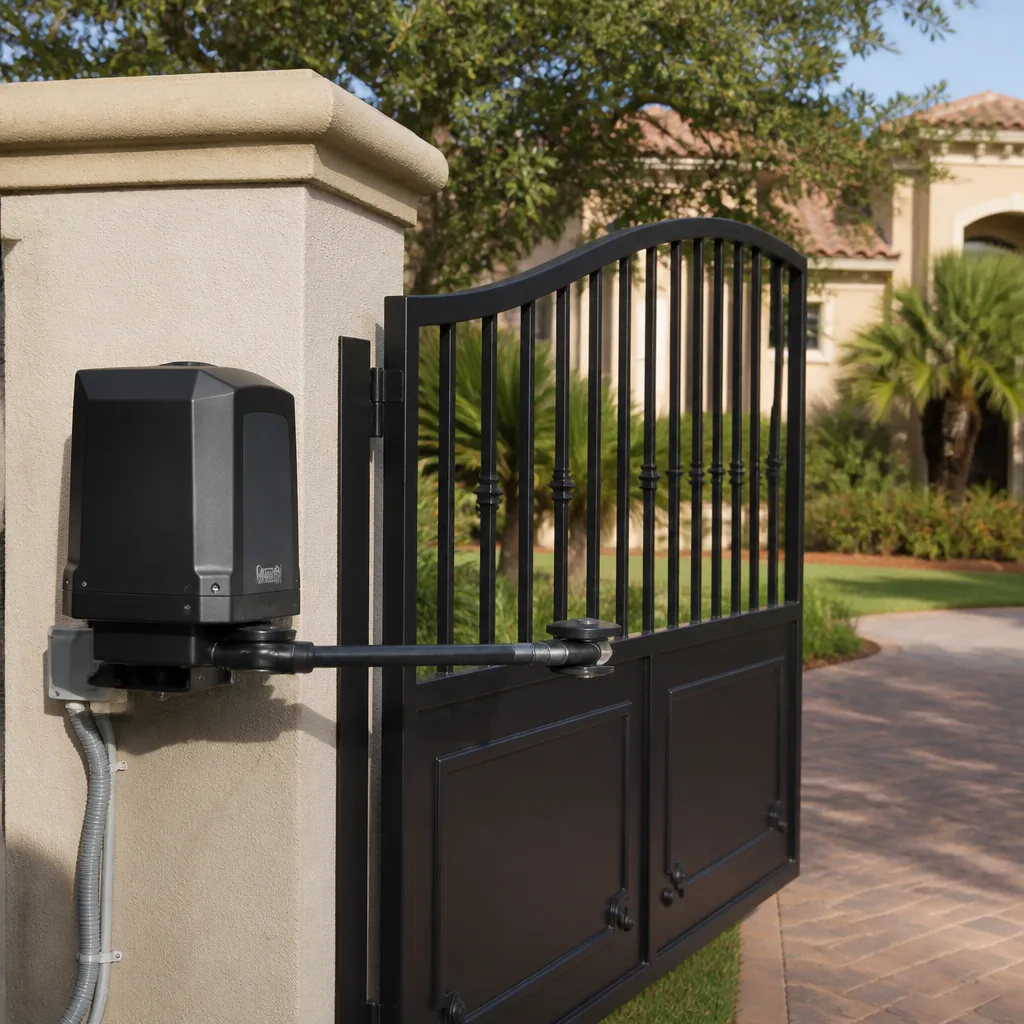
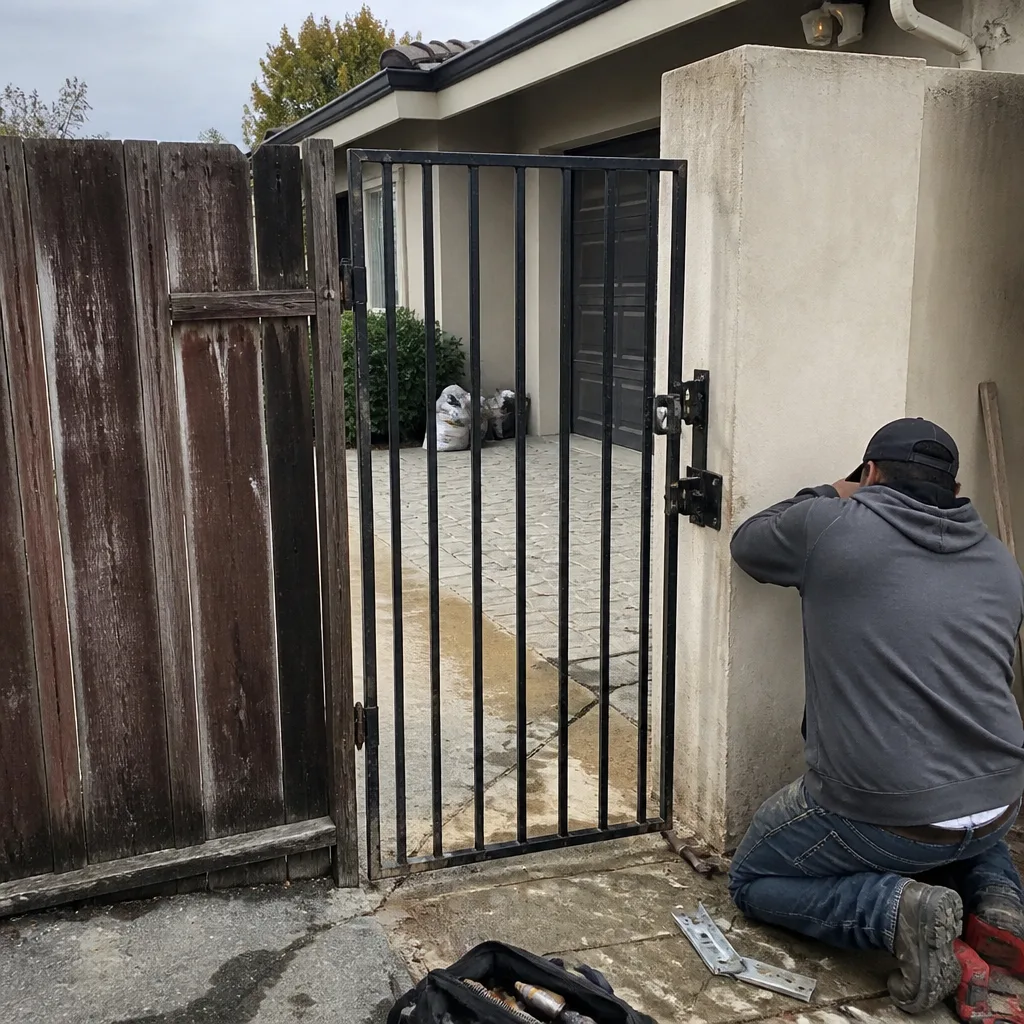 Before
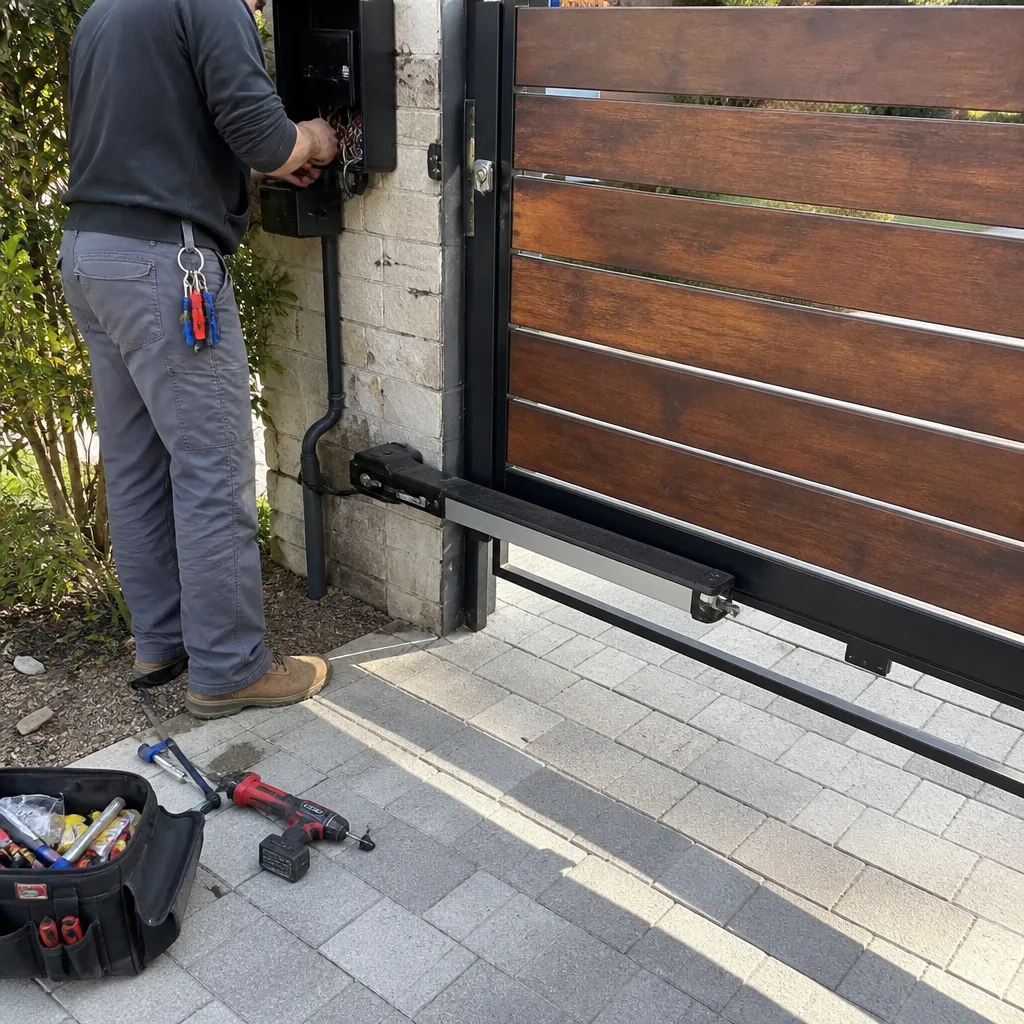 After
After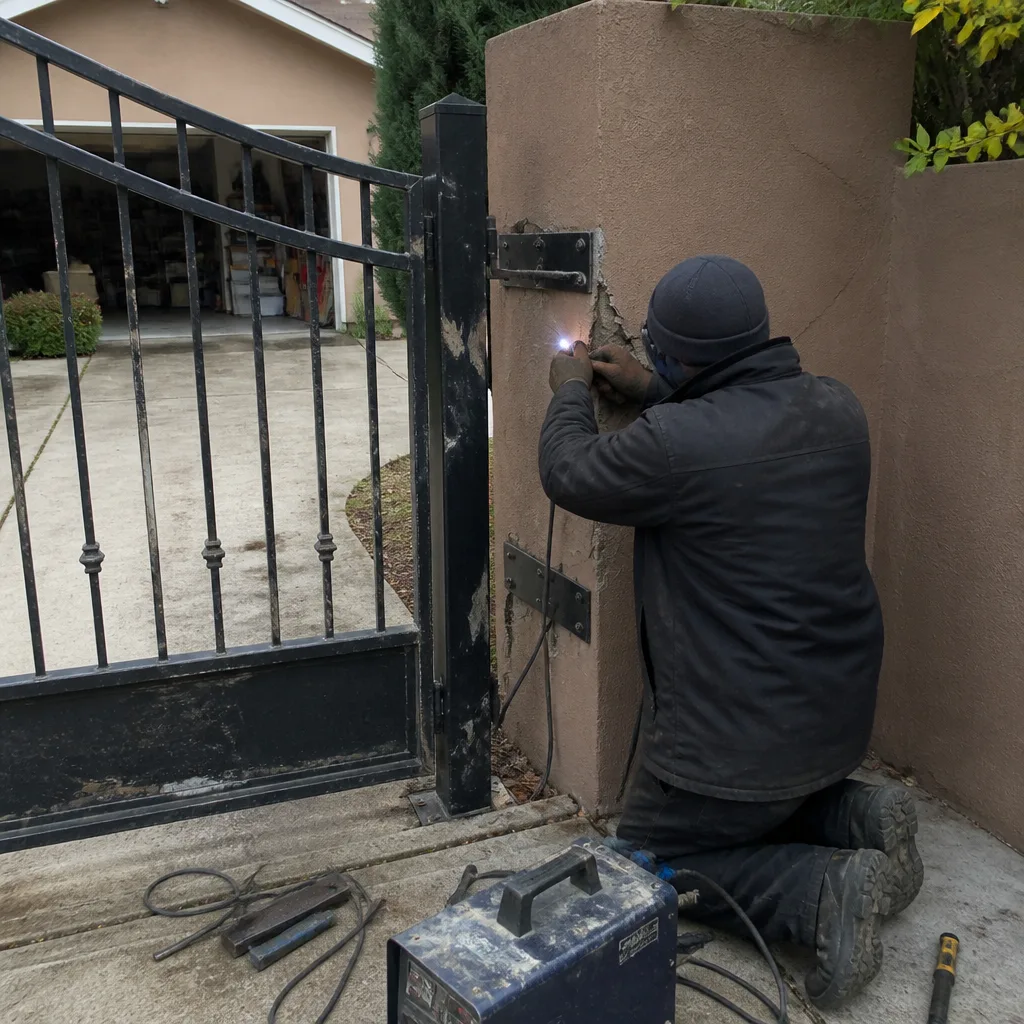 Before
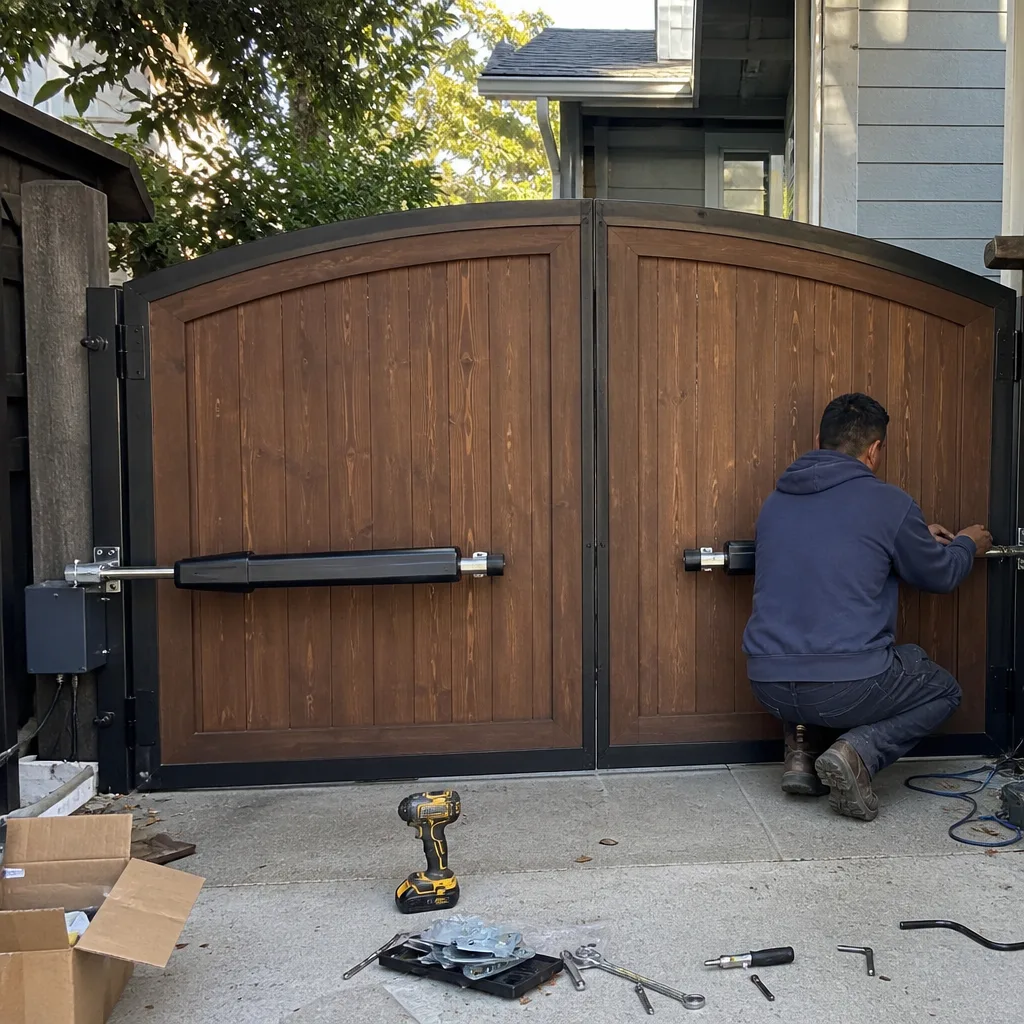 After
After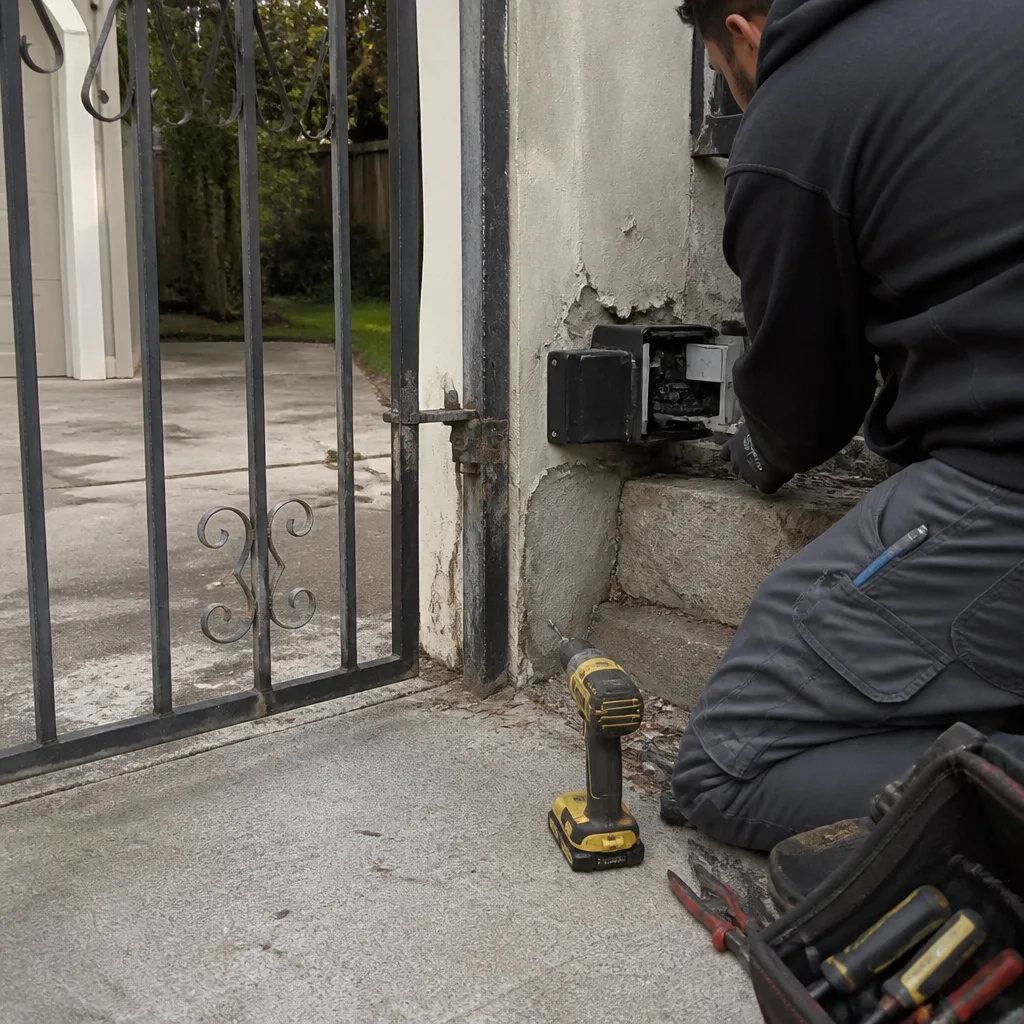 Before
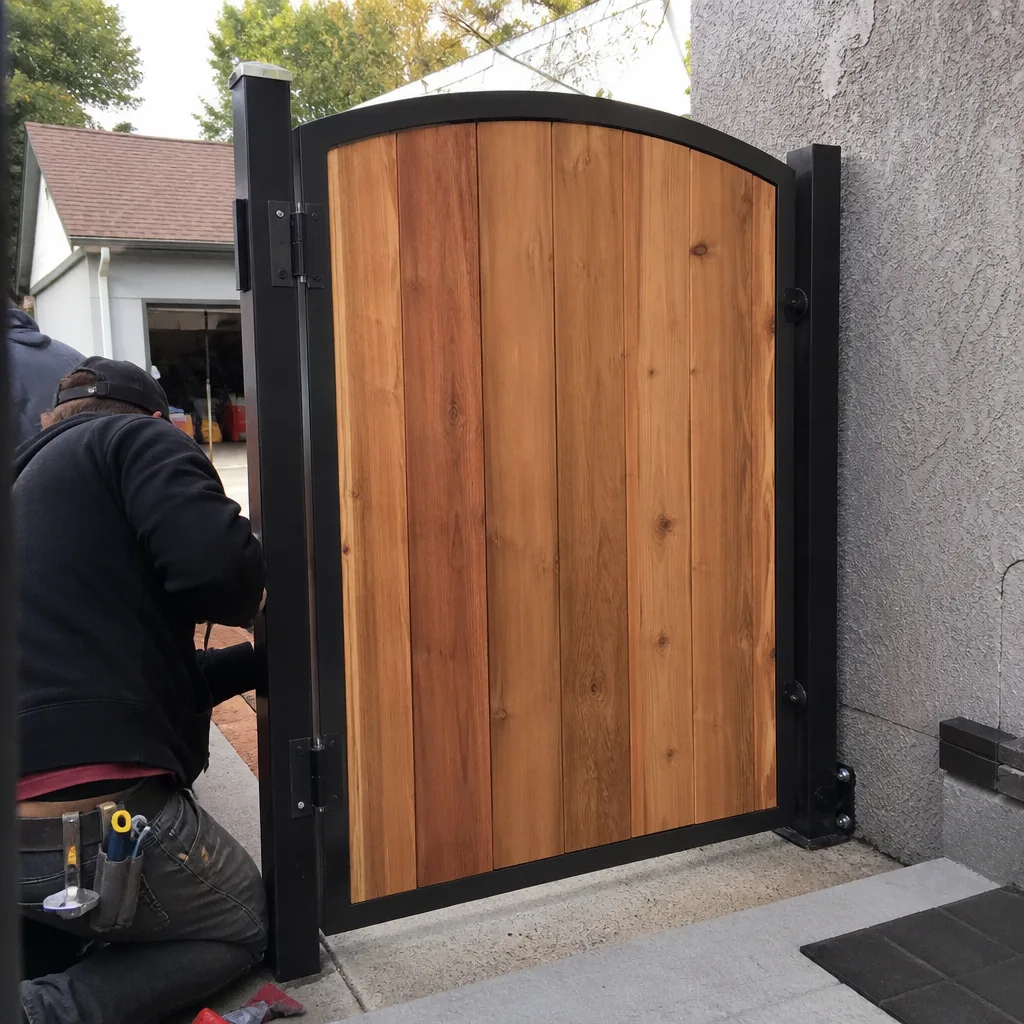 After
AfterDIY vs Professional Gate Repair: The San Mateo Homeowner’s Decision Guide
Replacing a broken gate hinge is legal, safe, and well within most San Mateo homeowners’ ability. Replacing the operator’s control board while the entrapment-protection circuit is unplugged is a UL 325 violation whether a licensed tech does it or you do - but only one of you is liable when someone gets hurt. In this guide and our related Gate Repair Maintenance Checklist for San Mateo Homeowners, we’ll break down which gate repairs California law permits you to perform, which require a licensed contractor, and which trigger permit requirements regardless of who does the work. You’ll learn the four tasks where DIY genuinely saves money, the hidden costs of DIY mistakes on gate operators, and what documentation to create so the next technician doesn’t bill you for rediscovery time.
Quick Answer
Most San Mateo homeowners can safely handle hinge lubrication, remote pairing, manual-release testing, and minor weld touch-up without legal or safety exposure. Any work involving the operator’s electrical system, entrapment-protection devices, or structural post replacement requires a C-61/D-49 licensed contractor in California and may trigger permit requirements in San Mateo County. The cost of a DIY mistake on a gate operator typically runs $180-$340 in diagnostic fees to undo, plus voided warranties and potential liability if UL 325 compliance is compromised - details we cover in our Gate Repair Cost Breakdown: The San Mateo Homeowner’s Reference for 2026.
Table of Contents
- California Law: What Homeowners Can and Cannot Legally Repair
- UL 325 and Entrapment Protection: The Hidden Liability in Operator Work
- Four Gate Repairs That Make Sense to DIY in San Mateo
- The Real Cost of DIY Mistakes on Gate Operators
- Permit Requirements in San Mateo County
- Documentation: Protecting Yourself and the Next Technician
- Common Mistakes to Avoid
- When to Call a Professional
- Frequently Asked Questions
- The Bottom Line
 Before
 After
AfterCalifornia Law: What Homeowners Can and Cannot Legally Repair
California’s contractor licensing system draws a clear line between homeowner maintenance and regulated construction work. The C-61/D-49 classification covers “gate and door repair and installation,” and any project exceeding $500 in combined labor and materials requires a licensed contractor. But the $500 threshold isn’t the only boundary that matters.
Here’s how California law classifies common gate tasks:
- Permitted without license: Lubrication, cleaning, remote battery replacement, manual-release testing, cosmetic weld touch-up on non-structural elements, and photo-eye realignment (provided you do not disconnect or modify the wiring).
- Requires C-61/D-49 license: Operator replacement, control board repair, limit-switch replacement, structural post replacement, new gate installation, and any electrical work beyond swapping a plug-in transformer.
- Requires additional specialty license: Low-voltage access control integration (C-7 low-voltage systems), gas-powered gate operators (C-36 plumbing for gas lines).
The $500 threshold creates a practical gray zone. A homeowner who replaces two hinges and a latch for $180 in parts is clearly within their rights. A homeowner who buys a $1,200 FAAC operator and installs it themselves has crossed into unlicensed contracting territory, even on their own property. More critically, that self-installed operator creates liability exposure that persists for years.
In San Mateo’s hillside neighborhoods like Baywood-Aragon and Hayward Park, we regularly see gates with operators installed by previous owners who didn’t understand these boundaries. When the current owner calls us for service, we often find entrapment-protection devices bypassed, safety edges disconnected, and control boards configured for reversed swing direction. Each of these conditions violates California gate repair safety standards and creates documented liability for the current property owner.
UL 325 and Entrapment Protection: The Hidden Liability in Operator Work
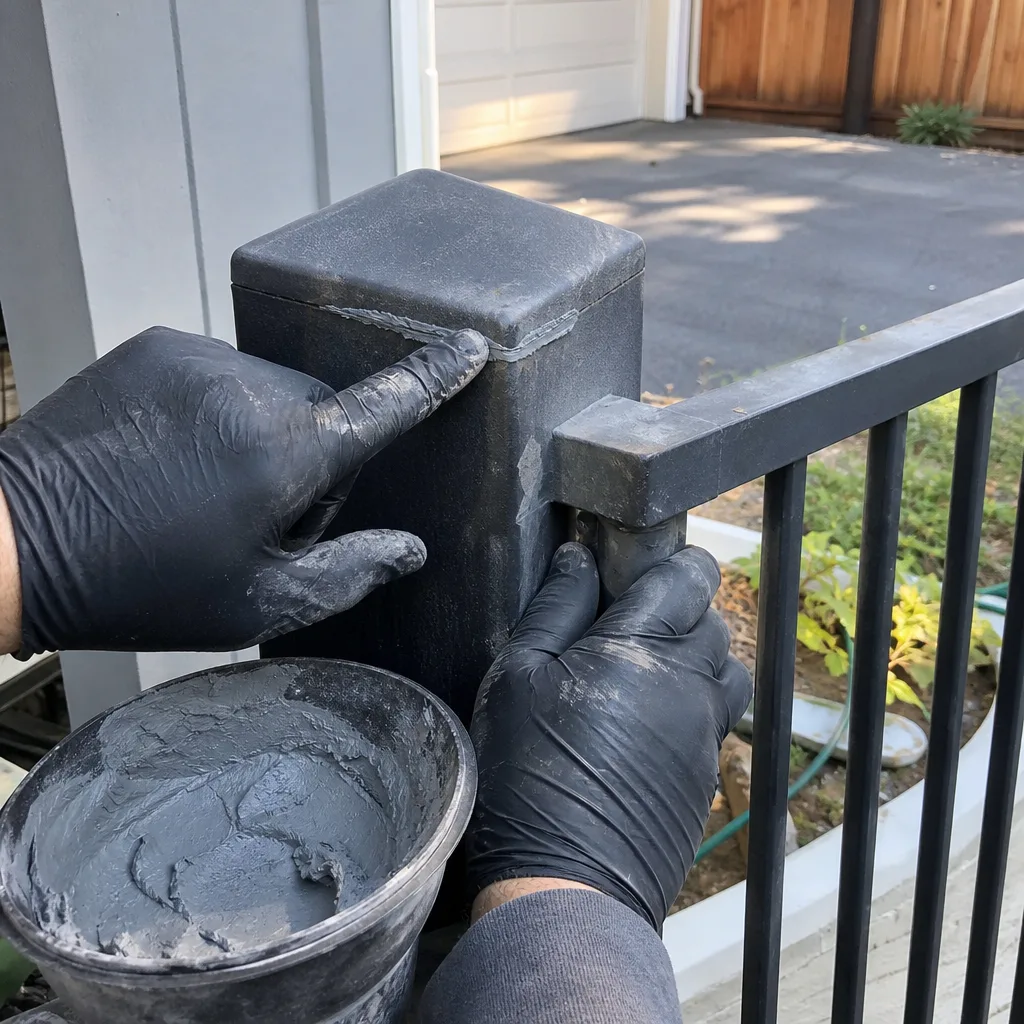
UL 325 is the Underwriters Laboratories standard governing automatic gate operators. It specifies how entrapment protection must function, how force must be limited, and what safety devices must be present. California adopted UL 325 by reference in the California Building Code, which means compliance isn’t optional - it’s state law.
The standard requires:
- Primary entrapment protection: Photo eyes (infrared beams) or safety edge sensors that stop and reverse the gate when triggered.
- Secondary entrapment protection: An additional independent system - either a second photo eye on the opposite side or a contact sensor on the leading edge.
- Force limitation: The operator must not exert more than specified force during the last 12 inches of travel.
- Warning signage: Visible signs on both sides of the gate stating the automatic operation hazard.
Here’s where DIY operator work becomes dangerous. Many residential operators ship from the factory with a “dummy plug” that bypasses the entrapment-protection circuit for testing purposes. A homeowner who doesn’t recognize this plug, or who removes safety devices because “the gate works fine without them,” creates a condition that violates UL 325 and California law.
The liability exposure is specific and severe. If someone is injured by a gate with disabled safety devices, the homeowner’s insurance may deny coverage based on the intentional modification of safety equipment. In a 2019 San Mateo County case, a homeowner faced personal liability after a delivery driver’s arm was fractured by a self-installed gate with disconnected photo eyes. The installation predated the current owner, but the liability transferred with the property because no permit or inspection record existed.
When we service operators in San Mateo, we test every safety device and photograph the configuration. Under our Haven Standard, Clause 4 (Evidence on every job), we document the photo-eye alignment measurement, the force-test reading, and the control board’s safety-circuit status. This record protects the homeowner and provides a baseline for future service.
Four Gate Repairs That Make Sense to DIY in San Mateo
Not every gate task requires professional involvement. These four repairs are genuinely low-risk, cost-effective, and legally permitted for California homeowners:
1. Hinge Lubrication and Adjustment
San Mateo’s coastal climate means salt air and morning fog accelerate corrosion on exposed steel hinges. A homeowner can extend hinge life significantly with quarterly maintenance.
- Clean the hinge pin and barrel with a wire brush to remove rust scale and old grease.
- Apply a lithium-based grease (not WD-40, which evaporates) to the pin and barrel.
- Check for vertical play - if the gate sags more than 1/4 inch, tighten the j-bolt or shim the hinge. If the post itself has shifted, stop and call a professional; post replacement requires proper footing and often a permit.
- Cycle the gate manually to distribute the grease.
Document what you used: grease type, date, and any play measurement. If we later service the gate, this tells us whether the sag is new or progressive.
2. Remote Control Pairing
Most modern operators use rolling-code remotes that must be synchronized to the receiver. This is a consumer-intended function, not a repair.
- Locate the “learn” or “program” button on the operator - typically on the control board housing or receiver module.
- Press and release the learn button (hold times vary by brand: LiftMaster requires 1 second, Viking requires 2 seconds, Linear requires pressing until the LED blinks).
- Within 30 seconds, press the remote button you want to pair.
- Test from multiple distances and angles.
If pairing fails after three attempts, the receiver may be failing or experiencing interference. That’s the point to call for gate motor and opener service in San Mateo.
3. Manual Release Testing
California law requires that automatic gates can be opened manually during power failures. Testing this monthly is homeowner maintenance, not repair.
- Locate the manual release - typically a key switch, lever, or pull-cord on the operator.
- With the gate closed, activate the release and verify the gate moves freely by hand.
- Re-engage the operator and verify automatic operation resumes.
- If the gate binds during manual operation, the track, rollers, or hinges need attention - note where it sticks for your technician.
4. Minor Weld Touch-Up on Non-Structural Elements
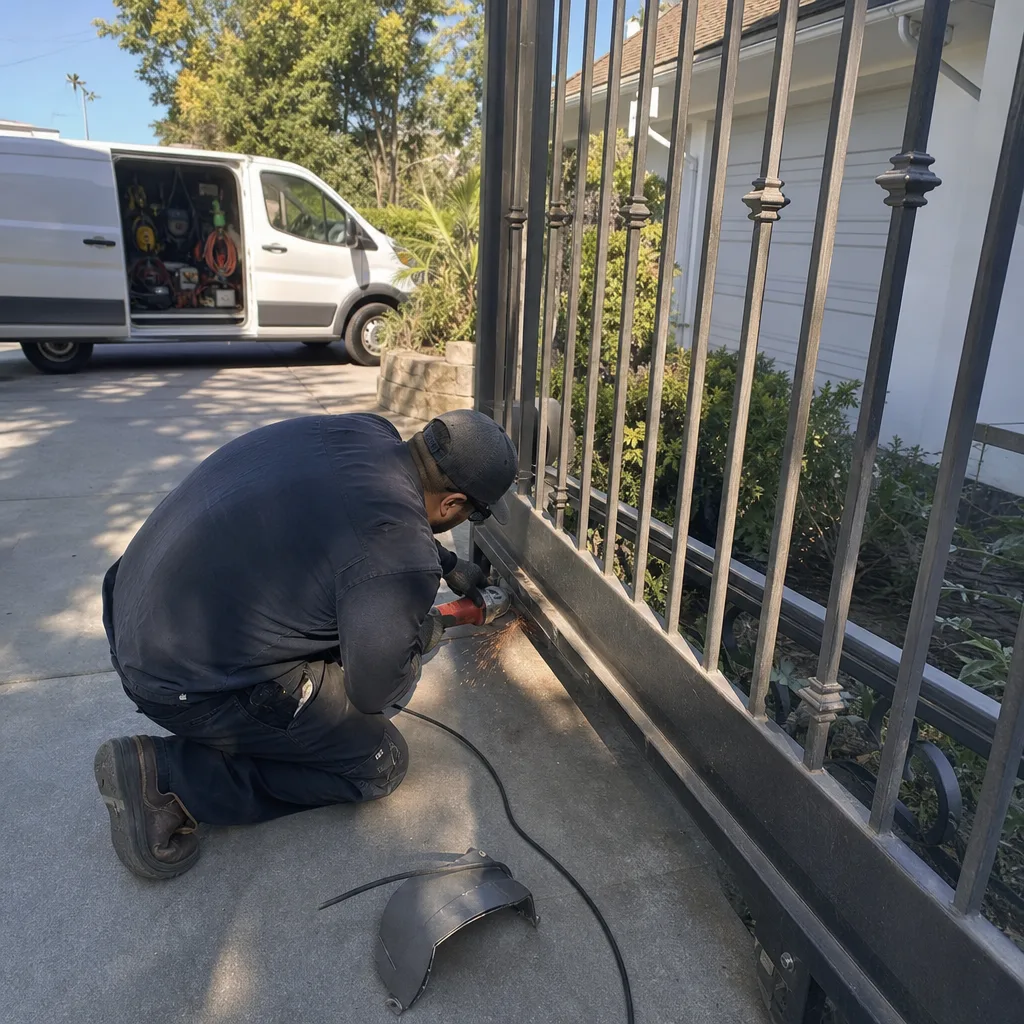
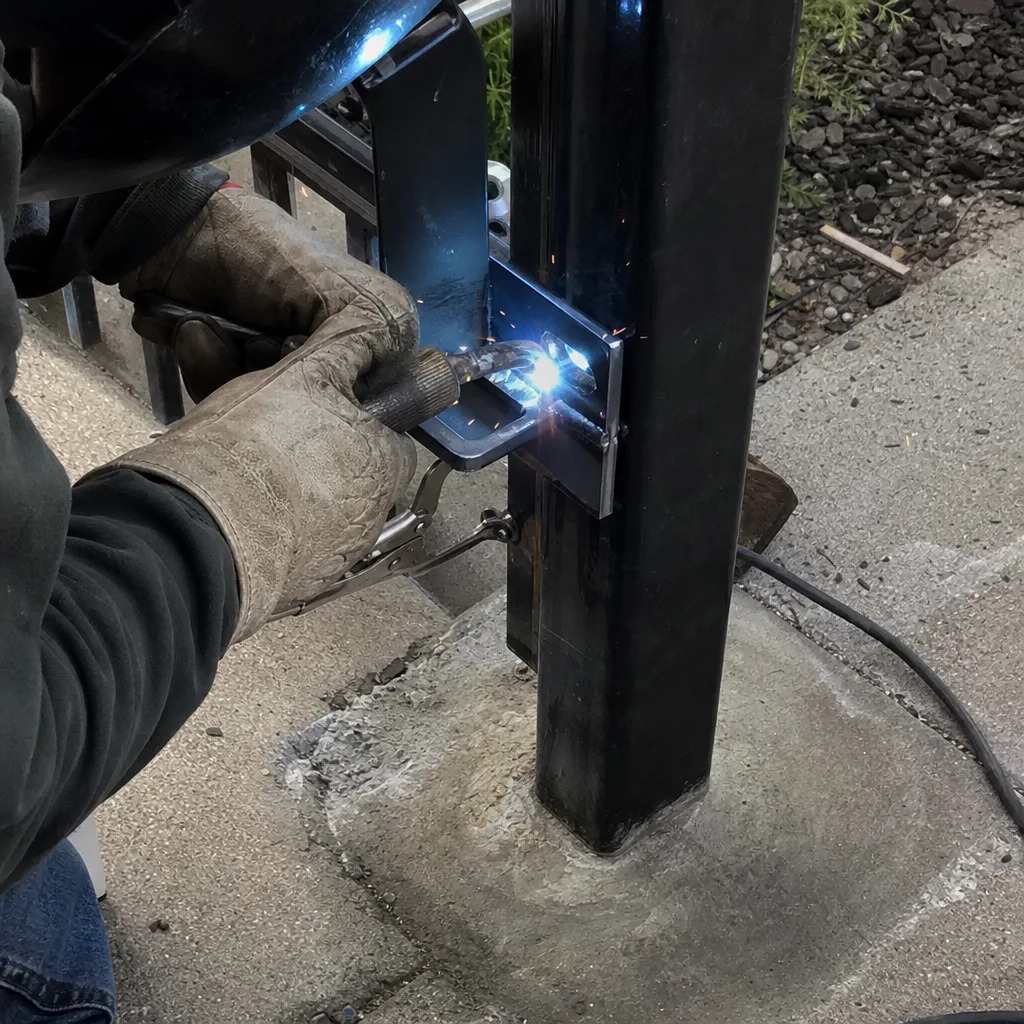
Surface rust on decorative ironwork can be addressed with a wire brush and cold-galvanizing spray or a small MIG weld if you have the equipment and skill. Restrict this to non-load-bearing elements - pickets, scrollwork, non-structural brackets. Never weld a gate arm, hinge mount, or post connection without understanding the load path. In San Mateo’s fog-prone areas near the bay, we see accelerated rust on ornamental iron that homeowners can manage with quarterly attention.
The Real Cost of DIY Mistakes on Gate Operators
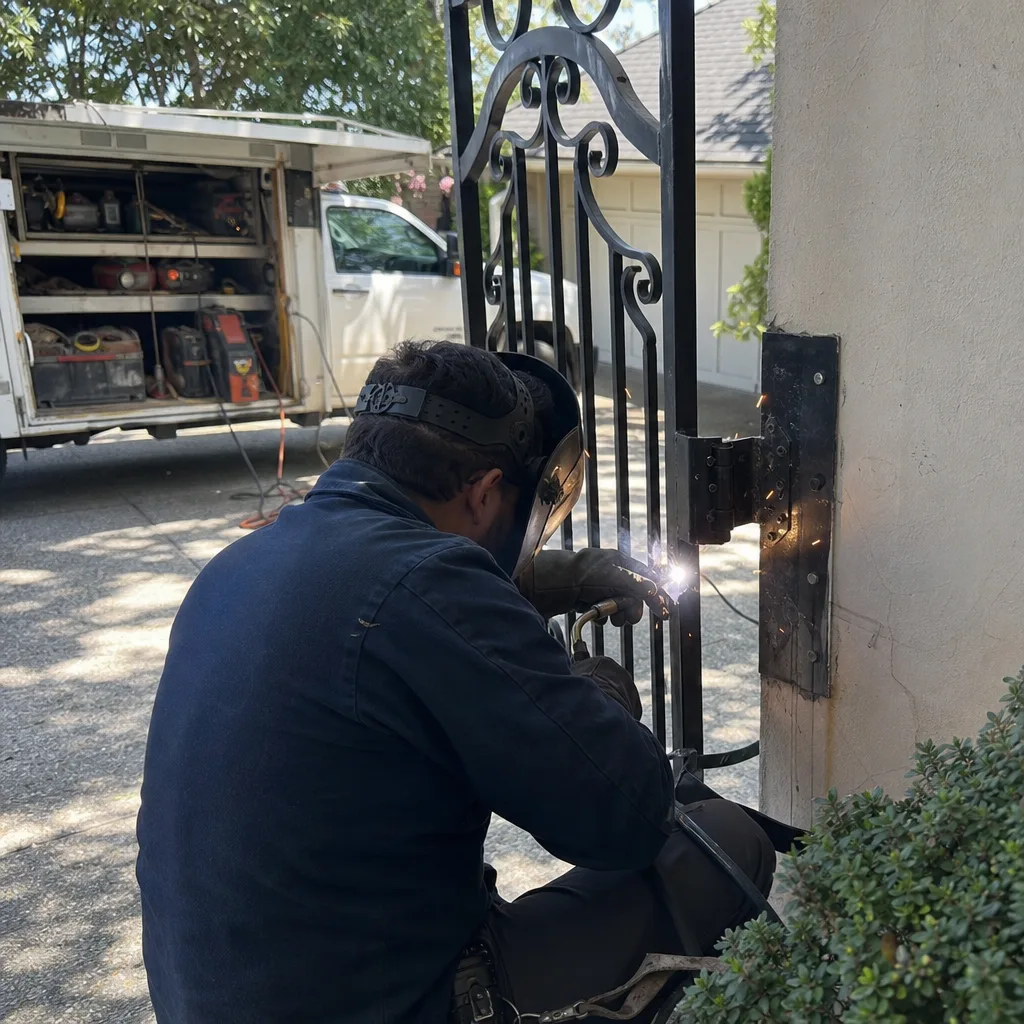
The hidden cost of DIY operator work isn’t the parts - it’s the diagnostic time to undo incomplete or incorrect work. Here’s what we typically encounter in San Mateo:
| DIY Mistake | Typical Cost to Correct | Additional Consequences |
|---|---|---|
| Mismatched limit-switch calibration | $180-$260 | Gate slams or reverses prematurely; motor strain reduces lifespan |
| Control board replacement without brand-matching | $240-$420 | Voided warranty, incompatible safety-circuit logic, possible UL 325 non-compliance |
| Photo-eye misalignment after “cleaning” | $140-$200 | Intermittent operation, safety system disabled, liability exposure |
| Disconnected safety edge | $160-$280 | Immediate UL 325 violation, insurance denial risk if incident occurs |
| Incorrect voltage transformer | $200-$340 | Board damage, fire risk, voided operator warranty |
These figures represent our diagnostic and correction fees in San Mateo. The range depends on operator brand - BFT and FAAC operators often require proprietary programming tools that add time, while Linear and Viking units are more straightforward.
Beyond the direct cost, there’s the warranty issue. Every major operator manufacturer voids the warranty if installation or repair is performed by an unlicensed technician. A homeowner who installs their own LiftMaster operator and calls us six months later with a failed control board will pay full retail for the replacement part, plus labor - typically $480-$720 versus a covered warranty repair.
We document what we find. Under the Haven Standard, if we discover a self-installed operator with disabled safety devices, we photograph the condition, explain the liability exposure in writing, and will not return the gate to automatic operation until the safety systems are functional. We’re not being difficult - we’re documenting that we didn’t create the hazard and that we corrected it.
Permit Requirements in San Mateo County
San Mateo County’s building department requires permits for gate work that meets specific thresholds. Understanding these triggers before you start prevents red-tag situations and resale complications.
Permit-required work includes:
- New gate installation: Any new automatic gate requires a building permit and electrical permit in unincorporated San Mateo County. Incorporated cities (San Mateo, Belmont, Foster City) have similar requirements through their own building departments.
- Structural post replacement: Any post supporting an automatic gate, or any post deeper than 24 inches.
- New electrical service: Running 110V or 220V to a new operator location.
- Access control integration: Low-voltage systems that interface with telephone entry, keypads, or card readers - technically a C-7 specialty, though often performed under the C-61/D-49 umbrella with proper coordination.
Permit-exempt work includes:
- Hinge and latch replacement on existing gates
- Operator repair that does not relocate the unit or modify electrical service
- Remote and keypad replacement (standalone, not hardwired)
- Cosmetic repairs and painting
The resale implication is worth noting. San Mateo’s real estate market demands clean disclosure. A gate installed without permits becomes a material fact that must be disclosed, and the buyer may require permit retroactivity or a price reduction. We’ve been called to document gate conditions for transactions in neighborhoods like Shoreview and Sugarloaf, where the absence of permits on a recent installation delayed closing by three weeks.
For new gate installation in San Mateo, we handle permit submission as part of our scope. The written price includes permit fees, and we provide the inspection documentation for your records - another Haven Standard Clause 4 deliverable.
Documentation: Protecting Yourself and the Next Technician
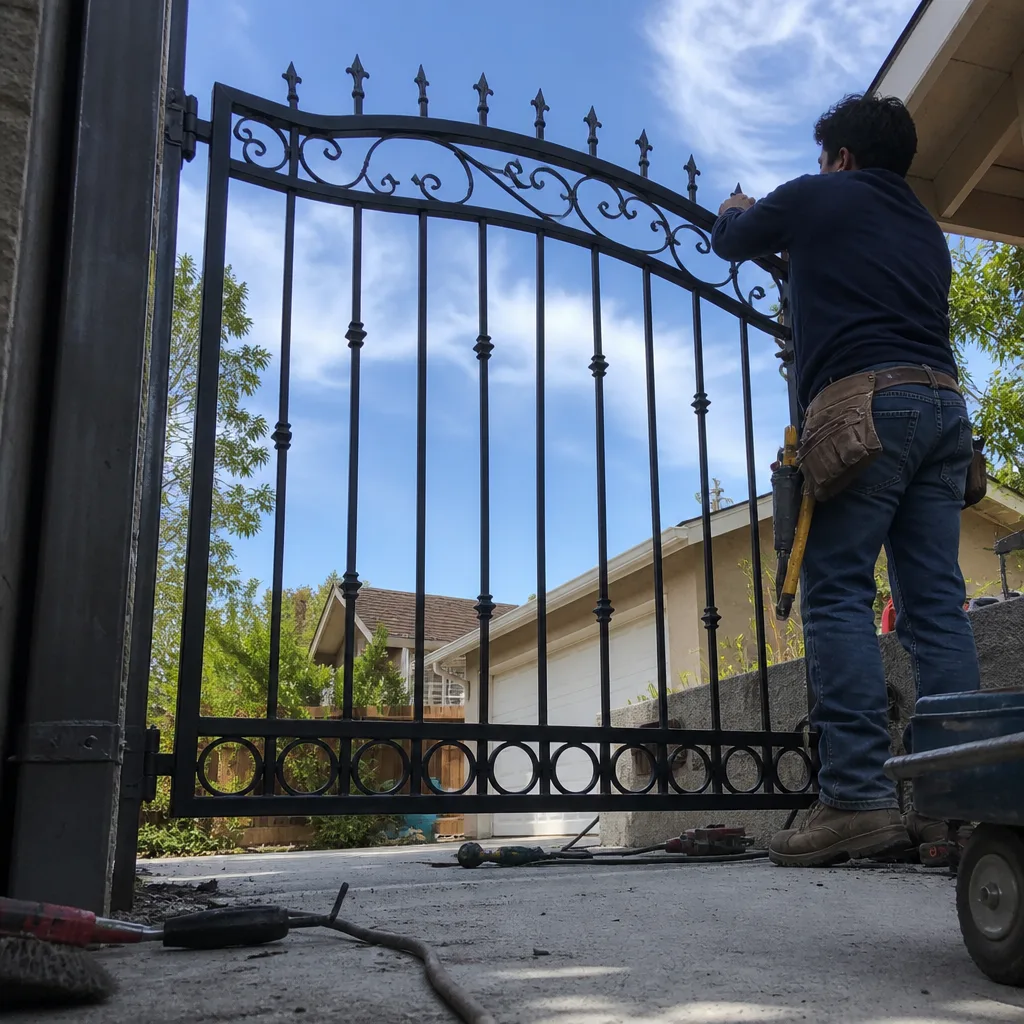
Whether you DIY or hire a professional, documentation is the most overlooked aspect of gate maintenance. A gate without records is a gate that gets diagnosed from scratch every time - and discovery time is billable time.
If you complete a DIY repair, create this record:
- Photograph the condition before and after. Show the full gate, the specific component, and any identifying marks.
- Record the part number and manufacturer. “Replaced hinge” is useless. “Replaced National Hardware N129-516 4-inch heavy-duty strap hinge, zinc-coated” allows the next technician to know what’s there without disassembly.
- Note the date and what prompted the repair. “March 2024 - gate sagging 3/4 inch, bottom hinge pin worn oblong, replaced both hinges and shimmed post bracket 1/4 inch.”
- Keep operator programming records. If you paired remotes, note how many and which buttons. If you adjusted limit switches, photograph the dial positions or digital readouts.
- Store everything with your home records. Not in a drawer - in your home’s permanent file, digital or physical, where it transfers with the property.
When Vance Gate Repair services a gate, we leave a documented photo record of what was found, what was adjusted, and what was replaced. Before we leave, you get a copy, and we file the original. If you later sell the property or call another company, this record prevents redundant diagnosis.
We’ve seen the alternative. A homeowner in San Mateo’s Baywood neighborhood called us after two other companies had “fixed” the same intermittent reversal. Neither left records. We found a partially failed safety edge with an intermittent short - a 20-minute diagnosis if you know the previous work, a two-hour process if you’re reconstructing history. The homeowner paid for both companies’ silence.
Common Mistakes to Avoid
- Assuming all operator brands work the same. A Viking operator’s limit-switch procedure differs from a BFT’s auto-learning cycle. Using the wrong procedure can damage the control board or create unsafe force settings.
- Disconnecting safety devices to “troubleshoot.” This is the most dangerous DIY mistake. If a photo eye seems faulty, test it with an object, clean the lenses, and check alignment. Never bypass it - the fault may be in the wiring or the control board’s safety circuit, and bypassing masks the real problem while creating liability.
- Ignoring the manual-release requirement. San Mateo’s earthquake risk makes manual operation critical. A gate that can’t be opened without power traps vehicles and blocks emergency access.
- Using the wrong lubricant on operators. Chain drives need specific chain lubricant; screw drives need grease, not oil. The wrong product attracts dirt and accelerates wear. We find this regularly on gates near San Mateo’s coastal trails where windblown grit compounds the problem.
- Not checking for permit history before buying a home. In San Mateo’s competitive market, buyers waive inspections. A gate without permit records may cost $800-$1,500 to bring into compliance if the installation predates current codes.
- Calling “a guy who does gates” instead of a licensed specialist. Unlicensed operators often leave no records, no warranty, and no recourse. Verify the C-61/D-49 license through the California Contractors State License Board before hiring anyone.
- Attempting post replacement without understanding footing requirements. A gate post for an automatic swing gate needs a concrete footing typically 36-48 inches deep in San Mateo’s clay-heavy soils. Shallow footings heave in winter rains and lean within two years.
When to Call a Professional
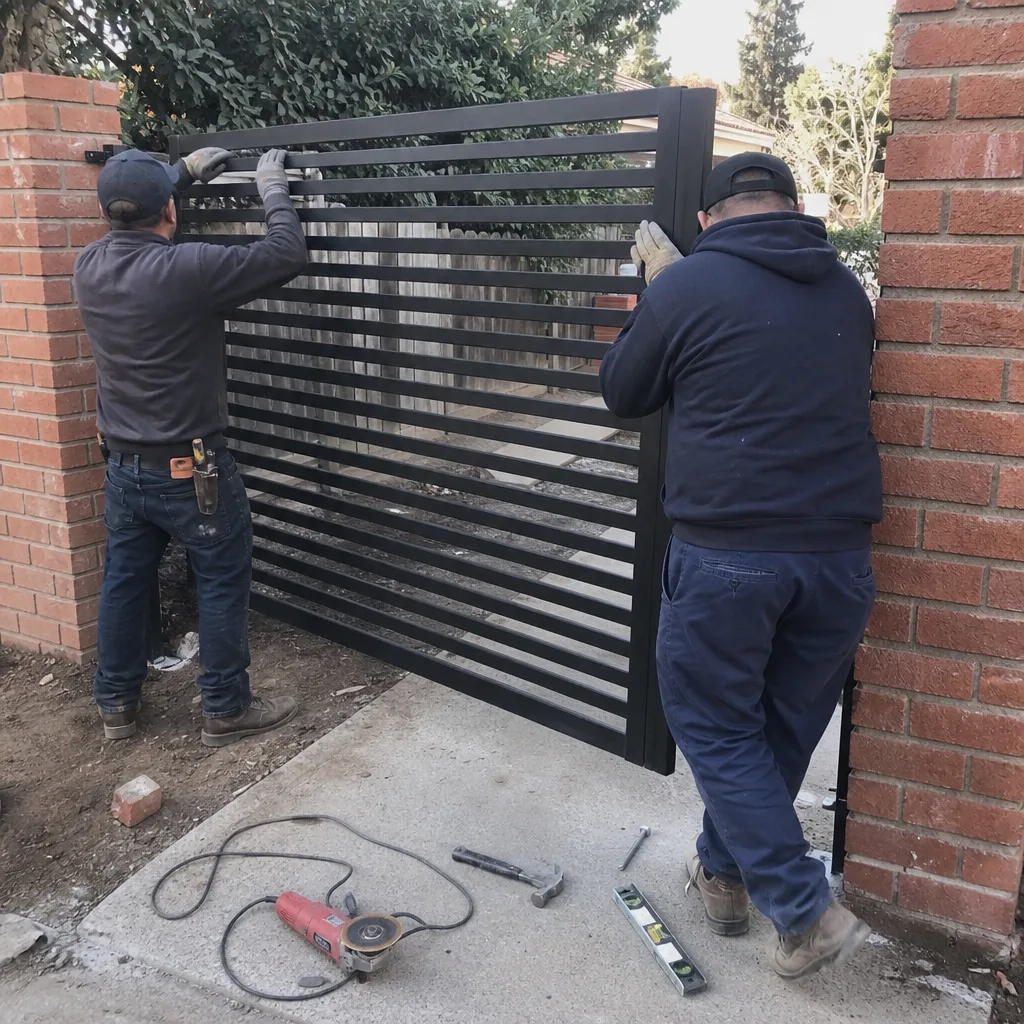
Call a licensed gate specialist when the work involves electrical systems, entrapment protection, structural elements, or permit requirements. Specifically: operator failure of any kind, intermittent reversal or stopping, post movement or gate sag that exceeds hinge adjustment range, access control integration, and any condition where you’ve attempted DIY repair and the problem persists or worsens.
Vance Gate Repair San Mateo offers Gate Repair services with free estimates in San Mateo - call (650) 293-9440. We’ll provide a written price before any work starts, under Haven Standard Clause 1, and every visit includes a documented photo record under Clause 4. If you have a written estimate from another company, we’ll review it at no cost for a second opinion.
Frequently Asked Questions
Most residential gate repairs in San Mateo range from $180 for hinge and latch service to $720 for operator control board replacement with full safety-system testing. A complete operator replacement on an existing gate typically runs $1,400-$2,800 depending on brand and whether the arm bracket and safety devices can be reused. We provide a written price before any work starts - call (650) 293-9440 for an exact quote; estimates are free.
California law allows homeowners to perform work on their own property below the $500 labor-and-materials threshold, but operator replacement typically exceeds this and requires a C-61/D-49 licensed contractor. More importantly, self-installed operators create personal liability if UL 325 entrapment protection is not properly configured, and manufacturer warranties are voided without licensed installation. For most San Mateo homeowners, professional installation is the lower-risk choice.
Your homeowner’s insurance may deny coverage if the gate has modified or disabled safety devices, or if the work required a license you didn’t hold. California courts have held homeowners liable for unlicensed work that violates building codes, regardless of whether the homeowner understood the violation. Documentation of proper installation and maintenance helps, but does not override the licensing requirement for regulated work.
Check for two independent safety devices (photo eyes, safety edges, or a combination), a force-test label or sticker on the operator showing test date and reading, and visible warning signage on both sides of the gate. The operator housing should display a UL 325 listing mark. If any of these are missing or appear tampered with, call for professional inspection. We test and document compliance on every service visit.
Repair that does not relocate the operator, replace structural posts, or add new electrical service typically does not require a permit in San Mateo or San Mateo County. New installation, post replacement, and new electrical service do require permits. If you’re uncertain, the San Mateo County Building Inspection Division or your city’s building department can confirm - or we can assess and handle permitting as part of our scope.
Request a written scope and price before work begins, photographs of the condition found and the work completed, part numbers for any components installed, and a warranty in writing. Under the Haven Standard, we provide all of these on every visit. If a company offers only verbal estimates and no photographic record, you’re paying for rediscovery on every future service call.
The Bottom Line
The DIY-vs-professional question for gate repair isn’t about whether you’re handy. It’s about which tasks carry legal and liability exposure that outlasts the repair itself. Hinge lubrication, remote pairing, manual-release testing, and cosmetic weld touch-up are genuinely low-risk DIY tasks in San Mateo. Operator work, structural repair, and anything touching entrapment protection or electrical service belongs with a licensed professional who documents everything. The money you might save on a DIY operator installation becomes irrelevant when a voided warranty, a failed inspection, or a liability claim surfaces years later. Document what you do yourself, demand documentation from anyone you hire, and know the line between maintenance and regulated work before you pick up a tool. For additional help, see our more guides & resources.
Written by Adrian Vance, Owner at Vance Gate Repair San Mateo, serving San Mateo since 2014.