
Last updated September 22, 2026
Free on-site gate assessment - hinges, posts, and your LiftMaster or Nice gate operator checked before anything is quoted
The assessment is free and the quote is the invoice.
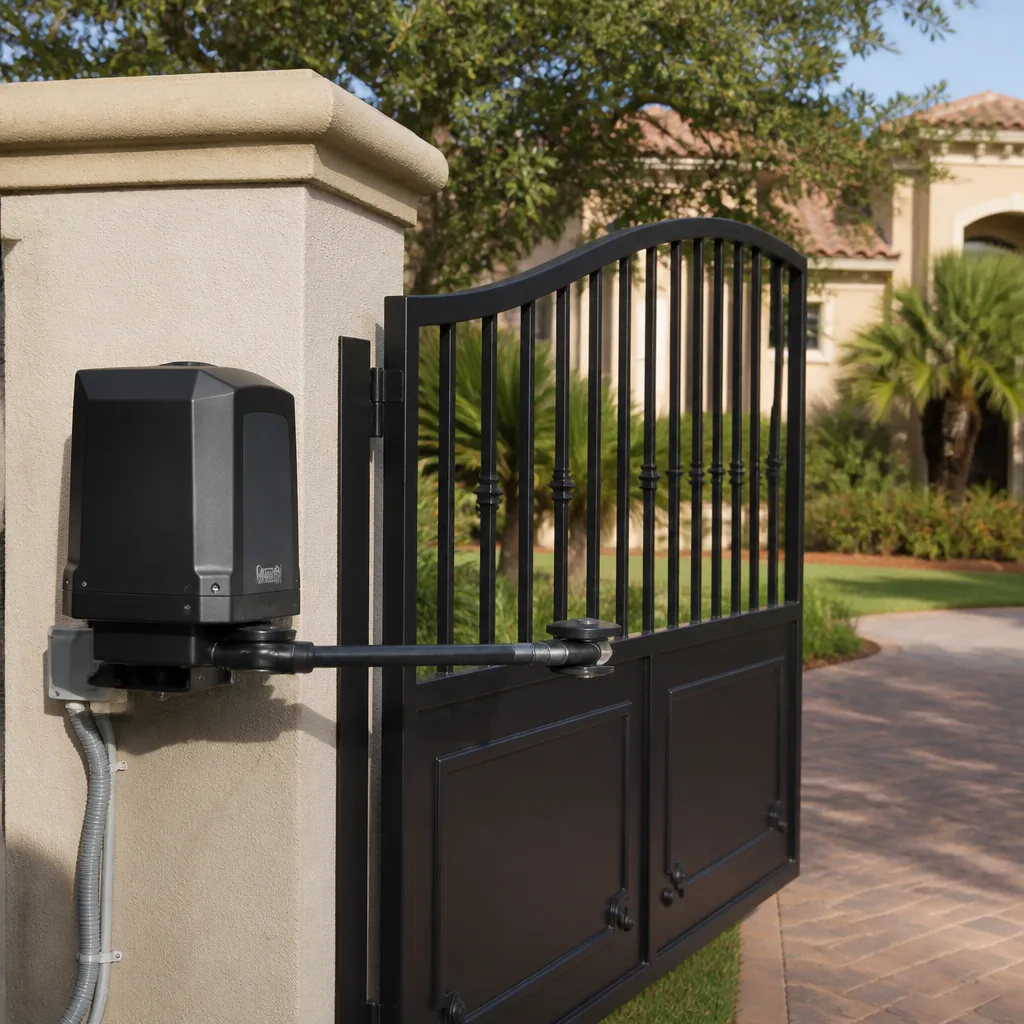
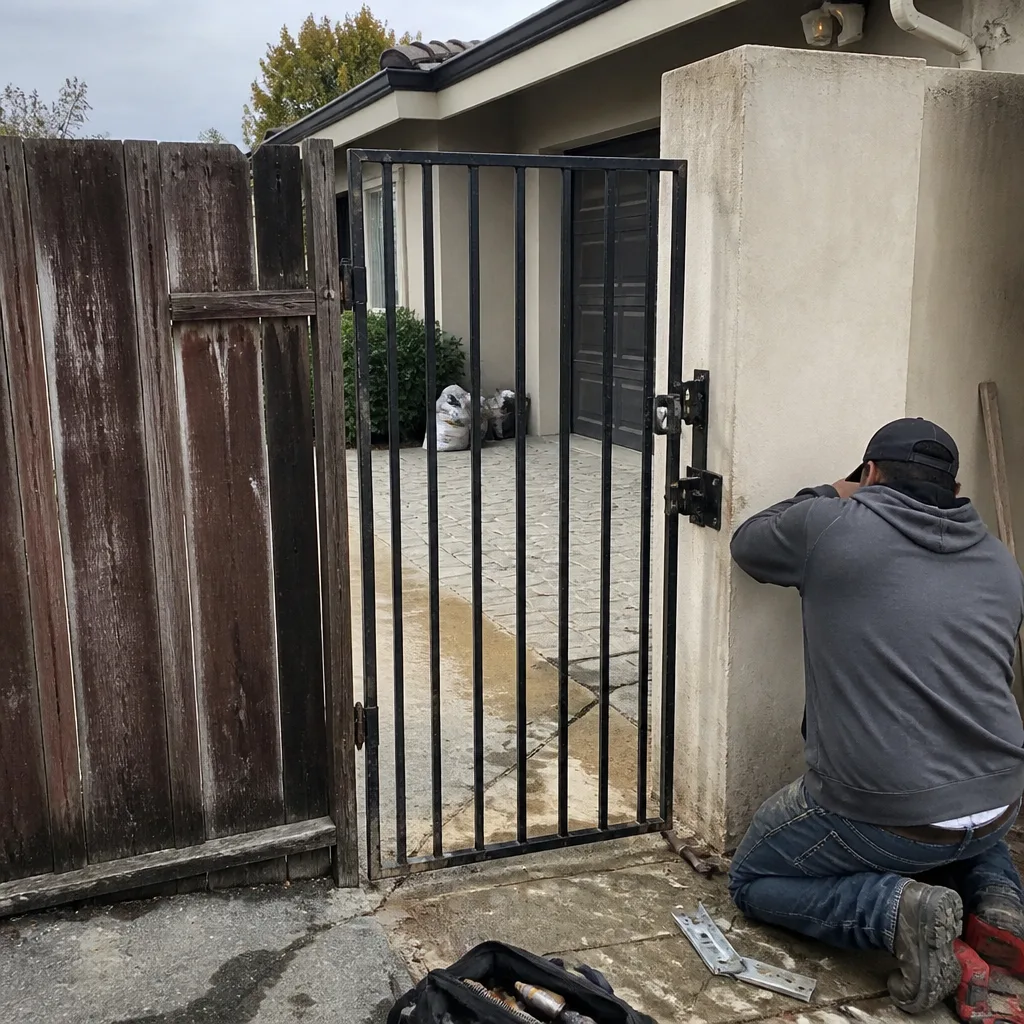 Before
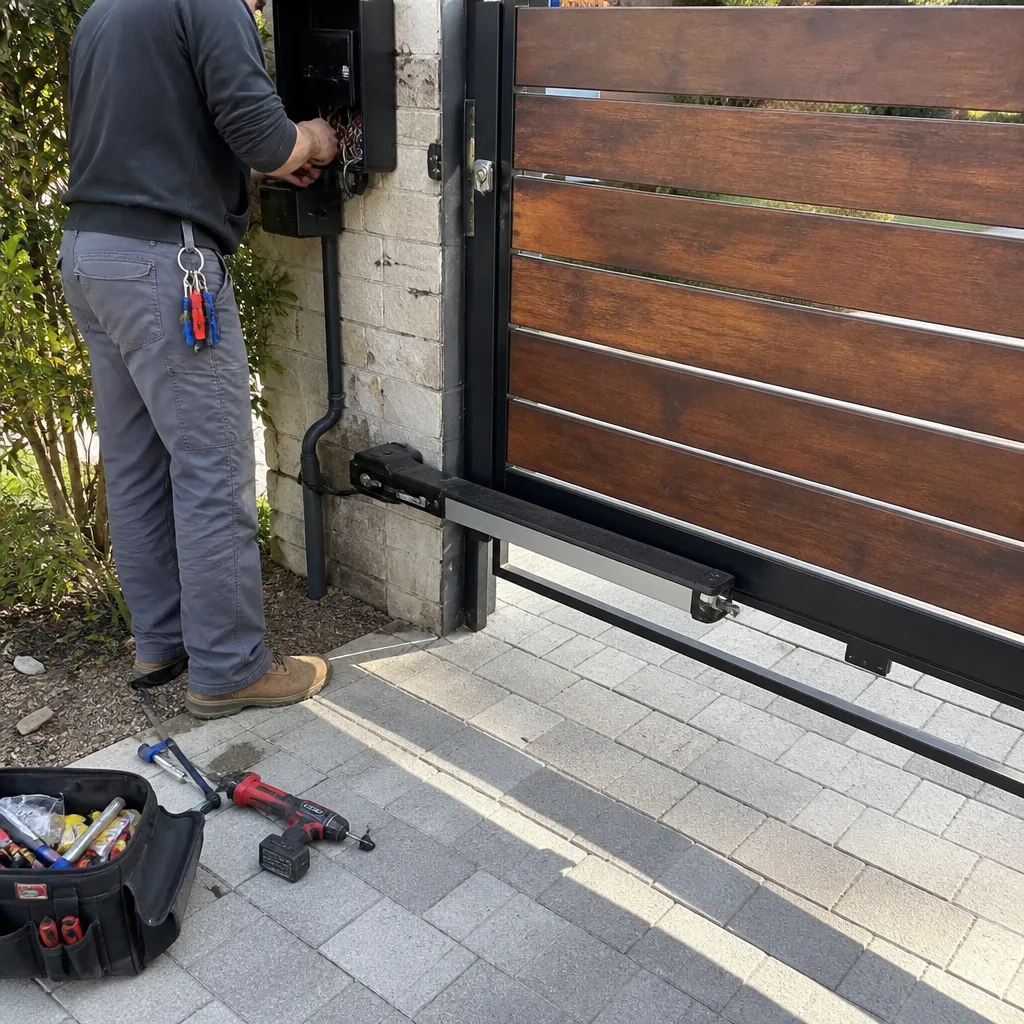 After
After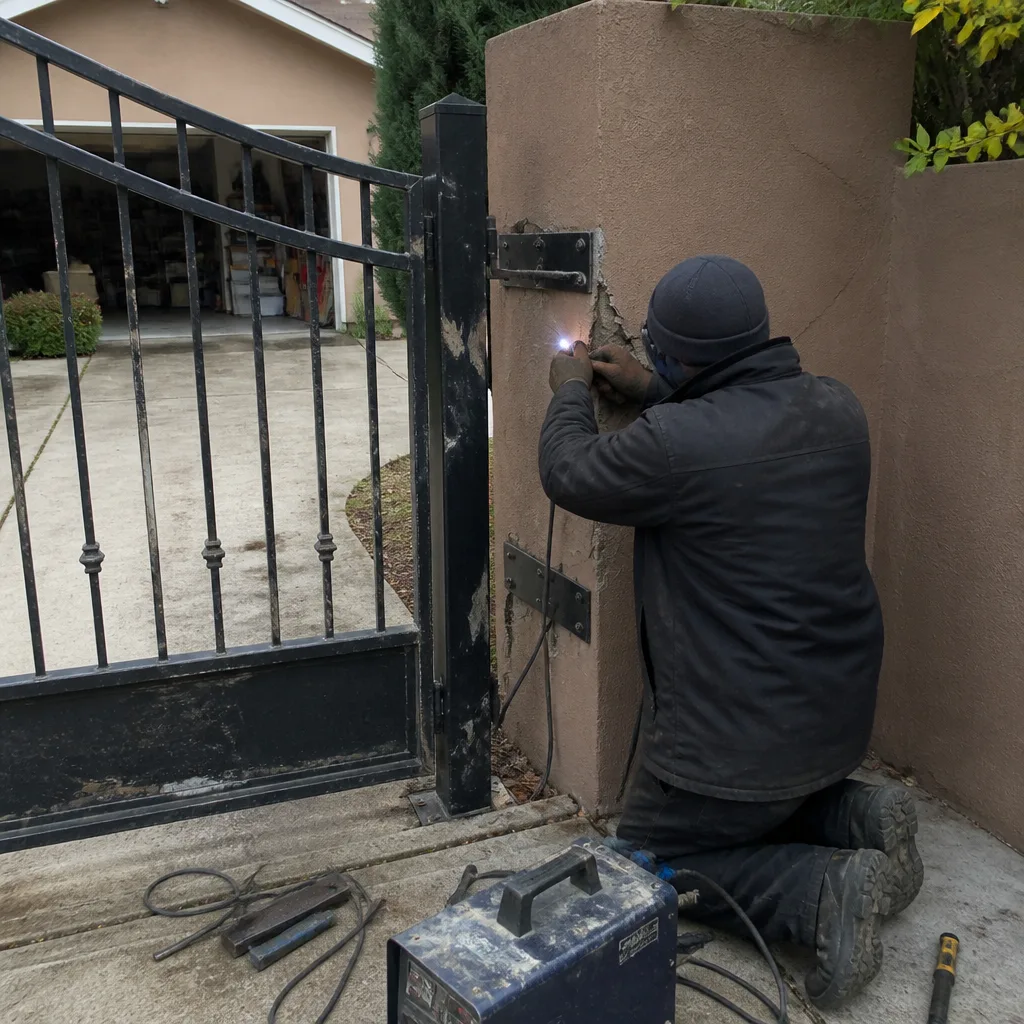 Before
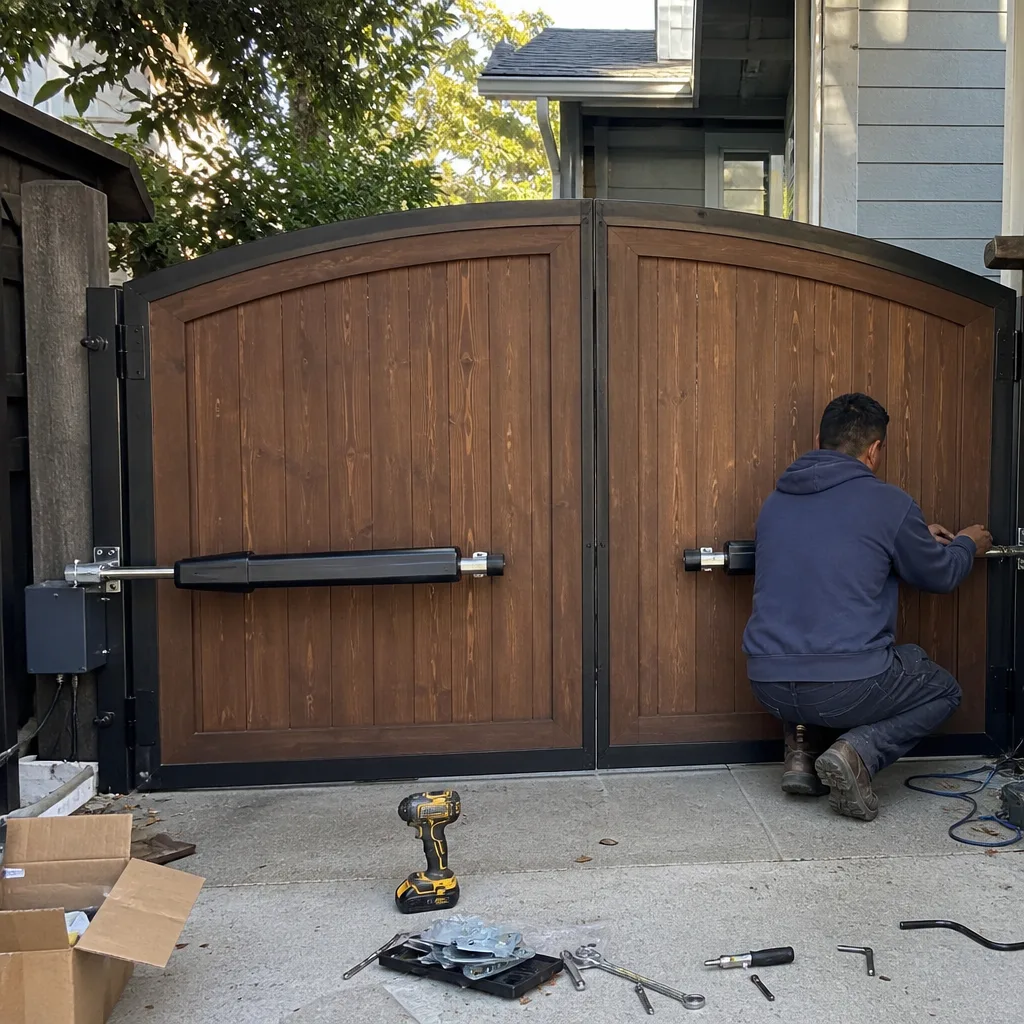 After
After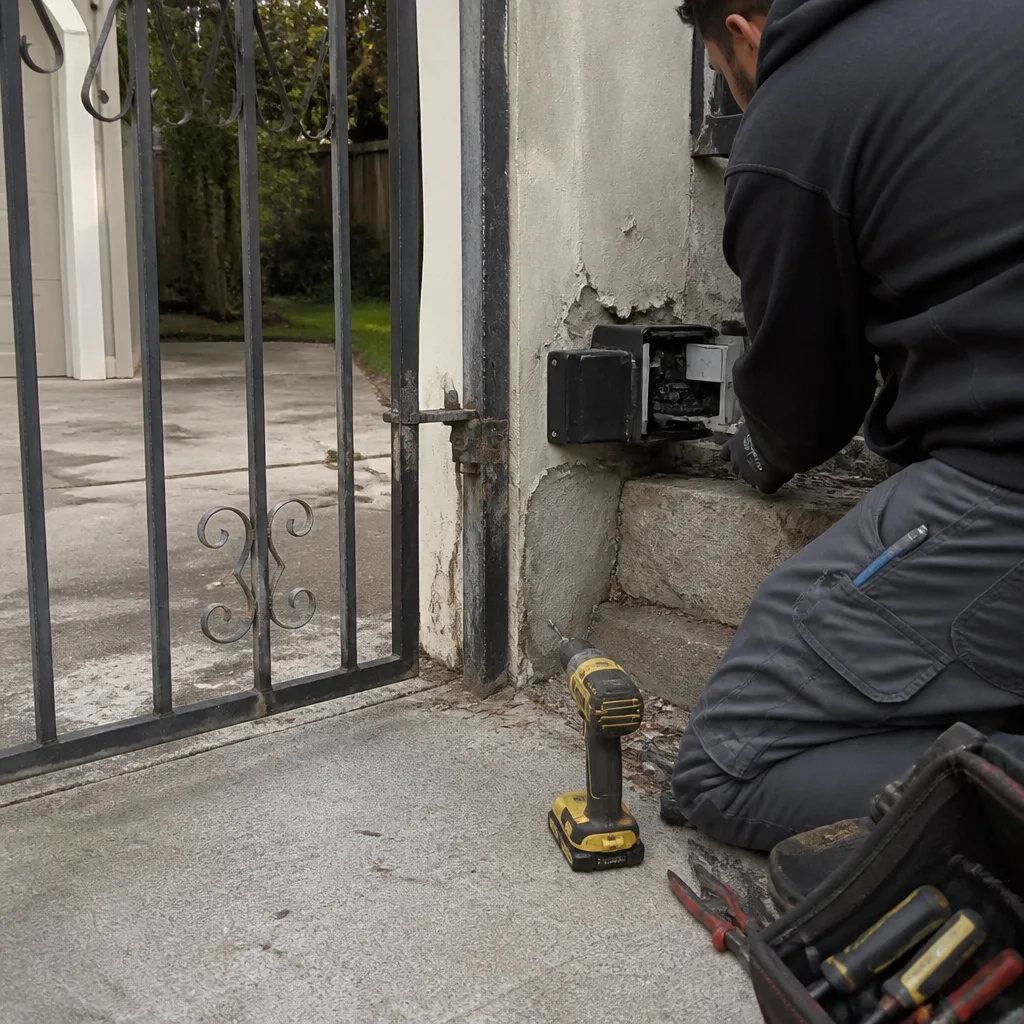 Before
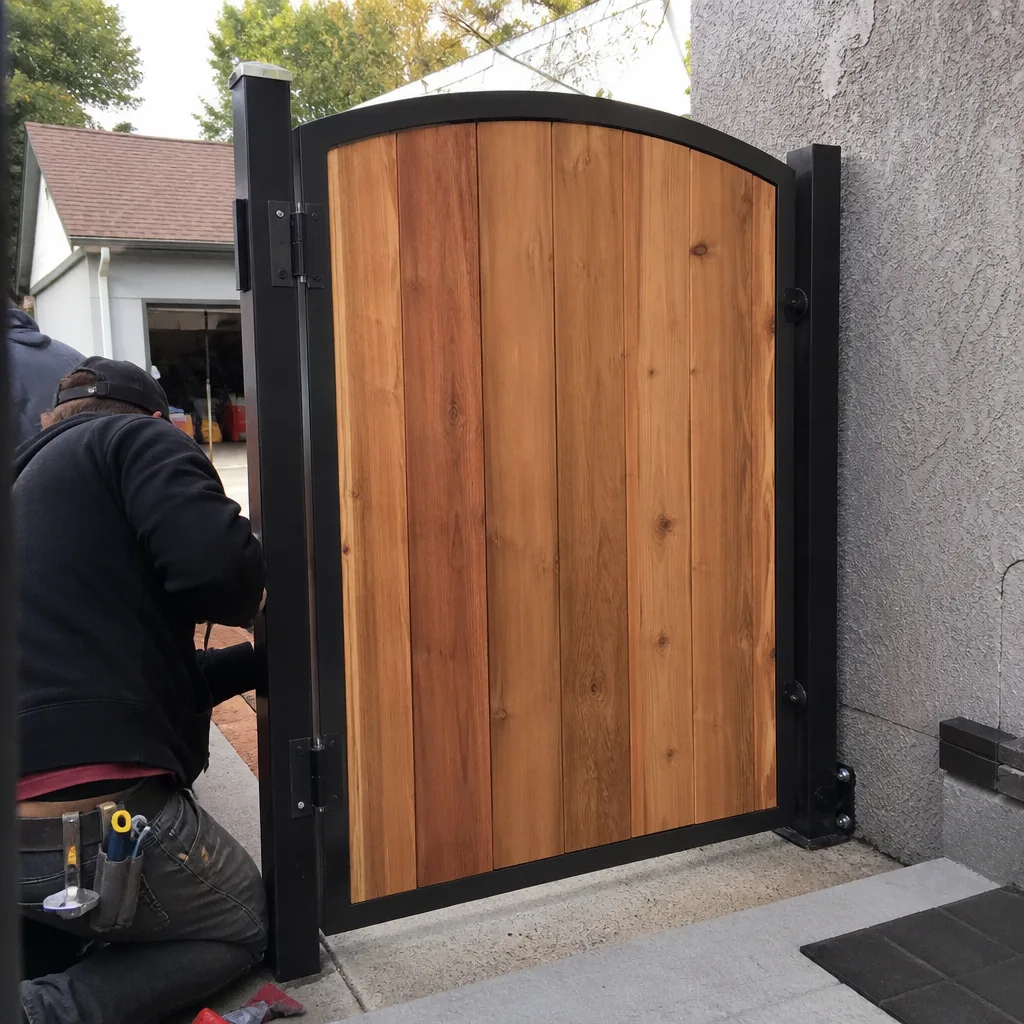 After
AfterHow to Hire a Gate Repair Contractor in San Mateo: A Step-by-Step Guide
A verbal estimate is not a scope of work. In gate repair, the difference between the two is the difference between knowing what you agreed to pay for and finding out after the invoice. Most hiring guides tell you to “get three quotes,” but they don’t explain how to compare those quotes when each contractor describes the same repair in deliberately different language. In San Mateo, where hillside properties in Baywood-Aragon often need cantilever slide gates with custom post footings and flatland homes near Central Park run standard swing-gate systems, the scope of work matters more than the bottom-line number. This guide-along with our Complete Guide to Gate Repair in San Mateo-shows you how to turn information asymmetry in your favor, starting with the first phone call.
Quick Answer
To hire a gate repair contractor in San Mateo, verify they hold a C-13 ( Fencing), C-10 (Electrical), D-28 (Doors, Gates, and Activating Devices), or B (General Building) license through the California State License Board. Request a written scope that specifies part numbers, labor hours, access-control programming details, and post-service documentation before any gate repair work begins. Compare at least two quotes using a standardized checklist that forces each contractor to define the same deliverables in the same terms.
Table of Contents
- Why Verbal Estimates Fail in Gate Repair
- The Four License Types That Can Legally Cover Gate Work in California
- What a Written Scope Must Contain to Be Enforceable
- How to Vet a Contractor’s Familiarity With Your Gate Brand
- Red Flags Specific to Gate Repair
- How to Compare Quotes When Scope Is Deliberately Vague
- San Mateo-Specific Considerations: Climate, Code, and Terrain
- Common Mistakes to Avoid
- When to Call a Professional
- Frequently Asked Questions
- The Bottom Line
 Before
 After
AfterWhy Verbal Estimates Fail in Gate Repair
Gate repair sits at the intersection of mechanical, electrical, and structural work. A single repair might involve replacing a Linear actuator arm, reprogramming a keypad, welding a cracked jamb bracket, and recalibrating limit switches so the gate stops precisely at its open and closed positions. When a contractor gives you a verbal estimate of “$850 to fix the gate,” you don’t know which of those tasks are included. We’ve seen this in San Mateo homes near Hillsdale Mall where a homeowner was quoted $600 verbally for “motor work,” only to receive a $1,400 invoice that included a control board replacement the contractor claimed was “obviously necessary once we opened it up.”
The problem is structural, not ethical. Without a written scope, the contractor can’t be held to a specific deliverable, and you can’t verify whether the work performed matches what was promised. The California State License Board receives hundreds of complaints annually about home improvement contracts where the dispute centers on scope, not price. In gate repair specifically, the lack of documentation creates a second problem: the next technician has no record of what was adjusted, replaced, or programmed. We’ve opened control boxes in San Mateo where three previous contractors had left incompatible wiring, and no one had documented the original configuration.
The Haven Standard exists because of this problem. Vance Gate Repair San Mateo home operates under three clauses: written price before work starts, documented photo record on every visit, and a 365-Day Done Right Promise. But you can demand equivalent documentation from any contractor, and this guide shows you exactly what to ask for.
The Four License Types That Can Legally Cover Gate Work in California
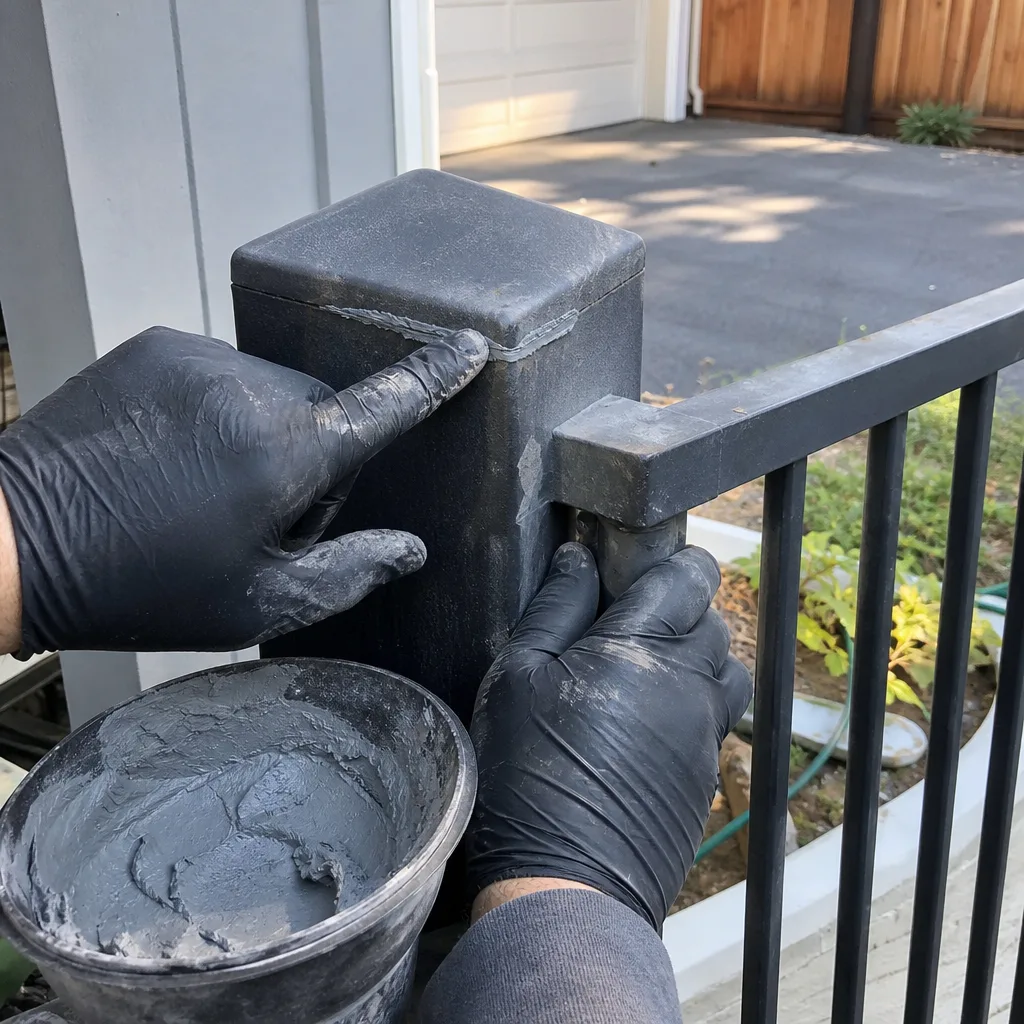
California does not have a single “gate repair” license. Four different classifications can legally perform gate work, and the right one depends on what broke. Hiring a contractor with the wrong classification for your specific repair won’t necessarily void the work, but it can create liability problems if something fails and you need to file a complaint or insurance claim.
C-13 - Fencing Contractor
A C-13 can build, repair, and install fences and gates. This classification covers the physical structure: posts, hinges, wheels, tracks, and welding. If your gate sags, the track is bent, or the post footing has shifted in San Mateo’s clay-heavy soil, a C-13 is properly licensed. However, a C-13 cannot legally perform electrical work beyond low-voltage wiring integral to the gate itself. If your repair involves replacing a 110V outlet, running new conduit, or upgrading the electrical supply to the gate, the C-13 must subcontract a C-10 or hold both classifications.
C-10 - Electrical Contractor
A C-10 is required for any work involving electrical systems above low voltage. This includes replacing control boards, installing new 110V or 220V power runs, upgrading transformers, or troubleshooting ground-fault issues. In San Mateo, where many older homes near Downtown still have ungrounded electrical service to their gate motors, a C-10 is often necessary for safe motor replacement. If your gate motor hums but won’t move, or if the breaker trips when the gate operates, the problem is likely electrical and requires C-10 oversight.
D-28 - Doors, Gates, and Activating Devices
The D-28 is the most specific classification for gate automation. It covers the installation, repair, and maintenance of automatic gate operators, access control systems, and safety devices including photo-eyes and edge sensors. A D-28 contractor can legally work on the motor, programming, remotes, keypads, and safety systems. This is the classification that most directly matches “gate repair” as homeowners understand it. However, a D-28 cannot perform structural welding or electrical work beyond the gate system itself without proper additional classification.
B - General Building Contractor
A B license allows a contractor to perform any work covered by specialty classifications, provided the project involves two or more unrelated trades. For gate repair, a B-licensed contractor is legal if the project also involves, for example, concrete work for a new post footing and electrical work for a new motor. A B license alone is insufficient for a pure gate-motor replacement with no other trades involved. Many San Mateo homeowners hiring for full gate replacement (structure plus automation) will encounter B-licensed contractors, which is appropriate for that scope.
How to Verify the License
- Visit checkthelicensefirst.com (CSLB’s official lookup).
- Enter the contractor’s license number. Do not accept “pending” or “applied for” status.
- Check that the classification matches your repair type. A C-13 replacing your control board is a red flag.
- Verify workers’ compensation insurance is current. Gate repair involves heavy components and pinch points; uninsured contractors put you at liability risk.
- Check the license bond status. California requires a $25,000 bond for active licenses.
Ask the contractor directly: “Which classification covers the specific work you’re proposing?” If they hedge or claim “any license covers it,” that’s a signal to get another quote.
What a Written Scope Must Contain to Be Enforceable
A written estimate with a single bottom-line number is not a scope of work. An enforceable scope specifies what will be done, with what materials, to what standard, and what you receive when the work is complete. In our experience across 22,000+ gates since 2014, the disputes that escalate to the CSLB almost always involve missing specificity in one of these five areas.
Part Numbers and Specifications
The scope must list every replaceable component by manufacturer part number or equivalent specification. “Replace motor” is insufficient. “Replace with LiftMaster CSW200UL swing-gate operator, 1/2 HP, 24V DC, with built-in entrapment protection” is enforceable. This matters because:
- You can verify the part exists and is appropriate for your gate weight and cycle count.
- You can check warranty terms directly with the manufacturer.
- You prevent bait-and-switch where a contractor installs a refurbished or lesser model.
- Future technicians know exactly what was installed and can look up specifications without disassembling the unit.
In San Mateo, where salt air from the Bay accelerates corrosion on coastal-facing properties near Marina Lagoon, specifying stainless-steel or marine-grade hardware matters. A scope that says “replace hinge” leaves you with mild steel that rusts in 18 months. A scope that says “replace with 316 stainless steel heavy-duty hinge, 1,000 lb. load rating” does not.
Labor Hours and Task Breakdown
The scope should separate diagnostic time from repair time, and repair time from programming and testing time. This prevents disputes about whether the contractor “ran into complications” that justify a higher invoice. A proper breakdown for a motor replacement might read:
- Diagnostic and scope confirmation: 0.5 hours
- Remove existing operator and dispose: 1.0 hours
- Install replacement operator and hardware: 1.5 hours
- Program limit switches, safety devices, and remote/keypad integration: 1.0 hours
- Cycle testing and documentation: 0.5 hours
If the contractor won’t break out hours, you cannot verify whether the total labor charge is reasonable or whether padding has been added.
Access-Control Programming Specifics
This is where most scopes fail completely. Gate automation involves multiple interdependent systems: the motor controller, photo-eyes or edge sensors, keypad or intercom entry devices, remote receivers, and sometimes telephone entry systems or smart-home integration. The scope must specify which devices will be programmed, to what functionality, and what the homeowner receives.
A complete access-control programming specification includes:
- Number of remotes or credentials (key fobs, codes) to be programmed and delivered
- Whether existing codes will be preserved or require reprogramming
- Integration with existing smart-home systems (if applicable)
- Photo-eye alignment specification (typically within 1/4 inch at receiver)
- Force-sensitivity settings per UL 325 safety standard
- Auto-close timer setting (if applicable)
Under Haven Standard Clause 4, we photograph every programming screen and leave the images with the homeowner. You should demand equivalent documentation from any contractor.
Post-Service Deliverables
The scope must state what you receive when the technician leaves. Minimum acceptable deliverables:
- Written invoice matching the pre-approved scope, with part numbers and labor hours itemized
- Warranty documentation for parts and labor, with claim procedure
- Photo record of work performed (at minimum: before condition, installed components, programming screens, safety-device alignment)
- Written maintenance recommendations and expected service intervals
Without these, you have no evidence if the repair fails and no information for the next technician. We’ve serviced gates in San Mateo’s Baywood neighborhood where the previous contractor left no documentation, and we had to reverse-engineer a custom Viking control board configuration that took two hours of diagnostic time the homeowner shouldn’t have paid for.
How to Vet a Contractor’s Familiarity With Your Gate Brand
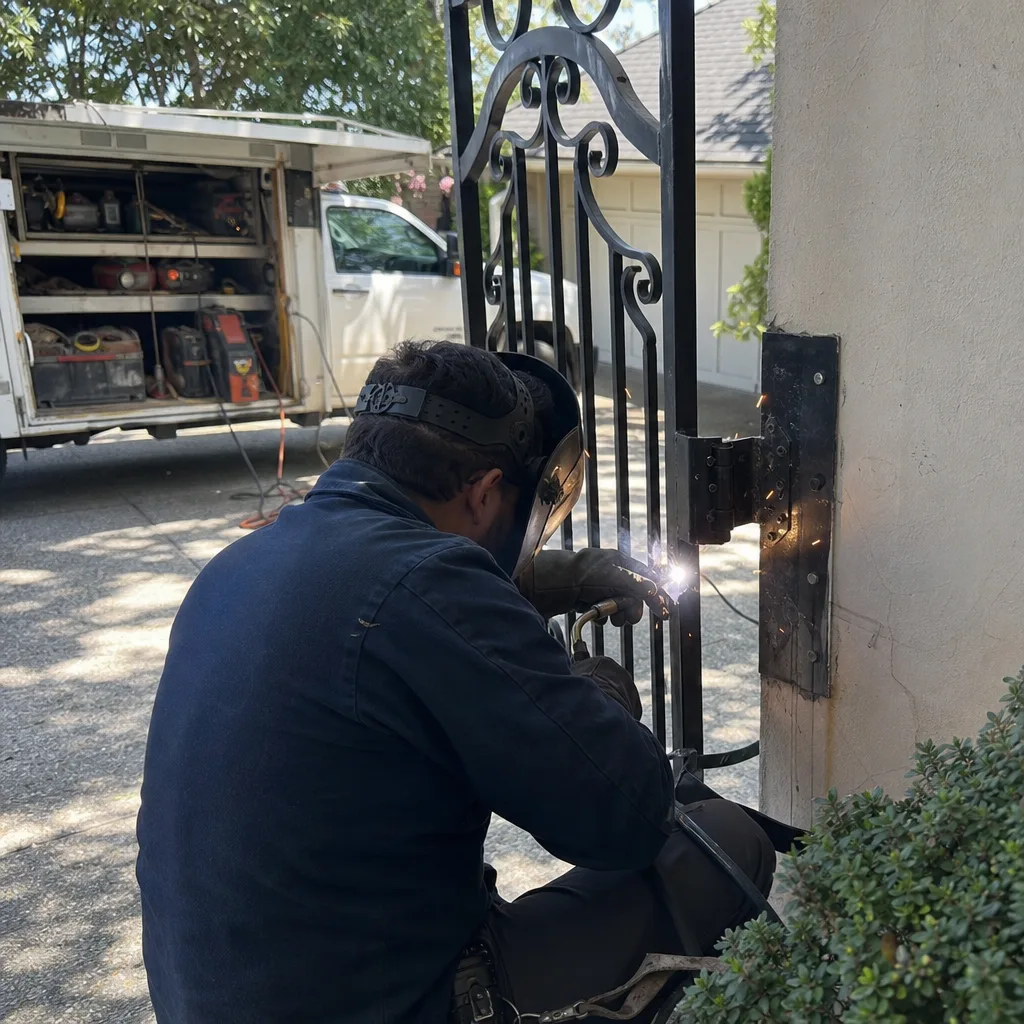
Every gate automation brand has proprietary programming procedures, diagnostic codes, and common failure modes. A contractor who claims to “work on everything” often means they can replace any motor with a generic unit, not that they can diagnose and repair your specific system. Before requesting a quote, ask one diagnostic question that reveals actual brand experience.
The One Diagnostic Question
Describe your gate’s symptom and ask: “What’s the most likely cause, and what’s the first diagnostic step you’d take without disassembling anything?”
For example, with a Linear actuator system: “My swing gate opens fully but won’t close unless I hold the button. What’s your first check?”
A contractor with Linear experience should immediately mention the photo-eye alignment or the close-limit switch setting, and should know that Linear controllers flash specific error codes on the board LED. A contractor who says “probably the motor” or “I’d have to open it up and see” lacks brand-specific diagnostic skill.
Similarly, for Viking systems: “My slide gate reverses halfway closed. What’s your first check?” The correct answer involves the magnetic limit switch and the obstruction sensitivity setting in the control menu, not the drive chain.
For BFT systems common in newer San Mateo installations: “The gate doesn’t respond to the remote but works from the keypad. What’s your diagnostic sequence?” A knowledgeable contractor knows BFT’s receiver pairing procedure and the difference between radio and hardwired control paths.
For Ghost Controls residential systems: “The gate opens slower than it used to and the battery seems to drain. What do you check first?” The answer should address solar panel output, battery load testing, and the tube arm grease condition, not jump to motor replacement.
If the contractor cannot answer with brand-specific vocabulary, they will likely replace rather than repair, or subcontract the programming to someone you’ve never met. Both outcomes cost you money and time.
Red Flags Specific to Gate Repair
Standard contractor-hiring guides mention generic warning signs: no license, no insurance, pressure to decide immediately. Gate repair has additional red flags that indicate a contractor who either lacks technical depth or intends to obscure the true scope.
No Post-Service Documentation
If a contractor says “we’ll give you a receipt” but cannot describe what documentation accompanies it, they do not document their work. This means the next problem requires complete rediagnosis, and you have no evidence if the same component fails again. Ask specifically: “What photos or records do I receive, and in what format?” If the answer is vague, the documentation does not exist.
No Limit-Switch Calibration Report
Limit switches control where the gate stops in its open and closed positions. Incorrect calibration causes motor strain, premature wear, and safety hazards. Any gate motor replacement or adjustment requires limit-switch calibration, and the final positions should be recorded. A contractor who says “it’s set right” without providing the open and closed degree measurements or photo evidence is asking you to trust what you cannot verify.
Verbal-Only Warranties
“We warranty our work” means nothing without written terms. The scope must specify: what is covered (parts, labor, or both), for how long, what voids coverage, and how to make a claim. The 365-Day Done Right Promise we offer is unusual in its duration and its no-fee structure, but any warranty shorter than 90 days on labor is below industry standard; see Seasonal Gate Repair Care for San Mateo: Year-Round Homeowner’s Guide for maintenance that protects your investment.
Refusal to Work on Your Existing Brand
A contractor who immediately recommends replacing your Gate Motor & Opener in San Mateo with their preferred brand, without diagnostic evidence that repair is impossible, is optimizing for their margin, not your cost. Nine major brands cover most residential and light commercial installations: LiftMaster, FAAC, BFT, Linear, Viking, Ghost Controls, DoorKing, Elite, and Mighty Mule. A competent repair contractor should service at least six of these without defaulting to replacement.
No Discussion of Safety Device Function
California requires automatic gates to have functioning entrapment protection (photo-eyes, edge sensors, or both) per UL 325. A contractor who discusses motor replacement without mentioning safety-device testing and documentation is either unaware of the requirement or intends to ignore it. Ask: “Will you test and document the photo-eye function, and what standard are you testing against?” The answer should reference UL 325 and include a specific test procedure (typically a 3-inch obstruction test and a timer verification).
How to Compare Quotes When Scope Is Deliberately Vague
Contractors know that precise scopes invite comparison. Many deliberately use vague language to prevent direct price competition. “Service gate system” or “repair motor as needed” cannot be compared across quotes because each contractor defines the task differently. Here’s a framework for standardizing three different proposals so you’re comparing the same job.
Step 1: Create a Standardized Checklist
Before receiving quotes, define your requirements in writing. Send the same document to each contractor. Include:
- Gate type (swing or slide), approximate dimensions, and approximate weight
- Current motor brand and model (from the nameplate on the unit)
- Specific symptoms and when they occur
- Your requirement for written scope with part numbers before work begins
- Your requirement for photo documentation of all work
- Your requirement for written warranty terms
- Whether you need same-day service or can schedule within one week
This forces each contractor to respond to identical parameters. A contractor who won’t quote against a written specification is telling you they prefer flexibility over clarity.
Step 2: Map Each Quote to the Same Categories
Create a comparison table with these columns:
| Category | Contractor A | Contractor B | Contractor C |
|---|---|---|---|
| Diagnostic fee (if separate) | |||
| Motor/part replacement (specify part number) | |||
| Structural repair (welding, hinges, track) | |||
| Access-control programming | |||
| Safety-device testing and alignment | |||
| Post-service documentation | |||
| Labor hours (broken out) | |||
| Warranty (parts/labor/duration) | |||
| Total price |
If a contractor’s quote cannot populate every row, the scope is incomplete. A $750 quote with blank cells may cost more than a $1,100 quote with full specification, because the $750 contractor will fill the gaps with change orders.
Step 3: Normalize for Warranty Value
A 30-day labor warranty has near-zero value for gate repair, where intermittent problems may not recur within that window. A 90-day or longer warranty provides meaningful protection. Calculate an adjusted price: total quote divided by warranty days, multiplied by 365. This reveals the true annual cost of coverage. A $900 quote with 30-day warranty costs $10,950 in annualized coverage terms. A $1,200 quote with 365-day warranty costs $1,200. The “cheaper” quote is not cheaper.
Step 4: Verify Documentation Commitment
Ask each contractor to send a sample of their post-service documentation from a previous job (with customer information redacted). Compare the depth and clarity. A photo of the installed motor is minimum. A photo log showing before condition, wiring connections, programming screens, safety-device alignment, and limit-switch settings is comprehensive. The contractor who documents thoroughly will likely perform the repair thoroughly.
San Mateo-Specific Considerations: Climate, Code, and Terrain
San Mateo’s geography and regulations create conditions that affect gate repair scope and contractor selection. For more guides & resources tailored to this region, explore our blog.
Coastal Corrosion and Material Specification
Properties west of El Camino Real, particularly those with Bay exposure in neighborhoods like Marina Lagoon and Shoreview, experience accelerated corrosion on gate hardware. Standard mild-steel hinges, rollers, and actuator arms may require replacement in 3-5 years versus 10-15 years inland. Your scope should specify corrosion-resistant materials when applicable: 316 stainless steel for hardware, marine-grade powder coating for metal gates, and sealed enclosures for control boards. A contractor who specifies the same materials for a Bay-front property and a sheltered Hillsdale home doesn’t understand local conditions.
Hillside Settling and Post Footing
San Mateo’s eastern hills, including portions of Hayward Park and Baywood-Aragon, have expansive clay soils that shift with seasonal moisture. Gate posts installed without proper depth or drainage develop lean over 2-3 years, causing binding and premature operator wear. If your gate has developed new mechanical problems after several years of smooth operation, the cause may be post movement, not motor failure. A competent contractor checks post plumb with a level before diagnosing the operator. A scope that includes motor replacement without post inspection is incomplete for hillside San Mateo properties.
Wind Loading on Swing Gates
San Mateo’s afternoon westerlies, particularly in exposed locations, create sustained pressure on swing gates that operators must overcome. An undersized motor strains against wind load, overheats, and fails prematurely. Your scope should verify that the proposed operator’s torque rating exceeds the gate’s calculated wind load by at least 25%. A contractor who sizes by gate weight alone, without wind consideration, will install a motor with shortened lifespan.
Local Permit Requirements
San Mateo requires permits for new gate installation and for structural modifications to existing gates, but not for direct component replacement (motor swap for equivalent motor, hinge replacement, etc.). However, if your repair involves electrical work beyond the gate system itself, new conduit, or panel upgrades, a permit may be required. A contractor should know the threshold and should obtain permits when needed. Unpermitted electrical work can void homeowner’s insurance and create liability exposure.
Access-Control Integration With HOA Systems
Several San Mateo neighborhoods, including Baywood-Aragon and portions of San Mateo Park, have HOA-managed entry systems. If your gate interfaces with a community access network, the scope must specify programming compatibility and who coordinates with the HOA management company. A contractor who programs your remote without verifying HOA system integration may leave you with a working gate that cannot communicate with the community entry database.
Common Mistakes to Avoid
- Accepting “time and materials” pricing without a not-to-exceed cap. Gate repair has too many variables for open-ended billing. If a contractor won’t commit to a maximum, they haven’t scoped the job adequately.
- Hiring based on lowest price without normalizing warranty and documentation. A $600 repair with 30-day warranty and no documentation costs more over five years than a $900 repair with one-year warranty and full photo records, because you’ll pay for rediagnosis and repeat failures.
- Ignoring the safety-device inspection. In San Mateo, where children and pedestrians share driveways in dense neighborhoods like Downtown and Central Park, a gate with disabled photo-eyes or misaligned edge sensors creates liability exposure. Verify safety function in writing.
- Not asking about brand-specific parts availability. Some contractors carry only one or two brands in inventory and will default to those regardless of what’s installed. Ask: “Do you stock parts for [your brand], and if not, what’s your procurement time?” A two-week wait for a proprietary BFT control board is very different from same-day repair.
- Failing to document the pre-existing condition. Photograph your gate, control box interior, and any visible damage before the contractor arrives. This protects you from disputes about whether a problem existed before the repair or was caused by the repair process.
- Assuming all “licensed” contractors carry the right classification. A handyman with a general B license can legally bid your gate repair, but cannot legally perform pure electrical or automation work without proper classification. Verify specifically.
- Not requesting a second opinion on major replacement quotes. If a contractor recommends full gate replacement or motor replacement over $2,000, a second diagnostic opinion is worth the time. Gate Repair in San Mateo should be diagnosed, not assumed.
When to Call a Professional
Some gate symptoms indicate immediate professional attention, both for safety and to prevent secondary damage. Call a licensed contractor if your gate exhibits any of the following: the motor hums but the gate doesn’t move (stripped gears or seized mechanism); the gate reverses direction unexpectedly or fails to stop at its limits; you smell electrical burning from the control box; the gate has detached from its hinge or track; or safety devices (photo-eyes, edge sensors) show visible damage or no longer respond to obstruction tests.
Do not attempt to adjust high-tension spring-assisted hinges or manually force a stuck slide gate. These components store significant energy and can cause serious injury. A trained technician has the tools and procedures to release tension safely.
Vance Gate Repair San Mateo offers free estimates in San Mateo. A live person answers calls at (650) 293-9440, 24 hours a day. We’ll review your symptoms, verify the appropriate license classification for your repair, and provide a written scope with part numbers and flat pricing before any work begins. If you have a written estimate from another company, we’ll review it at no cost and identify any scope gaps or inconsistencies.
Frequently Asked Questions
Most gate repairs in San Mateo range from $280 for minor adjustments and safety-device realignment to $1,800 for motor replacement with full programming and documentation. Structural repairs involving welding, post resetting, or track replacement on hillside properties can extend to $2,500 or more depending on material and access difficulty. The price depends on gate type, brand, and whether the problem is mechanical, electrical, or structural. Call (650) 293-9440 for a written estimate specific to your gate, estimates are free.
You can perform basic maintenance: clearing track debris, testing photo-eye alignment with a level, and replacing remote batteries. Do not attempt to adjust or replace high-tension springs, torsion-assisted hinges, control boards, or any component that affects the gate’s force and entrapment protection settings. Incorrect adjustment creates liability exposure and can cause serious injury. California law requires automatic gates to meet UL 325 safety standards; DIY repair may void compliance.
Replacement is typically necessary when the motor frame is cracked, the gearbox is stripped internally, or the control board has failed and replacement boards are obsolete or cost more than 60% of a new operator. Repair is usually possible for limit-switch misalignment, photo-eye issues, remote receiver problems, and worn but intact drive components. A diagnostic visit with written findings, not a phone guess, determines which applies. We provide free second opinions on replacement recommendations from other contractors, bring your written estimate.
A written estimate must include: part numbers and specifications for all replacement components; labor hours broken out by task; access-control programming details including number of remotes/codes and integration requirements; safety-device testing and alignment specification; post-service documentation description; and warranty terms with claim procedure. Without these elements, you cannot verify what was promised or hold the contractor accountable. Under Haven Standard Clause 1, every Vance estimate contains all six elements before work begins.
Emergency repair, where the gate is stuck open or poses a safety hazard, typically receives same-day response from contractors who maintain 24/7 availability. Non-emergency repairs are usually scheduled within 2-5 business days depending on parts availability. Installation and replacement work is measured, ordered, and scheduled, not dispatched for same-day completion. For repair urgency in San Mateo, ask specifically about live-answer availability and whether the technician carries common parts for your brand, not just about dispatch speed.
Direct component replacement, motor swap for equivalent motor, hinge replacement, and safety-device repair do not require permits in San Mateo. New gate installation, structural modifications to existing gates, and electrical work beyond the gate system itself typically do require permits. Your contractor should identify permit needs before work begins and obtain them when required. Unpermitted electrical work can affect insurance coverage and create resale disclosure problems.
The Bottom Line
Hiring a gate repair contractor in San Mateo comes down to controlling information. The contractor who arrives knows your gate’s condition; you do not know their competence until the work is done. A written scope with part numbers, labor hours, programming specifics, and documentation requirements removes that asymmetry. Verify the license classification matches your repair type. Test brand familiarity with one diagnostic question before requesting quotes. Standardize competing proposals using a checklist so you’re comparing identical deliverables. And demand post-service documentation, the absence of which costs you money on every future service call. The Haven Standard was built on these principles because they’re the only way a homeowner can know what was done, what was promised, and what comes next.
Written by Adrian Vance, Owner at Vance Gate Repair San Mateo, serving San Mateo since 2014.